Aah, so it sounds like one of the big reasons you sold was because of imposter syndrome? I don't mean that negatively -- I feel one of the things that comes with experience is you realize that nobody knows what they are doing. This dispels the impostor syndrome pretty quickly.
Once you think you know how a business or industry works, you develop patterns to solve it. This can sometimes work against you because it can blind you from the change happening as other people figure out different and possibly better ways to do things.
But I assume you already know all of this, and that's what's coming in part 2 :)
Hahaha. That is true. One of my favorite ways of getting used to this is thinking of my biggest competitors as friends (or trying to).
I would say "keep your enemies closer" but I really don't think of them as enemies. On the advice of my business coach I usually call my competitors to chat every once in a while and I think we mutually realize that we're just trying our best not to go obsolete. We also need each other's help from time to time. And we usually don't have quite the same business interests, so this naturally makes our businesses each appeal to a slightly different type of client.
When a new competitor shows up, they are usually inexperienced and either won't last long or will end up joining our club of friends. That's just how it works.
Yeah, most small businesses are impacted far more by overall market forces than they are by local competition. Even at large corporations in big industries though, individuals talk across companies. A lot. I've heard of major product launches from major companies in a fiercely competitive market because one CEO had lunch with another CEO and they shared their plans with each other. It's usually in the context of "This is what we're doing and we think we can beat you."
At the end of the day, even CEOs of large companies are only hired guns. They may be in a position later on down the road where they need a senior executive to run a charitable foundation, be a board member on a company they invest in, or to take the reins of their company when they retire. Always remember that there is the person and the role. The role gives them power, but the person is more valuable.
> When a new competitor shows up, they are usually inexperienced and either won't last long or will end up joining our club of friends. That's just how it works.
Not that I am a lawyer, but depending on your jurisdiction, you will need to be careful about what topics you can and cannot discuss.
Antitrust and consumer protection laws can bite you if you stray into the wrong subject.
Yes, I've been aware of this since reading the Graphic Artists Guild Handbook in 1996. The number and type of things you cannot discuss (at least where I live) is very limited, and tend to be contingent upon (or take fruit in) specific market conditions that simply don't apply most of the time in my field.
Some people DO know what they're doing, but they're way to the right of that particular distribution. One acqu. I was in (not a founder here, just an humble hireling) - the first one - was part of one of the acquirers' five year plans and it went just like they planned.
I kinda doubt impostor syndrome per se. Perhaps I missed something, but sounds like selling was the perfect move here. In any acquisition, there is significant performance anxiety - just plain old stage fright. Not necessarily paralyzing, but just the ... cognitive shear from being backstage to being under the lights. "It just got real" to mangle a cliche. Your ...calibration gyros are whirring a lot.
So true. I've switched industries a few times and by now you'd think I'd get it. It still takes me some time to get up to speed with the 'dynamics' of the space/industry I'm working in and the realization everytime is that it is truly a con-fidence game. There is no consensus on the one 'right way' to do things and anyone who spouts with religious fervor that their way is the only way is being disingenuous or worse really believes the horse-shit they spew
Yeah, though often you have to publicly over-advocate your solution as being the only "right way" ("Why my novel carrier pigeon-based NoSQL database is eating the world") just to get any visibility around your product. Of course your solution isn't right for everyone, but the people who it's not right for probably know that already, and the people who it might be right for have a higher chance of seeing it.
> I feel one of the things that comes with experience is you realize that nobody knows what they are doing. This dispels the impostor syndrome pretty quickly.
True, not many actually know what they're doing, but it's done nothing to dispel my concerns of being an imposter. Most people don't know what they're doing, but they seem to be much better at improvising than I am, so I feel like an imposter all over again.
Every time I made a decision in my startup based on fear or insecurity, I always regretted it. When you have something awesome, you need to believe in yourself more than anyone else. I constantly try to remind myself of that, but it's especially hard when it's your first real startup and you have nothing to measure it up to!
I think that the idea that you can succeed without "knowing what you're doing" may be more common to Silicon Valley. From what I've seen, the startup environment in most other places is not so forgiving.
I'm probably being petulant or don't understand American culture, but:
> To avoid spending money, we'd been subsisting on a diet consisting largely of soup. [...] But now, we'd gradually started to feel like we might be able to afford to eat at restaurants again.
Co-founder and "soup-maker" here. Not to dwell too much on the soup point, but it was our go-to meal for several reasons. I personally love making soup, especially when it's cold out. I can make it reasonably balanced in terms of meat, veggies, and carbs. It's pretty budget-friendly too because it extends more "expensive" items like lean meats. Lastly, it's convenient to make in between working on marketing content or answering support requests.
Yeah, soups are awesome! :) My partner is studying 20+ hours a week on top of a normal job at the moment, so I've been tasked with doing all the cooking - soups certainly make up a decent percentage of the meals! Good time:quantity ratio, and hearty.
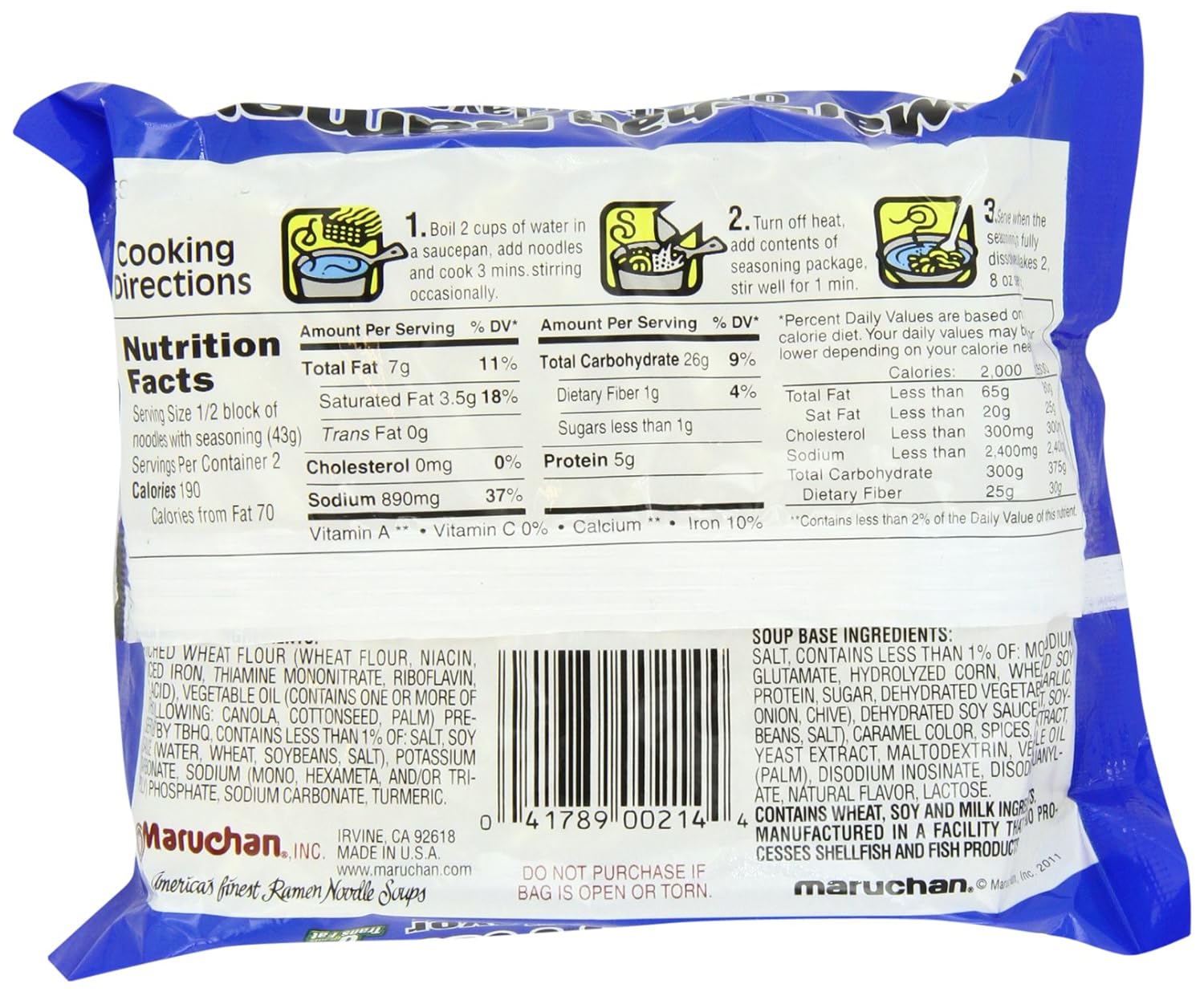
Each ramen packet has about 400 calories, add in a few vegetables and a little meat and you've got a 500-600 calorie meal. Nothing in instant ramen is inherently bad for you (unless you have high blood pressure and are sensitive to sodium intake--and even then, just eat less of the seasoning).
Sure living off of nothing but instant ramen isn't great, but neither is living off of nothing but broccoli.
Also the portions are large (which everyone already knows). But it is also culturally normal to take a doggie bag of the leftovers home with you, to supply additional meals. ie one restaurant meal is good for more than one meal.
This arose because the easiest way for a restaurant to increase revenue is to increase portion sizes and hence the price.
Haha, yes. A friend of mine went to live in the states for a while. The first time he saw people taking their unfinished meals with them he thought he was eating in some kind of restaurant/food shelter combination. Needless to say, he quickly caught on to the trend and now actively advocates it over the European system.
American here. Everyone I know calls McDonald's a restaurant. They may choose not to eat there for health or ideological reasons, but everyone agrees that it is a restaurant, and has been a restaurant since its inception decades ago.
If I say to a friend, "What restaurants are around here?" nobody I know would ever reply with "McDonald's." It is a "fast food place," not a "restaurant." A "restaurant" has table service and a higher standard of food quality.
The original comment said that Americans consider McDonald's a restaurant, in implicit contrast to unnamed other places where McDonald's does not qualify as a "restaurant," as a way to suggest that Americans have lower standards than others for food quality.
I am pointing out that, at least among the people I've known my whole life here in the US, this is definitely not the case; McDonald's and other fast food places are not in any sense considered "restaurants," no more than a gas station that sells microwave burritos is a "restaurant."
I'm with Gamblor. That may be your experience, but in my experience McDonald's barely sneaks into the definition of "restaurant." It could certainly be mentioned in response to "What restaurants are around here?"
A restaurant would be anywhere that a group can go to have food prepared for them, and then sit down and eat it. Most gas stations don't qualify on either count.
(And incidentally I've been to some really excellent, chef-owned restaurants that don't have table service. Cajun places, mainly. Cajun seems to occupy a weird intersection between "classy" and "cheap" that no other cuisine can enter.)
The original comment said that Americans consider McDonald's a restaurant, in implicit contrast to unnamed other places where McDonald's does not qualify as a "restaurant," as a way to suggest that Americans have lower standards than others for food quality.
I hope you limbered up sufficiently before stretching so far to find a way to take that as an insult.
McDonald's is in some technical, economic sense a "restaurant" in that it serves food for pay. In non-technical everyday usage, the word "restaurant" implies table service, excluding places where you must carry your own food around.
It really depends. Where I come from, 'Should we go to a restaurant' is rarely used. We'd usually say 'eating out'. And McDonalds was definitely 'eating out'.
> In non-technical everyday usage, the word "restaurant" implies table service
The english language varies considerably by geographical region, the speaker's socioeconomic class, etc. Your statement is not universally true; I've met people to whom it's true and people to whom it's not.
McDonalds might call themselves a restaurant (and I'm sure many others also do, Burger King, Wimpy, KFC, etc)…but I'm sure most people wouldn't describe them as a restaurant - it's a convenient marketing term, nothing more.
I'm in the US, and I don't think I've ever seen a restaurant cheaper than McDonald's. You can get a filling meal there for $2 if you order from the dollar menu. Even at most other cheap fast food places, you couldn't do that for less than $5.
You are just making an extrapolation from minimal information. You seem to be aware of this, so maybe the best way to describe your post is "being cute".
Plenty of Americans barely know how to fry an egg, plenty of others cook everything they eat.
I think the question about food is valid since the article talks a bit about lifestyle in Ohio with all the snow and not leaving the house.
HN also has lots of articles about nutrition and exercise, etc. So I think some of us would love to know if these guys were head down coding surviving on soup for months because they were in the zone.
It's Ohio, not Antarctica. I've lived here my entire life and cannot remember EVER being "snowed in" so bad that I couldn't make it to a store to buy food. Sure, you might stock up on canned or frozen food so you don't have to go out, but it's not like you're physically or mentally snowed in from Dec-Mar.
As a cheap-ass student I survived on soup. A can of soup is a bit over a dollar for the kinds that have stuff (veggies, pasta and meat) in them, you can heat it up on a stove and have a "meal" ready in a few minutes.
I wouldn't have qualms about doing it again. It was probably more expensive than buying fresh, but the time investment was low, it tasted way better than any frozen dinner, and it was way cheaper than doing any takeout.
Sure, but being slightly ironic about it, there is plenty of middle ground between asking for an expansion of what was meant there and making it a question about "American culture".
I was being hyperbolic -- we did eat quite a bit of soup because it was cheap, but we ate other things also. I didn't mean for the word largely to be taken literally.
Impossible? What if I find 1 or 2 HN threads (among the tens of thousands that exist) that are a counter-example to your sweeping, extraordinary claim?
It evokes images of Charlie Chaplin eating boiled-shoe soup, or Charlie Bucket's entire family eating thin cabbage soup (and just one Wonka bar per year). Eating hot dogs, bologna, mac and cheese, and peanut butter sandwiches doesn't quite do it, because people eat those things occasionally, even when they can afford not to.
But if you cut up that one hot dog and use it to make hot dog soup, you're now signaling that you're far too frugal for a second hot dog, a bun, or even mustard. But you're still not pinching that penny so hard that you just eat the hot dog, unheated and unaccompanied. Soup says "poor, but still trying hard, because it is only temporary".
~ Either that, or it says "following a fad diet based on the idea that people who eat mostly soup are not fat". ~
The post states that soup is easy to make in large batches. This is true. Cut up some stuff toss it in a pot with some water, and turn on the stove (for the most part). You're just limited by the size of the pot, and the mechanisms you have for storing the soup.
I think it's rather hyperbolic to have some strong association between the word "soup" and cultural icons like "stone soup" stories.
Here's a thought experiment for you. Collect one copy of every restaurant menu written in English. Scan each menu to find food items that are primarily liquid in character. Note the word used to describe it, and the price of the item. Find the median list price for each word.
In your thought experiment, does the median price of a "soup" differ significantly from the median prices of "bisque", "stew", "chowder", "broth", "cream", "potage", or specifically named soups like "bouillabaisse", "gazpacho", "chili", or "pho"?
My hypothesis is that higher-end restaurants purposefully substitute "soup" with synonymous words to avoid the intrinsic association with frugality, and this practice lowers the observed median price of a "soup".
It would be for the same reason that some restaurants don't put $ or numbers with two decimal places anywhere on the menu. It's a psychological trick to prevent you from entering "cost-benefit evaluation mode" before ordering your meal, so you spend more. Compare the following to your own anecdotal restaurant experiences:
So when you order pho at a restaurant they have purposely named it pho instead of soup in an attempt to sound more "high class?" I'm sorry, but this seems like an extreme view. Most of those words exist to describe something specific. Do you expect to see "A bunch of vegetables cooked in water" or "vegetable soup" on the menu? Is the later an attempt to charge you more?
Take gazpacho as another example. It's a specific type of soup. You can't complain about this anymore than complaining that the menu says "vegetable soup" instead of just "soup." They have to describe the food adequately to you so that you know what you're getting.
No, I'm saying that when a chain restaurant with a psychologist on staff drafts the new menus, they will look at the entry for "Pho - Vietnamese rice noodle soup", and edit it to say "Pho - Vietnamese rice noodles in beef broth" instead.
"Normal" restaurants don't know all the tricks to get customers to spend more money, but businesses for whom that marginal 1% of revenues is significant will absolutely pick over their menus looking for loaded words and design tweaks.
If you have ever seen a smiley face on your receipt, that is a psych trick. It is experimentally proven to increase tips for female servers in midscale casual dining restaurants. Squat, smile, mimic. Push appetizers, booze, and desserts. Say you enjoy a dish yourself. Touch customers on the shoulder. Tell a joke. Pose a brainteaser. If a server does any of those things to you, they may have done their tip-boosting research.
Menu tweaks are pretty simple, actually:
  - put cheaper, high-margin items near the most expensive thing on your menu
  - create seasonal specials
  - introduce new menu items as specials, sides, or appetizers rather than as an entree
  - draw boxes around the popular items, or highlight them in some way
  - carefully match descriptive tone with the desired clientele
  - destroy all currency symbols
  - suggest beverage pairings with the entree listing
  - make high-margin items more discoverable
  - chunk your menu into graspable categories; a giant pile of items should form a tree rather than a flat list
  - make the most expensive thing on your menu more expensive
The word "soup" is a psychologically loaded word. You should only be using it on your menus if your overall marketing strategy is to attract value-based consumers.
> "Pho - Vietnamese rice noodle soup", and edit it to say "Pho - Vietnamese rice noodles in beef broth" instead
But in your original post you included "pho" in the list of words that restaurants use to replace the word "soup." In this example "Pho" is not being used as a replacement for "soup."
I do not think you understood what I was trying to say.
Quite a lot of people do not know restaurant dishes by their proper names. If you invent a name for your menu item, or use an existing name not common in the vernacular, you avoid most psychological associations with those words. You can describe a Reuben without ever using the words "sandwich", "meat", or "bread", for instance.
Reuben: corned beef, sauerkraut, Swiss cheese, and Russian dressing on rye; lightly toasted
You can even avoid saying "beef", "cheese", or "dressing".
Reuben: cured brisket, sauerkraut, Emmentaler, and Thousand Island on marbled rye; lightly toasted
"Reuben" is not a replacement for "sandwich". That's what it is, after all. But for this particular menu item, no one ever reads the word "sandwich", nor are they likely to say it when ordering. And when that word is not present, people are less likely to associate the restaurant dish with the thing they can almost certainly make at home at lower cost. That's the whole point. You're trying to avoid activating certain areas of the human brain that tend to rein in impulses and encourage activation of areas that stimulate reward-seeking behaviors.
It isn't rocket science, but it is a science. People get paid to experiment on how to encourage people to spend more money in retail stores, and the results they get are often significant enough to sell to businesses. Once you can see these particular fnords, you notice them everywhere. It's one of the reasons why I can hardly stand eating in casual dining chain restaurants any more: I see puppet strings attached to everything, from the moment I see the building to the second I leave.
> It would be for the same reason that some restaurants don't put $ or numbers with two decimal places anywhere on the menu.
I had thought it was a signifier that the place is supposed to be high-class; the implication to me is that open discussion of money is slightly distasteful and should be done as briefly as possible. (And leaving off decimal places in particular says "no one here is so regretfully poor as to consider quibbling over mere fractions of a dollar.")
The dollar sign is redundant and a constant reminder that the customer is giving up dollars they already have for food of unknown value. Humans are also hardwired to value a thing they already have more than something of equal nominal value that they could easily acquire.
In the same way that freemium games elide your spends of real money behind a layer of invented virtual currency, the goal is to make the customer forget that they are spending actual money.
There's lots of middle ground, just within the quote you've selected. "I sometimes eat at restaurants" is a long way from "I eat at restaurants exclusively". It's kind of nice to be able to eat out occasionally.
I also wondered about this fast-food-soup or restaurant dichotomy. You can eat quite cheap and fast while healthy - f.x. full-wheat bread with avocado and onion.
Hi Nate, thanks for sharing your story. I think it's interesting because my co-founder is also my wife. And it's an interesting dynamic to say the least. If you don't mind me asking, what are the roles that you play individually? Just curious ;)
For myself, I'm the backend engineer and devops, while my wife does the design and front-end engineering.
Roughly speaking, with Zen (and now again with our new startup TaskTorch), I was in charge of the technical side of the business, and she was in charge of anything non-technical (finance, marketing, support, etc.)
Niki is an industrial-organizational psychologist, so her viewpoint is completely different from mine as a software engineer. As a developer it can be hard for me to see past the software sometimes, and Niki's perspective helps quite a bit.
Very cool! I can totally see where you are coming from. I also tend to get stuck in the minutiae of software sometimes, and it may be empirical data at best, but I feel that women are sometimes so much better at seeing things from the user's point of view, and have a better sense of empathy for the user.
I'm glad to see that you managed to have such a close and complimentary working relationship with ur SO. All the best for your new startup, and am looking forward to Chapter 2 of your blog post!
The new platform is light years ahead of the old one. Part of that is six years difference in technology, part of it is that I have another six years of experience, but mostly it's a difference in mindset. RethinkDB and React in particular are fantastic.
> Eventually, we'd come to learn how wrong we were, how hard the road ahead of us would be, and that selling the company would mean the end of what we'd worked so hard to build. But that night was for celebrating.
So ominous... any hint as to what happened before the next blog post installment?
> So ominous... any hint as to what happened before the next blog post installment?
Looks like they started a new company called TaskTorch. Considering this acquisition happened in 2010 and TaskTorch hasn't really launched yet I'm going to assume they stuck around big company for a few years, hated what they were doing to the software they loved to build and eventually quit after taking their sticking-around bonus.
Good way to announce your new company if I do say so :)
> The weakness of the design of the Zen UI also contributed significantly to the failure of the product after we were acquired, but that's another story.
I was a little excited to read about Akron and Sandusky on Hacker News and then, of course, they're used for the backdrop of how "miserable" winters are here in Ohio.
Weather seems like a commonly-stated reason for leaving Ohio. I'm from here, so I obviously take note of it, but I do wonder if people commonly talk about leaving places like Boston and NYC for warmer climates. Those areas seem to have equally miserable winter weather.
As someone who moved to Ohio from California for grad school, the big problem I've had with the winters is just the lack of sun. [1] It's as though sometime around the beginning of November a gigantic cloud descends on central Ohio and doesn't lift until late April. Boston and New York get cold, but I would find them much more tolerable just because the sun is out more often.
I had heard this complaint from the other grad students when I was visiting here, but it's hard to understand how important the sun is for your well being until you've lived without it for months at a time.
BTDT. I lived in Seattle 15 years, and while I loved it, and learned to love the rain, when I moved to Colorado I realized that sun and light and dry can be more than pretty nice too. (There's moss growing on the roads in Seattle, fer cryin' out loud.)
For some of us, sun and light make a huge difference. And yes, the sun does come out in Seattle, and when it does it's especially beautiful, but in a way that's like saying that you're hitting yourself on the head because it feels so good when you stop. (But I still miss Seattle.)
The lack of winter sunlight is one of the biggest reasons I moved (back) to Atlanta from Seattle. I can definitely attest to what you've said - it's a much bigger impact on your well-being than people think.
And no, SAD lights or Vitamin D don't cut it when you're used to seeing the sun on a semi-regular basis.
In my experience part of what makes Ohio winters so bad, is they are wet, cold, and muddy. It seems like every time it snows in Ohio, all the snow melts the next day and creates a mud pit.
At least when it snows in NYC, the snow often sticks around long enough to be enjoyed.
Bostonian here. We hate our summers and our winters. We're pretty much constantly grouchy about the weather, save for a few weeks in the spring and fall.
What's up with the summers? I know that Boston (and New England generally) can have very cold and snowy winters. I had visited in fall once and it was great. Interested to know how summer is.
I spent the first 25 years of my life in Boston and have lived for the past three here in Texas. There is a lot I do and don't like about living in TX, but I am absolutely certain I will never return to Boston winter climates ever, ever again.
I knew a girl from Akron who referred to it as "Crackron". She painted a pretty bleak picture but it was of course anecdotal. Would you say it's worth visiting next time I'm nearby?
I wouldn't make a pit stop in Akron. I can't imagine there would be too many interesting activities for tourists. There is a lot to see and do in Cleveland, which is only a 30 minute drive from Akron.
  You also seem to have a knack for writing. Reading the beginning, I got the

    The sky above the port was the color of television, tuned to a dead channel.

  feel.
Much like how poetry will mean different things for different generations. Perhaps 100 years down the line nature would mean vicious tyrannical entity.
5 million is a lot of money. Sometimes I feel like it's 1999 all over again - people spouting 200k salaries and 8 digit 'acquisitions' of < 10 people companies as 'normal'.
Given their size and stage at the time it was likely south of 7 figures or very low 7 figures. Considering their acquirer IPO'd soon after, though, the stock portion probably grew in value significantly.
(No inside knowledge of course, but people's perceptions of acquisition windfalls tend to be skewed higher than reality)
The story felt like a typical HN submission. I read it with interest, but expected a 'morale' lesson at the end. Instead the story is quite straight forward, but what threw me off is the name below the article (and - now I see that Nate submitted this as well).
I'm a fan of Ninject, following the author on Twitter. Nate, you've got a couple of beers waiting for you in Germany, if you ever want to remind yourself of the bad weather in Ohio by visiting us here.
Sounds like you made the right choice. When you're weighing certain money versus 'we think this company will be a big deal someday if we slog it out', it'd be silly not to cash out. As long as it's a reasonable offer, of course.
Worst case you work for a couple years at the acquirer until your golden handcuffs run out, then start another company -- this time with money in the bank.
Team of 2 going into meetings to talk acquisition very exciting! But makes me think the deck is stacked pretty unfairly (always is) but you might have been able to improve your odds by hiring some M&A experience for the day.
Would you have sold to Atlassian if they had offered? If so, did they know your company was in play?
Cliffhanger! Looking forward to the next installment. These types of posts do a great service to others, I read many before selling my first company. The structure of my deal was largely based on the lessons learned from others with which I read about in the blogs posted on HN.
I loved AgileZen when it was first launched and I was a huge champion of it at Quickoffice. Definitely helped keep us organized and on track. Thanks for the write up and behind the scenes details - can't wait for part 2.
We were actually interested in moving to Raleigh, NC before we knew Rally had an office there. It's 8-9 hours to drive from Raleigh to Akron, it's 2 hours to the beach, and anytime you already have friends in an area, it helps.
Boulder gets around 300 days of sunshine. Also it's not wet cold and hence you don't feel the cold much. But the sub-zero overcast days is a different story.
I got the impression that they moved to NC.
  We weren't keen on moving to Colorado, but strangely enough,
  they had an office in Raleigh, NC, where we already had several friends.
  It felt like serendipity.
Not directed at OP in particular, but with acquisitions that include shares, is there something that stops you from just dumping them straight away, essentially making it a cash only deal?
When we were acquired, Rally was a privately-held company, so our shares were illiquid. If the company was publicly-traded, we could have sold them, but there are often lockup agreements in place that restrict you from selling for a few months.
Very nice story, I have just one question: why did you guys not look for fundings or apply to something like Y Combinator?
Also, I know there are a lot of other similar stories around the US. I would really like to find and ear something similar in an European country, in the hi-tech industry: a small startup doing a good job, with a tiny but prepared team, being lately acquired by a larger competitor. Is there any similar story based in the old-continent?
The stock answers to "why raise?" reduce to 1) to achieve the same success faster, or 2) to achieve a larger scale of success, or 3) because raising money drops you into a new world of experience and learning and future networks.
I'm not suggesting any of the above are superior paths to what was chosen in the article, BTW.
One of the reasons they gave for selling was that they weren't sure they would be able to take the product to the next level on their own. It sounds like they would have had to seek funding at some point if things didn't change.
We wanted to focus on building the product and getting it to market as quickly as possible, to see if people were even interested in what we were doing. Also, I was still in graduate school and under contract to teach an undergrad cognitive psychology class, so moving for any period of time wasn't an option. We were able to raise a small amount of grant funding, but the acquisition talks started soon after. We never spent any of the grant and ended up paying it all back once we were acquired.
I've used Rally and don't care for it. It wouldn't surprise me at all if you've come up with something that's actually better. I'll take a look at AgileZen... though now that Rally owns it, I don't know that I'd use it because I'd be concerned they would screw it up.
I currently live in Columbus and actually attended CodeMash this past year. Its great to hear about people in my own back yard, so to speak, that have a successful start up. Typically you only hear about them in silicon valley. Great story and i'm looking forward to the next installment.
I live in Columbus too. Its a huge start-up city. Some label it as the next Silicon Valley because of Battelle, Ohio State, and the SIGNIFICANTLY lower cost of living.
I, for one, am very curious to hear what happened next... I came very close to accepting your offer to work at AgileZen three years ago ;) Good luck with the new startup!
great to see some other hackers from Akron on Hacker News. Sorry the acquisition didn't work out as you expected - looking forward to your next blog post


Once you think you know how a business or industry works, you develop patterns to solve it. This can sometimes work against you because it can blind you from the change happening as other people figure out different and possibly better ways to do things.
But I assume you already know all of this, and that's what's coming in part 2 :)