Absolutely. Unlike computer science topics art does not transfer well onto the internet. While one could learn a number of techniques for drawing and painting online, none of these make students into better artists, only better drawers or painters. Being technically better than your peers has some merit, but will not get you very far in the artistic community if the meaning of a piece is not conveyed well.
I think the primary mistake that the author makes is boiling art down into a collection of techniques. With this view they can easily argue that each of these techniques can be easily learned and replicated through online education. No reasonable artist would go to RISD and pay that much just to learn better techniques. If they wanted to do that they could just stay home and watch Bob Ross. Instead they to work with and be taught by the very good artists and students. And its these connections that make a RISD education worth 245k.
But to come to some kind of conclusion, art is not just a skill, at a very low level stops being about the artists technique and about its meaning, or communicative properties. Art education thrives on peer review, and the community around it. As a form of communication, you need to do and present art to other people, because without review, you can never understand how well you are communicating.
Art doesn't transfer well over any medium. That's why there are thousands upon thousands of Art School students that are not producing art after Art School. They go into different fields. You can't teach someone to become an artist in 4 years. For some people, you won't be able to teach them ever, not even in a 25-year rigorous art school program.
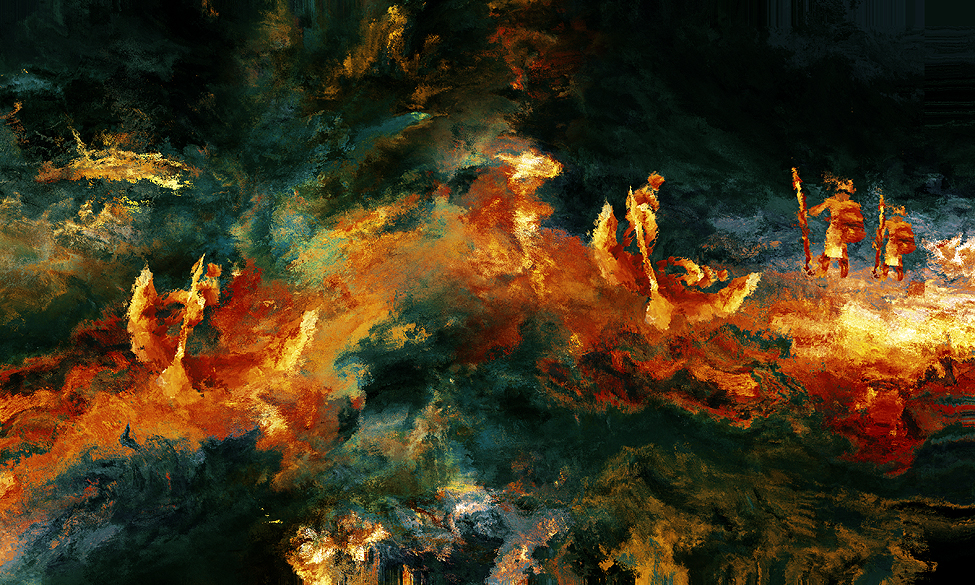
I made a ton of digital art. Some of it decent enough to be appreciated by snobby art school people. Especially the stuff that looks painted like http://detrus.nivr.net/art/photos/01/styx.jpg
All of my feedback was through the internet. There were entire genres of digital art fed by the internet and absent from art schools.
I also went to a cheap state art/design school after. Doing the same critique/feedback stuff I did online IRL is nothing special. Especially when people surrounding you are years behind making presentable work. It's probably harder to achieve aesthetic mastery with non-digital art, which some peers did in art high schools.


I think the primary mistake that the author makes is boiling art down into a collection of techniques. With this view they can easily argue that each of these techniques can be easily learned and replicated through online education. No reasonable artist would go to RISD and pay that much just to learn better techniques. If they wanted to do that they could just stay home and watch Bob Ross. Instead they to work with and be taught by the very good artists and students. And its these connections that make a RISD education worth 245k.
But to come to some kind of conclusion, art is not just a skill, at a very low level stops being about the artists technique and about its meaning, or communicative properties. Art education thrives on peer review, and the community around it. As a form of communication, you need to do and present art to other people, because without review, you can never understand how well you are communicating.