I dislike these pseudo-scientific claims about alternative number systems and methods of paper and pencil arithmetic:
> Because of the tally-inspired design, arithmetic using the Kaktovik numerals is strikingly visual. Addition, subtraction and even long division become almost geometric. The Hindu-Arabic digits are an awkward system, Bartley says, but “the students found, with their numerals, they could solve problems a better way, a faster way.”
I think the students can be praised for having come up with simple to understand and write number system that corresponds to the conventions for counting in Alaskan Inuit language, and it seems appropriate to capture these notations in upcoming Unicode standards.
However, spending time learning base 20 arithmetic has obvious disadvantages that the article ignores. The times tables, memorized in grade school and fundamental to paper and pencil calculations, are now four times larger. Base 20 is not a popular notation for numbers. One important advantage of the number system (Hindu-Arabic) that most of the world uses is that most of the world uses it. I grew up with inches and degrees Fahrenheit and had to learn the metric system to pursue my science education. I'm glad I didn't have to learn how to count as well. We shouldn't make it harder for these kids to enjoy the rest of the world's books, journals, and internet resources about math and science.
The big advantage would be that you learn to see that there is nothing magical or 'right' of one number base over another. Base 2 has it's uses as does base 10(10). And most computer programmers are familiar with at least one other base besides decimal, and quite a few will be able to use binary, octal and decimal with relative ease. It gets interesting when you go off the beaten path and you re-learn the rules for arithmetic in different bases. In my experience all of this gives you a much better understanding of why decimal is practical and widespread. But it also shows you that it is a convention that won out for both cultural reasons and because it made certain arithmetic easier.
If 10x10 = 100 looks natural to you in decimal then it will still be natural to you if you think of it as 16x16 = 256 when you look at the numbers in their hexadecimal representation. You can only get that kind of fluidity by playing around in different number systems. So I'm perfectly ok with students inventing their own number systems, they are definitely not going to get any dumber on account of having done that.
Growing up with Inches and degrees Fahrenheit is a cultural issue, most of the rest of the world has moved on from there, for reasons that are far more compelling than those that would apply to using a different number base. Those are arbitrary values, whereas all number bases exist regardless of whether we use them or not. Think of the one as cultural baggage and the others as just another part of number theory.
Heh. Yeah, I guess. Maybe I'm an idiot, but the idea of a minute being a unit of a base-60 system didn't occur to me til round the time I was learning about complimentary binary arithmetic.
I think you're not unusual in not having thought about it, but there's value in being able to intuitively extend your understanding of decimal math to cover it.
Imperial units are unfortunately still in common use in the United States, the United Kingdom, and related colonies/ex-colonies. They are variable base number systems that people reckon with on a daily basis.
It wasn’t so long ago, historically speaking, that England used pounds, shillings, and pence! Decimal currency really was a fantastic innovation.
Pedantic comment: USA doesn’t use the imperial system, that was Britain. USA has used the “United States Customary Units” since 1832. Since 1893 the units have been defined in terms of metric.
Since 1991 the rule has been to “prefer metric units”, which I guess is why all packaging you commonly see includes measurements in both systems.
edit: After living in EU and US, I will grant that the lbs is a more convenient unit for measuring food. A kilo of apples is a lot, but a pound is just right.
I don't think the difference between pounds and kilos really matters to purchasing food, but labeling everything with a per 100g nutrition facts rather than just whatever BS serving size the manufacturer makes up is a significant improvement. You can buy oil in the US that is listed as containing 0 calories and 0 fat per serving (and 1000+ servings per container). Not that that's a unit system issue.
As a calorie counter, I have thoughts on this. Comparing foods at the supermarket based on 100g base units is easier, true. But that means you need a scale every time you eat anything. It’s waaaay easier to go “yeah that’s about 1/3rd of the package” (and accurate enough for me).
So really I’d love nutritional labels that have both.
If everything was based on 100g, people would become used to roughly weighing things with their hands and knowing roughly how many calories are in their food.
It’s at least partially about recognizing that there are other ways to view the world than the default one we carry around inside our precious egos, ways that are — literally, in this case — equal to our defaults.
Some bases are inherently better for small integer arithmetic.
Every base has difficulty representing some fractions. For example, 1/3 is written in base 10 as 0.333... The 3 repeats forever. You can use explicit notation like a line over the top, but that's still just a workaround.
The Babylonians used base 60, which has many more prime factors than base 10: 60 can be divided evenly by 1, 2, 3, 4, 5, 6, 10, 12, 15, 20, 30, and 60.
60 is a lot of digits to remember, though. That presents its own overhead.
Some people advocate base 12: it's only two more digits, and it's evenly divisible by 1, 2, 3, 4, 6, and 12. 1/5 is a mess, though: 0.24972497...
> The big advantage would be that you learn to see that there is nothing magical or 'right' of one number base over another.
Different bases do indeed have "magical" properties that make them appealing, which is exactly what you later acknowledge when you say that base 10 makes certain arithmetic easier.
There's no issue with learning different bases, as long as it's not an excuse to avoid learning the common bases you need to interact with various fields.
Actually, many western number systems have traces from base 20. Just consider how you have names for numbers up until 20.
In Danish, the way we name numbers are heavily inspired by French, which also exhibit traces from base 20.
The name in Danish for 60 and 80 in modern Danish are "tre(d)s" and "firs", respectively. These are shortened forms of "tredsindstyvende" and "firsindstyvende" used historically, literally meaning "3 times 20" and "4 times 20", respectively. The number for 50 is "halvtreds" - derived from "half way to treds (60)" - meaning half way (when the "way" is 20 long) between 40 and 60.
In french 80 is quatre-vingt (4-20).
If anything, arguably our common system in which we have named numbers up until 20 (i.e. base-20) and then shift to base-10 for numbers above 20 is illogical.
> However, spending time learning base 20 arithmetic has obvious disadvantages that the article ignores.
They aren't learning base 20; they already use it in their language. They are learning how to write their language in their writing system.
From the article: "The Alaskan Inuit language, known as Iñupiaq, uses an oral counting system built around the human body. Quantities are first described in groups of five, 10, and 15 and then in sets of 20."
Not everyone counts in decimal. Base 20 exists in spoken French. For numbers 50-90, Danish uses base 20, in some cases mixed with fractions. There are other bases in other living languages as well.
> “the students found, with their numerals, they could solve problems a better way, a faster way”
> Base 20 is not a popular notation for numbers […] We shouldn't make it harder for these kids
So much of what you object to is that something they’ve found more intuitive and engaging isn’t what unintuitive disengaging stuff they’ll encounter. But developing intuition for math is far more valuable than developing conformance to how it’s supposed to be done. Who cares if that intuition is developed with some idiosyncrasy from what you consider normal? The math is math, the principles are consistent, the knowledge is transferable. Insisting they learn the same things a different way is totally arbitrary and counterproductive.
I think parent's point is not cultural as you are implying but rather practical. Learning in a base that nobody uses could be easier today and an hindrance later.
I think, all in all, this should not be a big deal. For the gifted kid, they'll find a way to adapt and become the next Einstein. As for the ungifted, it might give them a better leg up and allow them to perform better than they would have, so it's probably a plus anyways.
> I think parent's point is not cultural as you are implying but rather practical.
I think this is exactly what I find distasteful in the original comment: Culture is ignored in favor of what is practical for someone other than a subject of the article.
I believe it is my comment that you find distasteful. Please reread my post, I didn’t intend it to be dismissive of the Inuit culture. I even stated that these new numeral glyphs should be included in Unicode. I believe this aids in preserving the Inuit culture and traditions.
I myself have taken over two dozen university level math courses at the undergraduate and graduate level. I don’t need to have number bases explained to me, but I have raised three kids and recognize the challenge of helping them attain proficiency in basic grade school fundamentals. This is what motivated me to make the comment.
Ironically, perhaps, is the fact that my own ancestry includes an indigenous people living at the arctic circle who faced and continue to face racial discrimination, loss of native lands, and forced changes to their way of life, the Sámi. [1]
> Finger binary is a system for counting and displaying binary numbers on the fingers of either or both hands. Each finger represents one binary digit or bit. This allows counting from zero to 31 using the fingers of one hand, or 1023 using both: that is, up to 2**5−1 or 2**10−1 respectively.
> Numeral systems are classified here as to whether they use positional notation (also known as place-value notation), and further categorized by radix or base.
Learning more than one base system, like learning more than one language, can only benefit the learner. Is learning binary, octal, and hexadecimal a hindrance? No, it's generally quite beneficial to understanding and offers many insights that are easily missed in base 10. Humans use a ton of different number systems and scales for all sorts of things, from time, to distance, weight, thickness, angles, and more. None of these things harm the learner.
I would take this a step farther and argue that being exposed to different numeral systems expands your understanding of math, similar to how different programming languages expands your understanding of software, or how different unit systems (e.g. natural units [1]) expands your understanding of science.
At first students would convert their assigned math problems into Kaktovik numerals to do calculations, but middle school math classes in Kaktovik began teaching the numerals in equal measure with their Hindu-Arabic counterparts in 1997. Bartley reports that after a year of the students working fluently in both systems, scores on standardized math exams jumped from below the 20th percentile to “significantly above” the national average.
It sounds like they objectively are doing better though. Bottom 20th to above average is non-trivial. Even if you look at it from the point of view that learning a different base(binary, hex), any base, teaches you to think differently about math, why not learn the native base for extra confidence?
Memorizing the times table is for suckers. If you can add, you can spend at most 2 additions to get 2, 3 and 4 (2x = x+x, 3x = x+x+x, 4x = (2x+2x)). Multiplying by the base of your numeral system comes for free (just add 0 to the end). Assuming subtraction just as easy as addition, I now know how to multiply by base-1 and base-2 (9 and 8 normally, 19 and 18 in this case). The last trick I need to invoke is division by 2. Assume you've ignored every other lesson in order to focus on being unreasonably fast at cutting numbers in half. So now, coupled with the append zero trick, you have a path to 5 and 10 (5x = (20x/2)/2, 10x = 20x/2). I haven't memorized anything, and I've used at most two operations, and already I can multiply by 2,3,4,5,10,11,18,19,20. With a third operation I can reach 6,8,9,12,15,17. All that's missing is 7,13,14,16. At that point the remaining part of the "table" only has 10 unique elements in it. I can cover it with a 4th and 5th op if I'm truly stuck, but at some point in doing that repeatedly I'd probably end up remembering that chunk of the table anyway. If we were still in base 10, the same tricks would get me the entire single digit table within at most two addition and/or halving operations. It only takes 3 ops if you reject my premise that halving is as easy as doubling / adding.
Sure it costs me 3 operations per multiplication, but my operations are only doubling and halving (and arguably appending zero). What I lose in number of steps I gain back by just being faster at those two specific skills. And I didn't even have to waste time memorizing stupid tables!
It is still extra mental steps, memorising times table is relatively trivial. The costs of having these extra steps really add up for more complicated problems that involve multiplication
Memorizing the multiplication table is a shortcut that works for small numbers, memorizing a quick method for multiplication works for all numbers.
The table is just an optimization that can come in handy in the same way that cache memory is handy: it gives you the same answer but only for a limited set of data and in a faster way. Eventually you'll have to venture out of cache memory to reach the rest of the space and if cache memory is all you have you're in trouble. So if you can learn only one of the two the method is the better one, so learn that one first, then memorize, as much or as little as you feel like. Up to 20x20 is doable, much larger is useful for squares, powers of two and some other numbers for order-of-magnitude checks but when I'm lazy I'll just break out the calculator. It's useful to be able to do this in your head up to a certain point and beyond I'll use a tool just because it is convenient and faster.
I'd object to the idea that memorizing times tabes is relatively trivial as I've always had trouble memorizing anything. But I too realized a lot of the times tables are basically "free": the only ones I felt I really had to memorize were 2, 3, 5 and 7 (incidentally, the primes). In fact, I still struggle with the 7 sequence because we learned the times tables in two batches (1-5 and 6-10) and 7 was the only one in the second batch that required actual effort and at the age I mistook the other ones being trivial to deduct with me having become better at memorizing times tables.
In retrospect, batching it as learning the primes first (including 1 to ease you into it) and then the rest of the numbers second would have probably helped me a lot by avoiding the feeling of "what the heck, why do I suddenly suck at this again when I just thought I had gotten good at it". But of course the concept of primes is off-limits when teaching basic arithmetic so even hinting there's something special about those numbers was apparently taboo.
EDIT: Additionally I'd argue out of the primes, 5 is almost free because of how numbers are represented in decimal (i.e. it just alternates between 0 and 5 and the digits in front of that go up every other time) and doubling is fairly intuitive to reason about (take what you have and add the same amount again) so it's just 3 and 7 that are weird.
I guess my case is different because we have multiplication songs in Cantonese. (Not really a song, just multiplication facts.) It takes like 30 seconds to read a full column, and kids were taught to read aloud a column at a time. So just plain old repetition, but easy to catch on after a while. A few short practices everyday in a week would be 15-20 repetitions on a single column, which is a fairly good starting point, and very short practices would minimise mental burdens.
... a different experience for different people and I wish we just accepted that and provided multiple ways to deal with it rather than assuming it's something we have to memorise. And maybe also paid attention if those having issues memorising it don't have more general memory issues that need addressing.
It is superior, because you can apply the same knowledge on larger numbers and later on general equations. Memorized table is just one pony trick to get result faster in limited amount of situations. And once you forget it, which you are guaranteed to forget, then you will need to derive numbers anyway.
Also, it was NOT easy to memorize it. It was hard. Which is why I started to use derivation as s kid, once I realized it is possible. I always did well in math, it did not harmed me at all.
Then you haven't realized how well what I wrote actually scales. In base 10, 2 operations gets you the whole of single digit multiplication (versus memorizing the whole table just to get it down to 1). It also gets you to 11, 12, 20, 21, 19, 30, 40 (by various use of the append 0 trick to multiply by 10 for free anywhere you want). Now try to work out which multiplications are possible within 3 additions/subtractions? How about 4? You should find the accessible fraction of the number line grows exponentially. Memorizing the whole multiplication table for 2 digit numbers isn't practical. That's a 100x100 table. But a small number of adding, doubling, and halving steps can get you anywhere you want in that table.
We humans are good at pattern recognition but we suck at mental arithmetic involving multiple steps. We are slow and error prone.
Yes memorizing sucks, all schoolkids hate it, but once you have mastered it you have gained a great new skill. Instead of having to waste mental energy on calculations you just remember them and can spend your precious mental resources on higher level calculations.
You haven't understood. I'm actually better at multiplying than the average and was ahead of the class. It doesn't matter that I'm doing two addition operations per single digit multiplication, because its very easy to be more than twice as fast at doubling / halving numbers if the only thing you ever care about is doubling and halving numbers. The pain of memorizing the table is wholly unnecessary. Memorizing is for suckers.
> I'm actually better at multiplying than the average and was ahead of the class
I bet that most people on this forum were better than average in elementary school, regardless of the method they were using. I also bet that you would have been even better after memorizing. Recalling from memory is almost instantaneous, it is always faster than having some multiple step algorithm.
Recalling yesterday's breakfast is not the same as multiplication table or some other facts you've memorized. Most people don't memorize their breakfast!
edit: as an example, when someone asks "what's your name", do you not recall much faster than what you ate?
i had the same thought, but it sounds like starting with a base-20 numeral system makes it easier for the iñupiat students to learn base 10, as evidenced by the reported test score improvements
myself, i learned mediation and duplation before i learned to multiply with a memorized multiplication table, and though that's a faster algorithm, you could maybe teach it after switching to base 10? also nowadays maybe you'd be better off with a memorized table of briggsian logarithms because if you really need more than two digits of precision you should probably use a calculator
mediation and duplation of 69 · 21
    21   69 *
    10  138
     5  276 *
     2  552
     1 1104 *
now we add the starred duplation column items where the mediated multiplicand was odd (corresponding to the 1s in its binary representation, 16+4+1)
       1104
        276
       + 69
       ----
       1449
a bit more work than adding up four appropriately shifted table-lookup results but not really that much, doesn't depend on a multiplication table, and you can do it just as easily in roman numerals or kaktovik numerals
So we just wrote very similar comments at the same time. Did you notice this for yourself too, or is there some magic utopia I've never heard of where they teach something other than memorizing math tables? Couldn't help but notice your use of RPN, and the fact that you have specific vocabulary for all the steps.
i learned mediation and duplation (which doesn't involve multiplying by the base of your numeral system!) from a book as a kid (a compendium of knowledge for kids from the 01950s that my grandparents had) but have seen people talk about it several times since then
you can get pretty fast at it but you have to do 6.64 halving and n-digit doubling operations per digit of the multiplier, plus about 1.66 n-digit additions, so in my experience it's still slower than computing partial products with a memorized base-10 multiplication table, which requires adding together n recalled multiplication-table entries to get a partial product per digit of the multiplier, and then adding these partial products together
just not as much slower as you'd naively expect
i derived a shitty version of quarter-square multiplication on my own about 20 or 25 years ago and much later learned about the streamlined version from wikipedia
>6.64 halving and n-digit doubling operations per digit of the multiplier
Where do you get this from? Intuitively I'd reckon you'd need no more than log2 operations. Whatever this result is it certainly doesn't hold for small n.
>mediation and duplation of 69 · 21
    21   69 *
    10  138
     5  276 *
     2  552
     1 1104 *
Am I mistaken in reading this as RPN? You put the operator to the side of the operands rather than the middle. Slightly unorthodox to put the op on the right, but still obvious in meaning.
Your English is obviously perfect, but you have a very idiosyncratic way of writing math that I've never seen before. For example you wrote "from the 01950s". I've never seen anyone use a 5 digit year format, and rarely if ever have I seen anyone include a leading zero in a number at all. Its not bad or wrong, I just don't know what this style is except possibly a type foreign accent?
> Where do you get this from? Intuitively I'd reckon you'd need no more than log2 operations. Whatever this result is it certainly doesn't hold for small n.
2 log₂ 10. a multiplier m with 5 digits has a log₂ between 13.29 and 16.61, 3.32 per digit; you need log₂ m halving operations and log₂ m doubling operations. so 6.64 is an upper bound but it's usually pretty close. in the example there, it would have led you to expect 13.28 halving and n-digit doubling operations, when the reality was 8 halving and doubling operations, of which three were n+1-digit doublings
n is the number of digits of the multiplicand, so it holds just as well for small or large n, except in the sense that n can be a bad estimate for how many digits you need in the doublings when it's small
> Am I mistaken in reading this as RPN?
yes; those asterisks mark the rows where the mediation column was odd, as i explained below in 'now we add the starred duplation column items where the mediated multiplicand was odd'. they do not denote multiplication or any other operation on the two numbers to their left. you are surely not the only person who misinterpreted this, and i apologize for the lack of clarity
When I was in school (90s-00s, MI public school), we didn't have to memorize times tables at all. They taught us a bunch of different methods in succession and told us to use whichever we found easiest.
Honestly, I didn't learn them at the time so I couldn't tell you. I was good enough at mental math that I never had to use any (and stubborn to the point that I refused to show work that was done in my head, and so got horrible grades for correct answers). It's only as an adult that I've become interested in learning algorithms and gained any appreciation for mathematics.
> The times tables, memorized in grade school and fundamental to paper and pencil calculations
Am I the only one who never memorized the times tables as a kid (because I found it boring), and yet today I am far better at mental arithmetics than 99% of people?
eg. If you ask me what 7 times 5 is I have no idea from memory, but I can tell you half of 7 is 3.5 so it's 10 times that. Or 8 times 9 is 80-8. And so on.
The bottom part has 5 digits, but the top part only has 4 (counting blank as digit 0). If both had 5 digits there would have been 5×5=25 positional digits.
So it’s kind of base 5, base 4, and base 20 at the same time.
Will they actually need to do pen and paper multiplication in real life? I'm not sure when anyone I know would need to, or if I even still could.
Is using a lookup table just as good/almost as good if nobody actually needs to do it fast in the field?
Can they just use base 10 for all multiplication, if multiplication isn't needed in whatever problem set this is optimized for that seems to have them so excited?
> The times tables, memorized in grade school and fundamental to paper and pencil calculations, are now four times larger.
Why would you expect them to memorize four time larger table? There is zero reason to do so, just because the base number is larger. Also kids don't memorize the whole 10x10 table anyway. They are taught to calculate majority of it.
Your argument could equally be used to say that children should only be taught English, Spanish, Mandarin or Hindi. I'm not sure if you would agree with that, but the sentiment isn't unheard of, especially when it comes to opposition to language preservation.
You get non-canonical representations such as 11=3
You could go multiplicative based. So 11 = 2×3. But then you get very difficult addition, comparison, and you need numerals inside your numerals. (E.g. 2048 would be 11 as in a single 11 in the first symbol spot)
Last year someone on HN linked to a sample set of problems from the International Linguistics Olympiad. I really enjoyed working through a few of them and found it an approachable challenge despite having no training in linguistics. About 2/3 of the way down there's a problem on Inuktitut Numbers, which I recommend attempting before reading the attached article if possible: https://ioling.org/booklets/samples.en.pdf
> Math is called the “universal language,” but a unique dialect is being reborn
It is not a unique dialect. It is just a yet another numeral system.
> Because of the tally-inspired design, arithmetic using the Kaktovik numerals is strikingly visual.
Ok, so is there any reason to think that it is better than other similar systems like the Mayan system? I am not even convinced that “strikingly visual” system is any better than our modern way to represent numbers in bases above ten using letters (…, 8, 9, A, B, …). If numbers look similar, you are more likely to mix them up.
I think the benefit, is its confusing to convert between systems. The point is to match the base ti the one the language/culture generally uses. English uses base-10, this particular language/cultural group did not, so constantly converting back and forth to base 10 was confusing.
Sometimes you need "negativity" (though GP's was very mild) to dissuade people from bad ideas that will have negative consequences later. Prioritizing emotional state now over consequences later has worse consequences than reasoned negativity.
If this numeral and base system is used to supplement children's understanding of basic principles, that's fine. I think there were lessons on alternate bases, and there was plenty of interaction with cuisenaire rods, when I was in pre-k/kindergarten/1st and maybe 2nd grade. The emphasis placed on Kaktovic numerals and number system by the article, suggests something more than a supplement.
If teaching this system distracts at all from children building a core fluency in arabic numerals and base-10 arithmetic, it does them a great disservice, and makes more advanced math more challenging than it would otherwise be.
Arabic numerals and base 10 (which is also based on digits, but only hand-digits and not hand+feet digits) are not fundamentally better than anything else, but they are the primary system used to communicate concrete math, and as such have to be the primary system taught in school, or children suffer far more than any negativity you're worried about in these hackernews comments.
This is a written representation of the number system used in their native language. It's not intended to replace arabic numerals. It's a pedagogical tool to internalize and apply a system they will be using already.
> At first students would convert their assigned math problems into Kaktovik numerals to do calculations, but middle school math classes in Kaktovik began teaching the numerals in equal measure with their Hindu-Arabic counterparts in 1997. Bartley reports that after a year of the students working fluently in both systems, scores on standardized math exams jumped from below the 20th percentile to “significantly above” the national average.
It's not clear to me what that paragraph is saying. One interpretation is:
- They were using standardized textbooks with problems that used standard arabic numerals.
- Students converted to kaktovik numbers (in words, since they didn't have the symbols until 1994?) before working the problem, and back to arabic after solving it.
- The change in 1997 was to teach students to solve problems directly using arabic numerals in addition to being able to solve problems directly using newly-arrived kaktovik numerals
I realize that interpretation goes against the tone of the article, but I wouldn't put it past journalists to gloss over an inconvenient fact in an article that's intended to champion an alternative number representation system.
It would make a lot of sense that students would do better on (timed) standardized tests after they're fluent in arabic numerals, which was the entire point and concern in my earlier post. I don't care what else is taught to supplement basic arithmetic, or to reinforce concepts, but students have to be fluent in using arabic numerals for arithmetic, without conversion to some other system, or they will suffer.
By the article's own admission there, students were using kaktovik numerals before 1997, and their scores were lower, so whatever change was made in 1997 did not involve students learning kaktovik numerals when they didn't know about them before. Were they taught them better, so they understood abstract concepts in basic arithmetic better... or were they taught arabic numerals better, allowing them to use those numerals natively to solve problems? My speculation, as above, is the latter. There's nothing inherent about learning kaktovik numerals that would help on standardized tests.
Please don't tone police people. It's not a great way to communicate, and it stifles discussion. You don't need to demonstrate your privilege at every opportunity you get.
i agree that it's disappointing that the sciam author, amory tillinghast-raby, knew so little about math that they didn't understand that what's supposed to be universal about math isn't the system of numerals; such ignorance or malicious disregard for truth is astounding in this context
as for why it's better, if we count 0 as 3 strokes (backslash, left, slash) and a base-20 digit as 4.32 bits, the kaktovik digits average 1.18 bits per stroke, versus what I calculate as 1.11 bits per stroke for our western arabic digits (using the stroke counts [3, 1, 3, 4, 3, 4, 3, 2, 4, 3])
averaging the number of strokes required per number up to 268 (a randomly selected number) we get 6.30 strokes per number with the kaktovik numerals or 6.79 strokes per number for western arabic numerals, an 8% advantage for the kaktovik numerals
the mayan base-20 numerals are more immediately comprehensible than the kaktovik numerals but i think they are harder to write and more error-prone to read
a way that base 20 is worse is that the multiplication table is substantially more unwieldy to memorize; however, if you can overcome that, both multiplication and division become more practical. for example, numbers between 1000 and 8000 have four base-10 digits but only three base-20 digits, so multiplying two of them in the usual way in base 10 will require 16 multiplication-table lookups and summing four partial products of usually 5 digits, while doing it in base 20 requires 9 lookups and summing three partial products of usually 4 digits, about 40% less work (aside from the number of strokes required)
in the limit, representing a large number in base 10 requires about 30.1% more digits than base 20, and so about 69% more work in the standard multiplication algorithm, but beyond about 5 digits you should be using karatsuba multiplication anyway
a way in which the kaktovik numerals are worse than western arabic numerals is that you definitely wouldn't want to use them to write a check; all numbers except for 20ⁿ-1 (0, 19, 399, 7999, etc.) can be increased by adding a single extra stroke to an existing digit
Define “better”. It is visual, so at least basic addition and subtraction don’t have to be done as calculation, they are purely visual. This could be a benefit for everyday tasks. Of course the representation nor the base actually matters mathematically, so in that regard it’s useless
> Ok, so is there any reason to think that it is better than other similar systems like the Mayan system?
It has 'zero'?
It's almost identical to roman numerals (count the strokes and the special symbol for certain multiples of 5 - V, X, etc) so I expect that it has all the downfalls of roman numerals.
I think that these primitive systems are what you get when you optimise for linear and incremental counting - you're optimising for easy and quick recognition of numbers not for convenient arithmetic.
Base-12 is what you get when you optimise for easy and convenient arithmetic. I have no idea what you will get if you optimise for easy and convenient calculus[1] :-)
[1] There's probably a research paper of Phd thesis in that goal.
> "The Alaskan Inuit language, known as Iñupiaq, uses an oral counting system built around the human body. Quantities are first described in groups of five, 10, and 15 and then in sets of 20."
French counting numbers are also still partly 20-based, as are danish and welsh. It's said it's a remnant of an earlier common numerical system. It's then even possible that human languages came from a common origin with a 20-based system, and some kept it.
Danish counting is no more base 20 than English (that is, it is until 20). The words for 50, 60, 70, 80, and 90 are derived from an old word for twenty, but it's really no different than English having "twenty", "thirty" and "fifty" instead of "twoty", "threety" and "fivety". It's not like French where 99 is 80+19.
It's not similar in function. It's an etymological curiosity, and one that many Danish speakers are not aware of, we're certainly not doing multiplications in our head when we use them. The words are just words. The underlying structure in Danish is counting in tens. There's a word for each ten and you add 1-9 before it, but not so in French.
Monogenesis is pretty deeply out of favor in historical linguistics these days. Afaik most linguists specializing in far ancient protolanguages just frankly admit that their techniques aren't capable of deciding it in either direction.
There's nothing even near consensus on how far back you'd have to reach to figure it out either. With theories it could be as recent as the out of africa expansion 50k years ago, or emerging with or even predating emergence of anatomically modern humans ~300k y/o, or literally anywhere in between.
Confidently establishing linguistic monogenesis either true or false is like nobel prize shit with significant ramifications across the entire understanding of human language. They have definitely considered number bases.
The simple near universal human fact of "fingers + toes = 20" means any number of unrelated languages are likely to converge on that base and its factors. It doesn't disprove that theory it just isn't a useful bit of data towards it either way.
> The examples listed feel contrived to get the best case results rather than the worst case.
They're cherry-picked. For addition, it only "makes sense visually" the way the article says it does if the answer lies within the sub-base-5 digit (i.e. the answer is, worst case, less than 5 numbers away).
There's also arbitrary rules in the so-called "easy visual arithmetic" - for some divisions (not all), some strokes have to be rotated. For the long division example, the visual indication of the remainder is reversed - i.e. it's a mirror image of the actual digit.
While I like the idea (the base-20 with sub-bases-5 makes counting easier, and having sub-bases means less memory overhead in memorising all 20 digits), the article itself is spinning wildly to make this seem like "the children came up with it on their own".
The title says "A number system invented by schoolchildren", while the article says that this was the result of a teacher-lead class project which came up with symbols for an existing numbering system.
Aside: With the exception of zero this numbering system is only slightly different from roman numerals - use the number of strokes and the special symbol to determine what number you are at. Counting is easier, and simple addition/subtraction/division is easier with roman numerals as well, but as soon as you need to do common things (approximate VAT for any figure[1]) then base-10 is so much easier.
For really easy arithmetic, using a base-12 counting system is even better (hence, the rise and popularity of imperial measures, which layers a base-12 system on top of base-10).
[1] VAT is 15% where I am, so mentally approximating VAT of $FOO is "10% of $FOO + 1/2 of 10% of $FOO). When it was 14% it was just as easy, do the above and remove 1%.
D'ni numerals were base 25, not 20. Each digit is composed of two base-5 "sub-digits" superimposed at 90° to each other -- the digits are designed such that this is unambiguous.
IIRC, the D'ni text you find in the school is written in their own (constructed) language. The player isn't expected to decipher it; I'm not sure if there's even enough information in the game to do so.
I find it interesting but unsurprising that learning a second base system makes you better at math, much in the same way as learning a second language as a child has benefits.
Grasping the concept of number regardless of base system is an interesting exercise (linked to modular arithmetic), see Mathologer on times tables in any number base:
Kids invent numbering systems all the time. Usually they see the point of numbers very early on and use their fingers to count. But occasionally they're very creative.
I have 3 kids. I remember an instance where the middle one asked for candy. So I said "how much". And she got her box of marbles and stones she collected (quite a collection), and wanted that many.
Wouldn't extending the system to 25 make more sense? I understand that it started as a representation of their previous system, but it stopping before W on W seems counterintuitive.
I see it would be more consistent in base 25.. if we could make up the missing 5 fingers. For me base 20 is already to difficult as I'm not so good in counting with my toes.
That's cool and all, but the computer aspect of this is it just got encoded into unicode and someone is making a font. Great for users of this system of course but ultimately not exactly the most exciting.
Idk, Base64 i guess. Actually the UTF-8 encoding is pretty ingenious.
However, that's beside the point. This number system this article is talking about is 30 years old. The article is actually about encoding some glyphs in unicode not the number system. The number system is interesting. Adding a bunch of glyphs to unicode is not particularly.
What I found interesting is that you could write these right-to-left and bottom-up, as long as you allow the top part to point in either direction, which makes the whole thing a lot easier. For example, 171:
        \ (1)


    \/\ \ (60 + 1)

        >
    \/\ \ (70 + 1, add 10 to the right digit)

    /   >
    \/\ \ (171, add 100 to the left digit)
Hopefully this makes sense, utf-8 will need to catch-up :)
This is more to that!
60 is https://en.wikipedia.org/wiki/Superior_highly_composite_numb... which means that lot of fractional numbers can be represnted in nice way.
And because one year is around 360 days and 12 (another superior highly composite number) is roughly correspond to number of lunar months in the year, people used those to based their calendar and angular measurments around that.
And 60 is very close to 64, so it could be nicely represented in binary... (10 is kinda akward, too big for 8 and too small for 16)
They counted to 60 by counting the 3 phalanges on each finger on one hand and with their other hand they indicated each time they added 12 more numbers to their count. So by adding 12 numbers 5 times they were able to count to 60! This is base 60, also known as the sexagesimal number system.
The visual logic sure seems nice, and the test results seem to speak for themselves (would be interesting to see studies on its impact). But I can't help but feel that if we are going to introduce a new number system with a different base at all, then that base should be 12. It's a highly composite number, it's divisible by 2, 3, 4 and 6, meaning that 1/2, 1/3, 1/4 and 1/6 (and their multiples) all have finite-digit representations, which would simplify a lot of everyday calculations. Several pop science articles have been written about the case for base 12:
If we're happy to use 11 new symbols instead of just 2, we could even keep the ideas from this system of using ticks and sub-bases to make computations more 'visual'.
Sorry, but I don't understand the basis for the opinion presented by a couple of people that the Kaktovik numeral system is similar to the Roman one. Is that because both of them use short lines as the sole element to build digits/numbers?!
But Kaktovik is a positional system while Roman is not!
Could our computers handle it? Makes me remember the count by 5 system. In this case, the 4 sticks are connected into a W. And the tick across the 4 sticks becomes a bar on top. The bar on top can count from 1-4. And then it goes to the next digit. So instead of base 16, we have a base 20.
Much like mayan, a base 20 system, very nice for addition subtraction, need to be a bit cleverer for multiplication. I made a little javascript module to convert arab to mayan numerals and render an SVG to go with them. Here's a fun demo
It's been a very long time since computers were anything other than binary, and unless quantum computing takes a, haha, quantum leap forward it will be a very long time yet until they're doing anything else.
But they can handle converting to and from this numeral system for the few humans who find it more natural to work with just fine.
Yes, computers can handle base 20. The IBM 1401 business computer (1959) could optionally support pounds/shillings/pence in hardware, where there were 20 shillings in a pound and 12 pence in a shilling. (Britain switched to decimal currency in 1971 for reasons that should be clear.) It could add, subtract, multiply, divide, and format pounds/shillings/pence as well as its normal base-10 arithmetic. So it was doing base-12 and base-20 arithmetic.
I should point out that this was implemented in hardware with transistors (lots of germanium transistors), not microcode or software. In other words, the three fundamental hardware datatypes of the IBM 1401 were arbitrary-length decimal numbers, arbitrary-length strings, and pounds/shillings/pence. Of course there were two conflicting standards on how to represent pounds/shillings/pence, so there was a knob on the computer's front panel to select the standard.
(This isn't directly related to the Inuit base-20, but I'm sure IBM would have supported Inuit base-20 if customers would pay for it.)
The decimal system is already based on the human body, most people are just not great at bending their toes one by one and find it convenient to have them covered by footwear. If you want a special symbol for one full hand, just use Roman numerals.
This reminds me of retro computing. Amiga or BeOS had some amazing concepts for the time, and quite possibly Wintel dominance was achieved by predatory tactics. It can be interesting to study old platforms and some enjoy creating new software up to this day. But if you limit yourself to these, don't expect modern living. At best you can hook up an old computer to a modern one as a thin client and fool yourself into thinking that harpooning a whale from a motor boat is traditional living. For whatever reason the world have move on and it's not possible for could have been possibilities to ever catch up with limited number of participants, since the rest of the world will also not stand still.
As a retro computing aficionado, this is where I disagree. Learning about old computers has always taught me something useful about modern systems. Going back to the first IBMs and Apple architectures has a lot of merit. It's like reading a book from the beginning, instead of jumping in the middle and trying to make sense of everything. You can probably continue reading, but you won't know why some things are the way they are.
Obviously, developing software for obsolete systems is not a great income stream, but as an exercise, this too has merit. You learn a lot about constraints and limitations, which today are rarely considered, but could still teach you how to optimize code. You learn how to produce software which can run surprisingly fast on machines from 30 or 40 years ago, and that is transferrable to modern coding.
You learn a lot about memory, how to use it efficiently and what can be achieved with just 640K, which as we all know, "is all the memory anyone should ever need". You learn that by introducing limitations a sort of game happens in which you need to be more creative to implement things which have since become obvious. And this makes you a better problem solver.
There is a lot to learn from old computers, and while some people will always disagree, I think it makes you a better software engineer.
Sounds like typical SV hype tbh. Who needs to do number arithmetics anyway? Most math involves working with symbols (x, y, etc.) for which this number system is useless. And as for actual number arithmetics: calculators.
Actually doing arithmetic is mostly useless in the modern world where everyone has phones, but teachers all seem convinced you still need to learn and understand it.
Symbolic math is also not directly used much(or at all) by most non-STEM people, since there's an app for almost everything, but we still learn it even though it's a specialist kind of thing.
Plus, if the kids are excited about it, maybe it's somehow relevant in the region in a way that's not obvious to people in the city, the same way that tradespeople actually like fractional units for some reason I don't really understand.


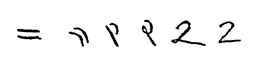
> Because of the tally-inspired design, arithmetic using the Kaktovik numerals is strikingly visual. Addition, subtraction and even long division become almost geometric. The Hindu-Arabic digits are an awkward system, Bartley says, but “the students found, with their numerals, they could solve problems a better way, a faster way.”
I think the students can be praised for having come up with simple to understand and write number system that corresponds to the conventions for counting in Alaskan Inuit language, and it seems appropriate to capture these notations in upcoming Unicode standards.
However, spending time learning base 20 arithmetic has obvious disadvantages that the article ignores. The times tables, memorized in grade school and fundamental to paper and pencil calculations, are now four times larger. Base 20 is not a popular notation for numbers. One important advantage of the number system (Hindu-Arabic) that most of the world uses is that most of the world uses it. I grew up with inches and degrees Fahrenheit and had to learn the metric system to pursue my science education. I'm glad I didn't have to learn how to count as well. We shouldn't make it harder for these kids to enjoy the rest of the world's books, journals, and internet resources about math and science.