> In the same way, people don’t buy a dishwasher, they buy clean dishes before their next meal.
Ironically, this tells me some... awkward things about how the author relates to their kitchen. I cook - a lot. I host parties - usually dinner parties - and I use cheap Ikea plates & etc instead of disposable anythings. And like (most?) millenials-ish, the kitchen is where we tend to hang out.
My dishwasher isn't so that I have clean dishes before the next meal. It's so that I have a clean kitchen after.
(If I wanted only clean dishes before my next meal... actually I'd probably want as fast a dishwasher as possible.)
Yeah, I often also do parties, where I cook for 20-ish people, and often have 3-4 dishwasher loads after a party. Speed does matter some.
Where it matters a lot more is that I live in an condo where officially I'm not supposed to run my dishwasher after 10:00 p.m. The difference between 1 or 3 hours is significant there for running it after dinner. (I basically only run it after 10:00 p.m. after parties; got a very quiet model for that reason.) Particularly since I have some stuff I'd like to have clean before the morning.
This is a pretty terrible example for the author's point.
People are different, and that's OK :) Some people have 1-2 really close friends, others have 20 friends that they are not that close with but still close enough to meet every week for dinner, but if you want someone to help you hide a body when you accidentally killed someone, you're probably better off with 1-2 really close friends.
And also, you can invite anyone over for dinner, that's sometimes how you make acquaintances into friends :)
> Well until this as-of-yet unknown person turns you into a body.
Most people won't :) I've probably met 100s of people and invited them home at one point or another, and worst thing I've experienced is rude, stupid, dumb, clumsy people, or a combination of some/all of those traits. No one is perfect though, including ourselves, so most people come with one or two traits you won't like, but don't let that stop you.
> I don't have friends.
Then head out and make some! Even introverts can make friends, although it is a bit harder for us, I guess.
"Recent studies found that: Social isolation significantly increased a person's risk of premature death from all causes, a risk that may rival those of smoking, obesity, and physical inactivity. Social isolation was associated with about a 50% increased risk of dementia."
Hence the "it's a dinner" part. All you need is keeping me distracted with more lamb chops and drinks until I forget that came to kill you, nom, nom, nom. It always work.
I like cooking and having people over, so it's something I do often. I have kids, but most of my friends don't, so the numbers aren't coming from big families.
If it's something that you aspire to, here's the basic algorithm:
- Learn to cook something well. It's better to master one dish, and pull that trick semi-often, than to be able to cook a bunch of stuff mediocrely.
- When you meet somebody interesting, invite them over in the next month. It's easier to do that soon after meeting them rather than, say, a year later. Feels more natural.
- Before inviting said person, check with existing friends (assuming you have a couple) to see if they're in. It's less awkward to invite someone new over if there are already going to be other people.
- Let everyone know that their friends are also welcome.
Bonus points: keep some reserve drinks around for such situations. I've pretty much always got a spare case of beer on the balcony, and a bunch of wine around.
If you don't already have a couple friends, then inviting people to your home is a little weird, but the same rule about inviting people out early applies: do it in the first month after meeting someone and it doesn't seem weird. There you can go to a bar, or do something you know you have in common.
Perhaps curiously given the above: I'm actually mostly an introvert and like spending most of my time alone. But a lot of these things do depend on your own personality and where you live.
Truth be told I found #1 very easy, #2 and #3 seem straightforward enough, but since I've made it a goal to see friends more it's been a herculean task.
I find myself being one of very few people actually taking the initiative to propose in person hangouts and to make them happen usually involves doing everything in my power to make them as low effort/cost as possible for others.
And honestly I'm grateful for the people who actually agree to do things, they're hard to find!
For step 4, I recommend hanging out with the families of friends of the outcome of step 2 & 3.
There are multiple benefits of this approach.
But apart from that, I feel your pain. There should be more people like you, hope you find them instead of having to convince people that are not like you.
You don't need 20. We ran three dishwasher loads for only eight people recently, with simple cooking. One at the start of preparations so it would be empty and we'd avoid a queue of dirty pots in the kitchen, one when the dishwasher filled up during the evening, and another at the end. To my mind, four loads for 20 people sounds low.
I also often have ~20p over for dinner. Not so uncommon when you meet a couple of families with each a bunch of kids.
However - these types of dishwasher loads stack really well, actually the type of dishes dishwashers are made for packing. You can easily fill the dishwasher with 20 plates of the same type, same with cutlery and glasses. And most of the times at these parties the dishes are fresh, so easy to clean.
Another note. In Sweden and Europe the trend has been for slower programs. To be able to meet the energy consumption benchmarks. 30 years ago dishwashers would typically be done in 1h. Nowadays the default program is often set to 3h. (With an option to do it faster and burn more energy)
Imagine a dishwasher that cleans a single dish in a few seconds. You could wash and put away in similar time to loading a regular dishwasher, and capacity would no longer be an issue.
Taking something from being a process to being a single step in a process can have huge impact to how we do things and what is possible.
I haven't worked in a kitchen in thirty years, and I can still recall the feel of my skin after even a half shift of working next to one of those dish cleaners. As envious as I am of their speed, I'm absolutely sure I don't want to reproduce that sensation at home.
I've spent 1 summer (in Maine) manning such a dishwasher (Hobart, can't forget that name even after 20 years). Efficiency monster, but you gotta be careful around it. Everything spot clean and steaming hot, it was actually much work around it since plates and cutlery were coming in very fast, and I had to also shelve the results to free up space for trays... a proper sweat shop
and this specifically disproves the core premise & title of the article.
SOME people DO need a faster dishwasher. Sometimes the next meal is always "now". Along the same lines restaurants are happy to sacrifice energy efficiency for speed, and they've already got better cleanliness than consumer machines because of those efficiency sacrifices.
This also shows why we need diversity in hiring. Only someone who'd never worked in a restaurant or never considered the needs of one would write this. With diversity we can see needs that are being overlooked. With a diverse set of eyes we can see the "obvious" falsehoods in our assumptions.
Also not sure my home dishes would cope with the rapid heating and cooling, I’m pretty sure my plates are not designed to thermal cycles that quickly, to say nothing of the glasses.
Wow, that breaks back some sense memories (scalding hot water that actually felt kind of good) from a Hobart dishwasher of this type I used many years ago.
The good reliable ones cost about $10K USD though you can get less reliable ones for $4K. You can’t run more delicate common household tablewares in them because they run so hot, nor can you use common detergent from the supermarket, they use more energy though some of the newer ones can use very little water (about 3-4 liters per load), they’re loud for the couple minutes they run their cycle, and parts and repair services are available for longer than residential models. In a home, they’ll never cost justify themselves but I still want one despite the trade offs.
Came here to say this. I worked a lot in commercial kitchens as a dishwasher during college time and I love the commercial dishwashers. Super solid, superfast, super high powered, mostly super effective except for the really really greasy stains on plates or where you need to scrub some slow cooking trays or pots. I’ve always wanted to buy one from my house. From what I remember we have three cycles: a 60 second a 90 seconds and a 120 second cycle and all pretty effective. Most of the cafés I worked in (coffee, sandwiches and baked snacks mostly) basically just use 60 second cycles.
That was 20 years ago though, so maybe the tech has changed by now!
I don’t think that’s true. Have you worked in a restaurant kitchen with a machine like that?
Pre-wash? you can just rinse them if there’s junk.
Gut? That’s surfactants, not specifically ones used in commercial dish washers. You can hurt yourself with dangerous surfactants if you don’t rinse them, when washing at home, even by hand.
It’s also totally not true that surfactants are not rinsed off. The speed comes from many more jets and lots higher pressure. They are performance machines!
Maybe it’s different in casinos, if that’s where you’ve worked?
You need to rinse off what you put in if there is a lot of stuff on it, not because it will not be cleaned (it probably will) but because you don't want to have to clean that out of the machine at the end of the night.
What does it mean for the gut barrier to be destroyed? I've worked in such kitchens in the past and there wasn't any material change in how I digest food or how sick I get, so I would suspect it's not as terrible as it sounds.
> I've worked in such kitchens in the past and there wasn't any material change in how I digest food or how sick I get, so I would suspect it's not as terrible as it sounds.
MrBuddyCasino has linked the paper in a comment next to mine. I don't know enough to decide the credibility of the science itself, but that is the one people are referring to.
The only thing I want to add is that it is not a danger for people working with the machine, but for the people eating from the plates cleaned by such machine.
And in addition the concern is that the chemical used by the commercial machines cause chronic issues in some people after repeated exposure. Clearly if everyone who eats at a commercial kitchen would get immediately sick that would be very easy to detect. You don't need scientist to tell you that. So instead of thinking in black and white think in probabilities. The proposed mechanism is that some people (who were either pre-disposed genetically, or got a larger amount of the chemicals for some reason, or both) gets sick after a longer amount of time.
> What does it mean for the gut barrier to be destroyed?
This isn't very nuanced at all - my only point was that it's not as absolute as it sounds when someone says "eating off these plates destroys your gut lining", not that there was nothing to be found at all.
many commercial kitchens use sanitizers which look like but are not washers, but they guarantee (heating and chemically) that the dishes come out germ free. They're not for food-crusted pots and pans, but work great for china, silverware, and glassware.
Yes.. I used one when I helped out after a birthday party with 80 guests. Getting the dishes through the washer wasn't the bottleneck.. everything else was slower.
Or semi reusable dishes where you have a very thin bioplastic film that is applied with a machine, thin enough to make cost and environmental concerns less relevant, and then on the bottom you have an air hole. Compressed air up it blows the film off and you start again.
Then the same hole is used to vacuum form the new film, while a computer vision camera makes sure everything happened correctly.
Could you make it thin enough to be less wasteful than the water to actually wash?
> Imagine if it leaks? Or anything else goes wrong?
I’ve never remained next to a dishwasher for the entire time in order to baby it in case of trouble, have you?
Plus a modern dishwasher uses less than 4 gal water for the entire cycle, there’s likely less than 2 gal in it at any one time.
> I've never heard of a dishwasher so loud it couldn't be run any time.
Then either you’ve never lived in an apartment building or you’re deaf. As a sufferer of chronic insomnia, 11pm dishwashers are a bane (though less so than midnight washing machines).
> I’ve never remained next to a dishwasher for the entire time in order to baby it in case of trouble, have you?
This is from experience actually!
The last two I've had (heavily used before I got them) had a tendency to leak, so I take a peek at them from time to time when they run. Basically the same level of attention I might pay the oven when it's on or a candle.
I would recommend it. A leaking dishwasher can do a surprising amount of damage.
> Then either you’ve never lived in an apartment building or you’re deaf.
Many modern dishwashers are essentially leak-proof. They have a closed bottom, a sensor that detects liquid and use a low-pressure hose with a valve at the end that connects to the wall outlet. The hose is double walled, so even in the event that the low pressure hose leaks, all water will end up in the dishwasher.
In the US, it's usually a cheap plastic hose connected to the sink supply, so same pressure as the rest of the house. I delivered and installed appliances for a couple years, still do on occasion.
This is also telling how thin the walls are where you live. I live in an old house with an old and fairly loud dishwasher. One door closed and there are no vibrations or noise problem.
Probably floors more than walls, contact points with both, and not so much "thin / thick" but "does this transmit the vibration". Like subwoofers on the ground, it changes how the sound carries.
No, I live in a new building with reinforced concrete external walls. But it's a general rule in Berlin. (Other German states have other rules, often with restrictions even earlier.)
And yes, I have been able to hear neighbors dishwashers before. Again, through the floor, not through the walls, though not in my current building (where I'm on the top floor).
Funnily enough here one part of the government, as part of an environmental push, is trying to encourage people to run appliances like dishwashers and washing machines at night to use renewable power that is currently underutilisied rather than contributing to how much of the fossil power is used at times of peak load.
Of course, at the same time, the also government run fire service is trying to encourage people _not_ to do that for fire safety reasons.
> My dishwasher isn't so that I have clean dishes before the next meal. It's so that I have a clean kitchen after.
So much this! My first act in preparing a meal is to empty the dishwasher so that I can rinse stuff and put it in the dishwasher as I go. Sometimes, it gets full between meals, so having the "fast" cycle lets me get dishes clean and the washer emptied before I start the next meal.
This article is a great example of the "I don't understand who might want it, so therefore it's not worth doing" mentality of many folks.
> Ironically, this tells me some... awkward things about how the author relates to their kitchen.
It also says a lot about how the author relates to restaurants, where a faster dishwasher is a selling point. Faster is separately important from throughput, because if it the takes 3 hours to run the dish washer, that’s a lot of plates that need to be washed and stacked all at once for a restaurant, and a lot of dishwashers needed to handle that volume.
Even within the commercial dishwasher space, there's some pretty different versions. I worked at a hotel where we had normal smallish cube dishwashers [1] for some of the smaller restaurants, but they also had an ~8foot long conveyor belt dishwasher for one of the busier restaurants, and for the banquet section they had a ~20+ foot conveyor belt dishwasher[2].
They also had multiple dishwasher stations just to deal with pots and pans that were similar to 1, but way bigger. I once fit a huge stainless steel butchers sink in one (iirc it was like 6.5x4ft? They could fit a whole pig, or half a cow in it)
>>so they always stink of gunk after they have been cleaned
No, that's just the issue of detergent people use, some brands are perfumed to high hell and more because people have this weird idea that the stronger it smells the better it cleans - which is obviously nonsense. You should be aware that with some smells it's not an issue of not enough rinsing - they linger no matter how much you rinse and rinse and rinse - it's not a safety issue.
If you want to have clean dishes with zero smell afterwards, get something like the Finish 0% tablets, they aren't perfumed at all, so there is no smell when you open the dishwasher. I use them for that reason alone.
You should clean your dishwasher, and check you aren't using too much detergent. (You know you aren't supposed to fill up the detergent holder to the top?)
Like cars; you don't buy based on daily needs, you buy based on exceptional needs. If you're ever going to need a car to haul six people, you're going to get a car that holds six people. If you're ever going to need a dishwasher to wash dishes quickly, you're going to buy a fast dishwasher.
It doesn't matter that it's only needed once every two weeks.
A dishwasher buys the convenience of not doing the dishes. That frees your time in itself and in general the time it takes the dishwasher to run is not critical.
> in general the time it takes the dishwasher to run is not critical
I have children. They use plates, bowls, cups, cutlery, more bowls, more plates, more cups. I have only limited room for additional dishes. Dishes better be done before dinner or else somebody is going to have bad time. And generally if someone in the family is having bad time then everybody is going to have bad time.
> Dishes better be done before dinner or else somebody is going to have bad time.
Of course but since there are several hours between meals, even if you have to run your dishwasher after each meal the time it takes to run is not critical as long as it's done within that timeframe.
Basically, in general it does not matter whether it takes 1 hour or 2 hours.
duralex picardie tumblers are indestructible and cheap, I have a drawer full of them and yet kids can use a dozen plus a day... moving away from bowls to plates really help with cramming too but I'm Asian and have to say it ain't easy to let bowls go
They're indestructible--until they explode into hundreds of glass pieces when you stack a very hot one from the dishwasher on a room-temp one on the shelf.
the 250ml one does this, the 220ml one perhaps due to it's smaller size feels even more indestructible! At least I've yet to broken one... needless to say it's always better to serve 220ml of sugary content than 250ml to the little ones too!
I think there's some misconception about faster dishwashers here. Faster dishwashers are almost as good as faster clocks. The idea behind operating a dishwasher is that you let dishes be washed for X time. So, if you wanted dishes to be washed for X - 1 time, you'd just open the dishwasher earlier.
I mean, dishwashers don't guaranty that your dishes will be clean after X time. They guarantee washing them for X time. They aren't concerned with whether or not it will make them clean. So, speeding up the process is trivial, but doesn't result in anything useful, which was the point the author was trying to make.
I'm not trying to defend the author's general claim. I also think that even if the metaphor doesn't work for you -- it's not really all that important in the context of the article. Just trying to give a way to understand what the author probably meant when making that metaphor.
I've long wanted some kind of miniaturized version of a cafeteria dishwasher where you put dirty dishes in one side and clean dishes come out the other a few seconds later. I want my kitchen to stay clean and it would be so nice for everyone to be able to clean and put away their dish right after the meal.
> this tells me some... awkward things about how the author relates to their kitchen.
Awkward? What awkward things does it tell you?
I think that all it tells you is that you are different people. It also invalidates his assertion that "nobody need..." -- which is hyperbole anyhow. Any time someone says "everybody" or "nobody" or other universal qualifiers, the statement is guaranteed to be technically incorrect.
You are precisely the sort of person who could use a fast dishwasher, after all.
Also nobody here appears to know that different places in the world have quite different size expectations for a consumer level dishwasher. In Japan... tiny as can be.
Having a large family of my own and sometimes hosting get-togethers I can not agree with your sentiment. I would not buy a dishwasher for 1% of my use-cases that otherwise wastes lot's of resources (presumably being much to large for everyday usage). Our standard eco program runs for ~3h minimizing water, electricity and chemical usage.
On the other hand I would be totally fine to buy another set of dishes for said occasions.
I feel like that used to be pretty standard for my parents’ generation and older: you’d have one set of dishes and cutlery (dented, mismatched, …) for normal use, and you’d get the “good” ware (silverware and fine porcelain) for hosting, with uniform everything for everyone, small cups for tea / coffee instead of the usual mug, …
Obviously that requires a house as you pretty much need a cabinet at least partially dedicated to storing this day-to-day.
My dishwasher has a beeper for when it’s done like a microwave. It drives me up a wall!!
I don’t care when dishes are done, I don’t need to attend to them urgently. They can sit there clean until I’m ready for them.
There is no way to disable this beeper and it goes off every minute after the cycle is complete. Thank god the dishwasher has a wall switch to the circuit so I can just kill it but oh man. Never buying Bosch again
(Edit) I say all this to say my dishwasher was engineered by the same kind of engineer who 1) has obviously never used the product or washed dishes and 2) optimized for “dishes are clean out them away RIGHT NOW” even though nobody uses a dishwasher like that
Cycle Completion Signal
The cycle completion signal alerts you when a cycle completes and the dishwasher has washed and dried the dishes. You can choose to disable the tone or adjust the volume.
NOTE: The unit must be powered OFF before activating.
To activate:
• Press and hold the right "Cancel Reset" button then press and hold the ON/OFF button.
• When the light on the "Cancel Reset" button you are pressing illuminates and the tone goes off, release both buttons.
• Press the far right "Cancel Reset" button until you achieve the desired volume or until there is no tone (to turn off).
• Press the ON/OFF button. The setting is now saved.
It's the oldest trope since BBS's, if you want free expert information how to do something, just go on any forum and say it wrong, and 20 neckbeards will step all over each other to provide the most correct most efficient most elegant directions.
I'm guilty myself. It's a fine tradition I have no problem with. ;)
If you ask a question usually few, if any, people attempt to help. When you outright say something wrong, everyone will be telling you the exact solution to your problem
Some people do it out of generosity, but for some it's a special subset of passive-aggression, a way to say you're wrong and I'm better, but indirectly and deniably.
I'm pretty sure I do it for both reasons at different times and in different cases.
Even if it didn't have the option, all you'd have to do is open up the front panel and rip the beeper off the board. That's what I do to my microwaves that can't be muted.
Once upon a time I earned some major brownie points with a husband and wife by disassembling their child's electronic toy, inserting a piece of kleenex between the speaker and the grill, and reassembling it, now 30dB quieter.
Initially they suggested I just cut the wire but I figured I could do something a little easier to reverse.
Many home appliances have hidden codes you can use to adjust settings like this, including making them silent. They usually come up if you search for “Sabbath Mode”.
   --------------------
   You can cook on your stove when it’s in Sabbath Mode, but
   additional features and functionality are disabled. Here are
   some common features and functions of stoves or cooktops with
   Sabbath Mode:

      Cooktop burners can still be operated.

      Sounds such as tones or chimes are disabled.

      Displays will not indicate temperature changes.

      Timers are disabled.

      Cooktop Lockout, a feature that prevents unintended
      use of the cooktop, is disabled.

      Energy Save is disabled in select models.

      Start, Cancel and Off keys, as well as Warming Zone on/off
      (select models), remain enabled. All other keys are disabled.
   --------------------
Does that sound rational to you? God is happy if the cooktop burner works, but not if an alert tone sounds?
It's OK to cancel the cycle or adjust warming zones, whatever that is, but temperature displays and child safety interlocks are right out?
Yeah, I've heard of the wire thing. But that's literally confined to a small area of New York, three thousand miles away. I don't expect them to share my culture or my values. But the notion that I might have to add "Sabbath Mode" to a piece of equipment I design just struck me as hilarious, horrifying, and depressing in equal measures.
I mean, I can just picture myself sitting in a cubicle somewhere at the Whirlpool Corporation. This comes up on my Jira. My jaw hits the floor. I pick up the phone, and hopefully I pause before dialing: what I do in the next 30 seconds determines whether or not I will still have a job tomorrow. I honestly don't know what I'd do, and that bugs me.
No idea why I didn't think to look into this more - but my bosch dishwasher has been driving me crazy since I moved into my current house. Thank you! I can now start a load of dishes right before bed without knowing I'll be incorporating a periodic beeping from the kitchen in my dreams!
I'm sure you are sarcastic here, because I have 4 (four) Bosch kitchen devices which might look similar (a rotating button with little displays left and right) but function WILDLY different - emphasis mine. On one the rotating button can be pushed, the displays are touch sensitive except on one, on one two increment by the touch displays not by rotating, on one the settings are reached by long pressing the info area, menus are a jungle different every time and can be reached by touch controls OR rotating the button... No, Bosch has zero coherence (just in design ok). And don't start me on the sound signals like the stove complaining it got a drop of water on its sensitive touch buttons placed right next to the pot. I'm sorry but I'm 110% behind the OC, no Bosch decision maker EVER used those appliances.
Actually I was mostly surprised by the parent comment, I thought that even in the subset of just dishwashers they had at least three different sets of controls/menus/settings.
>I'm sorry but I'm 110% behind the OC, no Bosch decision maker EVER used those appliances.
Well, I would extend that to most other manufacturers, I believe each one needs to show "something new" at the annual fair, and since - after all - there is not much to invent anymore in a dishwasher or a microwave, they add (senseless) features in the UI that only - say - 1% of users will ever use, inconveniencing the 99% of them.
>And don't start me on the sound signals like the stove complaining it got a drop of water on its sensitive touch buttons placed right next to the pot.
I believe this is actually a safety feature: When a pot boils over and spreads water on the touch panel, both the pot and the touch panel may be too hot to touch, leaving no way to turn off the stove. So, to be on the safe side, the stove turns off and beeps.
My crazy ones are same series and same year, but they are an oven, a steamer, a warming drawer and a microwave. Looks like the *washer teams work better together than the kitchen appliances.
My dishwasher (LG) plays a cheerful tune to let you know when it has finished its cycle (60 mins) At least its not too obtrusive, and it only does it once.
But.... then it has a cooldown timer, and if you open the door within the next 30 mins it LOSES ITS SHIT at you, beeping and carrying on because the dishes haven't finished drying.
I mean... Why play the happy tune to announce to the world that you've finished... when you actually haven't.
Our LG oven plays all sorts of fucking tunes for preheat, timer done, etc. The only tones you can disable are button presses and microwave done.
Also, it is a dual oven, and the top half is also a microwave. The problem is that the top half oven functions insist on being given cooking times after baking modes preheat. (99h99m is my usual go to, which causes it to round down and demand a second “start” keypress).
The final cherry on top is that it has a fucking modal UI. Like vim, but on a kitchen appliance. The terminal state for most actions is where it says “program complete”, and you have to press “clear” before it will accept any other keystrokes.
I’m pretty sure the people that set the meat thermometer to aggressively cool the oven at target temperature (instead of just beeping out a god awful unmutable song) have never actually cooked. I suspect they don’t even understand what “human food” is.
Yeah for an oven I want on/off and temperature setting. I can time what I’m cooking separately. For a dishwasher I want one button: start. So many things are overengineered with useless or even annoying features.
Our new(er) Bosch dishwasher beeps three times at the end of the cycle. I like it because it alerts me to open the door a couple of inches to promote drying.
All the dishwashers[1] I had previous to this had a real drying cycle that actively vented the humidity and was effective. My Bosch doesn't vent the compartment so the dishes take forever to dry if you don't open the door.
[1] Said dishwashers all manufactured over 20 years ago, before draconian energy efficiency requirements came into effect.
If I was buying a dishwasher I would definitely require this feature.
My current model takes 2h to clean and if you open it right away it is usually dry in another hour. However if you forget to open the door right away it cools down and can take 4-6h to dry fully (if there are small pools of water on top of things). Having an auto-open to get the reliable 3h cycle time would be fantastic.
Obviously if I'm in a hurry I can dry manually, but that defeats a lot of the point of the automatic machine. We also put everything in the dishwaster so if we have people over on the weekend then cook lunches for the week we can have quite the continuous stream of dishes for a couple of days. Getting in an extra load or two in that time would be super helpful.
When I was dishwasher shopping last, this feature alone cost almost $200. As in I could get exactly the same dish washer with exactly same features, other than the auto open, and pay $200 less.
Buy the cheaper one, get the extra part - probably a movable door latch, at least that is how my mother's Miele does this - and build it in the device yourself. You may have to add something to actually make the thing move since the firmware in the controller probably does not have this function enabled on down-specced versions [1] either by changing the firmware or by adding a simple circuit (hooked up to that beeper...) which actives the moving latch at the right moment.
[1] ...like our Bosch washing machine which clearly has the display and touch buttons for more precise program options (custom temperatures etc.) but does not enable these by means of a different piece of firmware. There will be a day when I'm bored enough to hack the thing to do my bidding...
In the time it would take to procure all necessary parts and tools, and perform the labor, most people could've earned enough wage to just pony up the $200 for a streamlined solution.
Not to mention avoiding the risk of voiding the warranty on a brand new appliance, or a house fire by mucking about with electricity in a device that also has water shooting around in it.
By all means though, to all the tinkerers out there, knock yourselves out...
> a house fire by mucking about with electricity in a device that also has water shooting around in it.
If a corporation can do it properly, there is no reason to assume OP cannot. It is a little over the top to insist their house will catch fire just because they added a latch to a dishwasher (on the outside of the shell, which is what contains the water).
Because corporations have giant amounts of resources under their control, and are able to spend hundreds of millions to create something large like Disneyland. I don't know about you, but the resources I have access to don't have anywhere near that level of money.
This is not about Disneyland, it is about a single dishwasher. I don't see how the scope is insurmountable for a single person when that is the subject.
What water pump and heater do you use? do you just grab some lame thing off the shelf that's the same as existing machines (at which point, what's the point of building your own if it's just going to be the same), or do you spec out expensive custom hardware with a custom motor that has bespoke winding arrangement that manages to accomplish what you set out to do? and an induction heater that's exactly right for the expected water for? And then, what do the panels and buttons look like? Is it a Janky looking electrician's special with protruding wires and buttons that aren't suitable outside of industrial use, or do you injection mold buttons that are right?
Okay, fine, none of that adds up to Disneyland money, but we're still talking some 6-figures for this project that may never be recouped. Maybe that's an amount of money that you're able to swallow without a corporation's help. Seems a lot easier with help though.
Here's a question I have been meaning to ask many times but refrained from doing so: what makes people like you so scared of the idea of creating or modifying hardware for personal use? Why does the simple prospect of adding a movable latch to a dishwasher lead to the above hyperbole which seems to be related to the design and production of a complete dishwasher instead of simply adding a moving latch to an existing one? Add to that the comments related to the enormous size of corporation needed to undertake any design work, the prospect of houses burning down because someone did something to his dishwasher and the picture becomes clear: thou shalt not think outside the box and be scared.
Now back to the prospect of adding a moving latch to a dishwasher which will have been prepared for something like that already given the fact that another model in the same series comes equipped with one. If you have a look at the mechanism you'll probably see the latch itself being built into the door with the bar mounted on the housing of the machine. In the 'cheaper' version this bar will be a grey piece of plastic, screwed down against the machine. In the 'expensive' version the bar is a longer piece of the same gray plastic which can slide in and out, moved by a motor of some kind (most likely a rack and pinion with end stops, could also be a servomotor). To add the moving latch to the version without one you'd take the screwed-down latch and either add it to a bar which can be moved using a servomotor (which can be had for a couple of € nowadays) or make a longer version using one of the many methods available to do such. Next you´d check whether the controller provides the control signals for the latch drive in the 'cheaper' version, if it does you can simply use those. If it does not you'll have to use an existing 'ready' signal to trigger the latch, the mentioned buzzer being a good candidate. Get a cheap microcontroller, program it to drive the motor when the 'ready' signal is given and to retract the bar when it is pulled from the latch or when the door is opened past a certain point and voila, you have a self-opening dishwasher. If you count the time spent to create your own version as billable hours it is probably not worth the effort but that is the wrong way to look at it. If you count the time spent cooking your own food, riding a bike instead of a faster mode of transport, reading a book or simply looking at the clouds as billable hours those things suddenly seem to be very expensive so why bother? Well, because there is more to life than billable hours. In this case it may simply be the joy of creating something, of overcoming an artificial hurdle, of one-upping the bean counters who decided to overcharge for such a simple feature or just because you think you can.
I have to say, very likely overpriced, but worth every cent.
Right now I need to set an alarm to go open the door when the dishwasher is hot to avoid it cooling down and then taking forever to dry. With the auto-open you never forget, are never busy (you can start it at night and it is dry in the morning) and don't need to be distracted from what you are doing.
I can't say for sure which dishwasher I have since it came with the house, but knowing the previous owner it's from IKEA and one of the cheaper models.
I can totally see manufacturers try and segment the market with a convenience function like this though.
Current Bosch dishwashers are packed full of something that absorbs water as it cools. So, that’s solved. As a bonus, there are no heating coils above the top rack to melt plastic stuff.
I saw a model house which had two dishwashers. One for extracting clean dishes, one for inserting dirty ones. Switch forth and back.
Obviously you wouldn't want dishwashers with alarms for that.
As for microwaves.. the good old ones had a simple spring-driven timer, turn the wheel and when it hit zero it hit a bell, physically.. a single "pling". Perfect.
But the new one I bought as a replacement would beep five times, and keep beeping even if I opened the door. Crazy and totally useless. I want to have a.. word.. with industrial designers sometimes.
The microwave I have now also annoyingly beep five times, but at least it stops when I open the door.
So yeah, all three invented the dishwasher it seems, but thanks to Josephine Cochrane (and Butters), we actually have a working and reliable dishwasher, something Joel Houghton was unable to build.
One can be happy that something exists while at the same time lamenting that the design isn’t ideal
(Edit: though incidentally, it turns out that the inventor of the dishwasher — or at least one of the earliest working designs — was a woman, as the sibling post pointed out; didn’t know that)
Good for your wife and I hope you have some snappy retort. Then, again...
Imagine if someone here said something similar about some dysfunctional piece of equipment:
Designed by a woman!
Either both of these made-in-jest sayings should be accepted - which is fine by me - or neither of them. Have a look at the way men are portrayed in commercials to see how far this imbalance has gone: Men are smelly badly-dressed clumsy idiots who would not make it far in the world were it not for all those smart women who... [1].
So, ladies, what's it gonna be? Free for all like it used to be with women making fun of men and men making fun of women or shall we have this boring speech-policed culture where each word has to be weighed and approved by the experts?
[1] ...fall in the trap of buying useless products?
You are over-thinking this. My wife's remark was almost invariably directed at goods and machines that were either aimed specifically at women or roles where women are overrepresented or at things the design of which clearly had not involved thinking that women would use them.
One classic example of the latter is car seatbelts and other safety features of cars. Examples of the former abound in the kitchen which in most families is still the domain of the woman of the house; for instance packaging that cannot be opened unless one's fingernails are clipped short.
It's still casual sexism though, because being bad at market research and design isn't an integral feature of being a man. It's like if you said Theranos failed "because it was led by a woman".
Which is not to say your wife is an awful person or anything, casual sexism is common and often goes unrecognized. But it's good to call it out when you do see it.
Being bad at anticipating the needs of a woman is an integral feature of being a man. At least, when compared to women. And while this is changing, women still do most of the dish cleaning (at least in the U.S.)
"Look at how men are portrayed in commercials" feels like a 20-years-out-of-date stereotype that immediately lets you know the person who said it hasn't watched live TV in decades.
Wanna link all those ads you think are running all the time? Cause I haven't seen many. I remember the nice man with the electric car saving the poor robot dog with low batteries, though...
(Ironically, a dishwasher detergent commercial just ran on my TV here, featuring both men and women extolling how great their new pods were, without any different roles by gender or anything...)
I have the same hate. I had a nice Bosch dishwasher I chose and bought in my last home, but I left it behind for the new owners. It would beep 3 times, 5 minutes apart and then stop. The beeps were gently.
My new home has a Kenwood, and it will beep few minutes, forever. If I start a wash before bed, I will literally hear it all night, no matter where I am in the house. Some nights I'll go downstairs just to turn it off if it's particularly bothering me.
Like you, I don't give a shit when the dishes are done, they can stay in the dishwasher until I'm ready to empty it, the stupid forever-beep is terrible design that like the linked article, makes weird assumptions about how you use your kitchen and dishwasher).
My dishwasher is quiet, bit my washing machines and the dryer are talkative. Both have a setup AND a dedicated quiet mode button to silence them. Maybe you should invest some time to RTFM?
Now you mention it, I will. I literally had no clue it could/would/might have such a feature, its interface is very simple compared to the Bosch I had before, so I never even thought to look for an STFU mode.
I'm pretty certain that's not an engineer's feature but rather the great idea of a product manager answering to marketing concerns wanting to make the product more "human" or some shit like that. The engineer sighed, implemented the thing, kept his job and moved on.
BTW, my Samsung _played a 30 second song_ (loudly beeping) when it was done. I think it was Schubert or something? And again, no documented way to shut it up permanently. Super fun at 2am to be when woken up by a machine that you bought because it's supposed to be quiet.
It was possible to disable it on mine with the Smart things app. You can even tell it to send a push notification instead. I absolutely hated the sound but loved the notification as it will remind me and I would just dismiss it when I did it.
This feels like it's just nagging you to install the app and hook it up to wifi. I've worked for $big_appliance_company and let me tell you... You don't want to connect your appliances to the Internet.
Samsung has started meshing their stuff. Worst case your washing machine forwards on a video feed from your fridge of you in your undies binge eating spray cheese at 2am while watching a Taylor Swift concert.
You’ll be doing this as a direct result of years of careful psychological conditioning via maliciously placed ads chosen by some 4chan group.
It can be useful because if you open it while the dishes are still warm, they dry better.
Usually you can turn off the beeping with some button combination, just google it for your model.
Interesting. I recently admired the creative engineering of my neighbor’s dishwasher which simply, and quietly, projects a small status light on the floor.
My decades-old washing machine has a clearly labeled "cycle end signal loudness" knob. It ranges from off to so loud I can hear it from the other end of the house on a different floor.
The other reply with the instructions on how to adjust the volume of the signal shows just how far UI has regressed. Instead of twisting a knob, you need to know some obscure key sequence.
The problem with poorly designed menus is that they can also be activated accidentally. Then you need to discover not only how to disable a feature, but also what the feature even is in the first place.
For example, once my headphones stopped playing sound whenever I would clear my throat or talk to the cats. It seemed like a weird intermittent failure, because I wasn’t expecting the microphone to have any effect when listening. And because it was an entirely new behavior. Turns out, if you triple-touch the right speaker and hold for three seconds, it will enter “speak to mute” mode. This can happen when taking the headphones off, so you don’t even hear any announcement about the mode.
Long ramble, but non-discoverable interfaces are a bit of a pet peeve.
I kinda wish mine had a clock (though I agree it's a pain having to adjust for DST). The power company has a lower rate after 9pm so I'd love to be able to set the dishwasher start time. Instead mine had a start delay, which technically works but is just more klunky.
If you have a clock that shuts off when the power is cut, you don't need to worry about drifting:
Most of those are synchronized to the grid, and the grid keeps time really, really well. They actually synchronize the grid to atomic clocks etc for that purpose.
I have clocks in various mains powered devices that will drift noticeably over a couple of months. Some survive small brownouts, some don't, I have one which will last for a decent length cut.
I'd wager all of them get timing from an internal oscilator driven by a low-voltage DC supply and have no mains frequency or voltage anywhere near them.
I guess, if they survive any power cut at all, they are probably not taking their time cues from the main's frequency. I agree with your wager that they probably run on low-voltage DC and perhaps have a capacitor somewhere to bridge short outages.
Where do you live that you have frequent enough brown outs to notice these things?
I have a time switch. It looks entirely mechanical, but I suspect it gets its time signal from the mains: it doesn't seem to drift at all. If there's ever a power outage (which happens from time to time when our breaker trips, not because the real mains is down) it just stops advancing the time, but doesn't reset, because it's all mechanical.
The grid? As in power lines? How in the world would that even work? I've seen a clock that could reset its own time using radio signals. I don't think radio counts as the grid however.
Some clocks use the mains frequency as the input reference. They aren't talking about the time of day being synchronized, just time intervals. I wonder how common that is among modern appliances.
Well... there is certainly a way to disable that beeper, but it may void your warranty.
I've been strongly considering cutting out the beeper in my refrigerator, which will aggressively beep after a mere 20 seconds of being open. One way I like to cope with this frustration is to subscribe to the conspiracy that it is an intentional anti-pattern designed to motivate me to upgrade to a more expensive model that has a (stupid) window. I'm very comfortable with the idea that I'm going to stand there and stare mindlessly into my fridge, basking in indecisiveness. I don't think I waste as much energy doing this as the glass does, being a poor insulator.
I've got a couple devices that are useable from my phone only. My first reaction to your comment was "why not have a wifi status page for my dishwasher?" Hell, you could put a 90 cent weight sensor on the racks to tell you when they've actually been unloaded vs. the door has just been opened.
On the other hand I don't want another damn app. Why is all that crap bluetooth and phone-only? Why can't I install these things on my router?
I feel like a simple email would be a much cleaner and cheaper solution than literally everything else that "smart" appliance manufacturers do. It might be a really "disconnected from the average person" opinion though.
Which reminds me about where I worked back in the neolithic.. we had an intruder alarm horn in the corridor, which was supposed to sound if someone didn't enter the magic sequence at the entrance door.
But it had some issues, so sometimes it just went off. It was very loud and annoying. One day our tech manager couldn't take it anymore and came running out of his office, with a nipper in hand, and, as he was a really big guy, reached up to the horn up at the ceiling and cut the cables.
The LG washing machine in my apartment has a lot of chimes (even on the ZZZ quiet mode). And it doesn't appear there is a way to disable them. It's really irritating.
That makes sense. If you disable the beeper on the washer, your clothes will get all smelly and moldy when you forget to unload it. At that point you’ll probably turn it back on.
The poor little beeper on the dryer is defenseless by comparison. If you leave it disabled, how will it find meaning in its life?
When relatives visit and join dinner (and they do so often) I end up with more dishes than I can fit in the dishwasher.
I can wash the remaining dishes the next morning, but this wastes energy and water because the dishwasher is not full.
I can also "preventatively" turn on the dishes in the afternoon, to wash the breakfast and lunch dishes, so that it's completely empty for the dinner dishes. But this too wastes resources (not full, but better than the "wash remainders next morning" scenario), and I have to turn it on early enough in the afternoon so that it finishes before people start cooking (around 16.00).
It's a pain to have to wait for 3 hours. I would absolutely want a dishwasher that finishes in 1 hour.
YMMV, but our Bosch dishwasher has 5 modes and one of them is "party" mode. When selected, the machine first preheats water for 30 minutes and then you can load it repeatedly, each load only takes 10 minutes to wash. It does have two drawbacks though. First, you have to use liquid detergent, as tablets do not dissolve fast enough. Second, it consumes a lot of power and water as opposed to the regular 3h+ setting. But it is handy if you ever need to wash a lot of stuff fast.
I wonder what it is about dishwashers that need 3h in order to be efficient, when hand washing can accomplish the same task much faster for similar amount of resources as long as you don't wash under a continuously open faucet.
Quoted from their site: "With the longer wash-cycle, the water doesn't require heating up as much".
I believe it's because dishwashers are rated for efficiency when at their default settings. So it's no wonder that the default setting is the slowest. It's all done to conserve energy and water. Obviously, you don't have to use it, the machine has multiple programs in total, with varying temperatures and speeds (and also a "faster/eco" button that can further reduce the time needed to wash a load at the expense of more resources used. But I think you'd be hard pressed to wash the same amount of dishes with less or equal amount of water. They claim the machine uses "3.15 gallons (11.92 liters)" on average.
Also, you can just dump dirty dishes there during the day, then run the machine overnight and have clean and dry dishes in the morning without having to manually wash them. It's convenient.
The cleaning is done by pushing soapy water against your dishes with high momentum. If the water is already hot then reheating it doesn't use much energy so it's pushing the same water through again and again. The pump is not using much energy.
Sounds interesting. The water isn't metered where I live, so using more water doesn't matter. If it could be connected to the 70 C hot water outlet as well.. that would be even better.
Many brands offer a specific variant of their models that has a hot water inlet. You just have to ask for it. It's pretty efficient if you have hot water via solar.
It helps with the "wash in the morning" strategy. Right now I manually wash big pans because they don't fit in the dishwasher when there are also dishes. But I need those pans tomorrow morning as well. If the dishwasher finishes before I need to go to sleep then I can just put those pans in the dishwasher.
The "wash in the afternoon" strategy also becomes more viable. That way I don't have to turn on the dishwasher before 13.00 in order to have it finish before people start cooking. Relatives often visit unannounced, or maybe they change their minds around 16.00 and decide to join for dinner anyway, so I can't always plan for this.
A fast dishesher lets me "batch dishes" (maximize efficiency, save resources) without worry.
Cooking with the dishwasher running is a huge pain. Most of the utensils and chopping boards are in the dishwasher right when you need them for preparing a meal. And when you're done eating, the dishwasher still isn't done so your kitchen and dinner table are left dirty for an hour or two.
Well there are several ways to tackle that problem, but from that aside I would not buy a dishwasher for less than 5% of my use-cases, where it would be much to resource consuming in 95% of all others...
I really dislike this article and fundamentally disagree.
Sure, some engineers need to be looking at the problems people have or the products they're trying to buy or whatever, but that's not why I'm here.
The goal, especially when starting out, is to:
1. Obsessively understand, improve and optimise everything, knowing that many of the results will not make it into real products or if they do will flop; and
2. Invent things that nobody asked for. Things that are weird and ideological and unlikely and confusing and just plain cool, knowing that many of thee too will fail.
Why 1? Because sometimes the things in 2 only become possible by mashing together a bunch of the things in 1 that looked like they weren't really worth it or useful.
Why 2? Because noone can really predict what people want or need, or would like, once you get into the realm of new technology and ideas that are sufficiently different from what we have today.
Many things about life in the future will and should be radically different than they are now (this is not something special about now, it has been true on generational timelines at least since the beginning of the industrial revolution and on longer timelines forever). Experimentation and ignoring business cases and customers is that future happens.
If you want to think about "consumer challenges" and worry whether your idea is a viable business rather than just giving it a go, iterating rapidly, and having an idea about when to stop if it doesn't work out, be my guest, but to me this is an incredily dull, mercenary view of the future.
This is where YC's motto "Build something people want" is helpful.
You can live by the advice you're giving, but if it doesn't end with you having built something people actually want, you won't have a viable business (if that is indeed your goal)
I agree. For me the journey has definitely been that learning about and working on things that interest me and I care about eventually presented the opportunity to have a shot at a viable business, rather than some innate desire to create a business that works no matter what (which, rightly or wrongly, I look down on a bit!)
Most people probably don't need a faster dishwasher - but it's a handy feature to have to sell dishwashers.
"Cleans just as well, using the same water & power, in half the time?" - well that sounds like you've just created a premium dishwasher you can sell to people who want to own a premium dishwasher.
I think it's much the same with all the wifi-enabled, app controlled appliances.
Their purpose isn't to be sold as useful features - they exist to add a half-dozen bullet points next to that item, that the other nigh-identical products you're comparing it against (or god-forbid, already own) don't have. $5 of extra parts that can be sold to you for $100
Decades back all appliances where white powder-coated. Then we decided they should all be built in and hidden. Then we decided they all needed to be brushed -aluminium feature appliances... except we didn't all decide this.
The manufacturers are just always looking for differentiators.
Of course you can opt out of this obvious cash grab, and kit out your kitchen with Miele 'quality' and the like (Did you know Miele is one of the few remaining brands that doesn't outsource manufacture to a Turkish third party? I did, I'm special)
Or reject all this modern stuff and buy a Speed-Queen (When pick-up truck owners get to decide what laundry brand to buy and maintain with the same set of spanners)
My dishwasher takes about an hour. If it took 50 or even 40 minutes, that wouldn't change things materially. But if it took 10-15 minutes, it would change the way I plan and execute work in the kitchen quite a bit.
well if I tell you that here in Austria dishwashers, washing machines and dryers (some of most energy hungry systems in a household) get a separate input that allows them to run when lot's of cheap energy (read solar power) is available - that might change again :)
These comments seem to make a gloriously meta confirmation of the article's point. The article is saying that engineers (among others) have been known to optimise for the wrong thing. He uses a possibly inappropriate example of faster dishwashers.
Then many of the commenters (quite likely engineers) optimise their comments on the thing they know about -- desirability or otherwise of faster dishwashers -- rather than considering the merits of the main thesis
And it's made even better by some commenters saying things about areas they appear not to know about, like the desirability of faster dishwashers for restaurants
Before I got a job as a developer, which happened by chance because someone noticed that I was a hobbyist programmer, I actually worked as a kitchen help.
A large chunk of that was cleaning and dishwashing.
Let me tell you that if I didn’t have a very fast dishwasher, I couldn’t do my job well. I was already juggling the time between supporting the cooks, keeping stuff clean and the dishwasher going. I used a fast and effective dishwasher, but any speed improvement would be welcome, among other things.
Engineers sometimes optimize for the wrong things, if they’re not involved with decisions and out of the loop.
But the reality is that there’s many more things that could benefit from optimization than things that don’t.
People definitely care about fast feedback loops and less time spent waiting. They might not always tell you in advance, because they assume it is like it is, but they _will_ tell you after the fact.
People who don’t care are typically disconnected from actual usage.
Whether that’s bosses and consultants who tell stories about “man hours vs cpu clocks” or engineers who excuse themselves with “premature optimization...”: they have that thing in common where they don’t know how it feels to wash a mountain of dirty dishes by hand, because the dishwasher cannot keep up.
Well I read you comment in a way that you did not fully grasp what OP intended to say.
Why people get so hung up on the speed thing? Yes there are situations where speed is of the essence, but for a private household it is not (statistically speaking in ~95% of the use-cases).
And if I read op in good faith he never ever talks about dishwashers in a professional settings as there apply completely different rules...
Half of all engineers also cook at home(1) and nearly one hundred percent use plates and cutlery.(2)
1) I pulled this number out of a hat.
2) We likely don’t care about the opinions of people that eat food raw out of the garden using their hands only, at least with respect to dishwasher design.
Making a faster dishwasher is exactly what engineers are trained to do. They get paid handomsely to optimize and improve existing forms and problems.
Sure it's good to say engineers optimize the wrong stuff... but what's the solution? Be someone else? Start the dishwasher again from first principles?
I love opening up the discussion with awareness, but a suggestion on the next step is helpful too.
author here.
Next steps would be to define with great details what the actual customer needs are, through diligent customer research, and identifying untapped opportunities.
I don’t know if those currently exist for dishwashers. But in general, you’re looking for pain points that have been ignored by the market because nobody has fully grasped the picture of the customer needs before. In that way, frameworks like Jobs-To-Be-Done or customer personas, while they may seem very “mechanical” offer deterministic disciplines to maximize the chances of encountering fresh insights and thus build innovative solutions.
Author here. I don’t know if I’ll write a follow up but the comments prove my point for sure. I sense a lot of the naysayers here were triggered by the argument, which probably shows that I hit the right spot.
Funny thing is none of what I’m sharing is novel, it’s based on the jobs-to-be-done framework, coined by a Harvard professor and used by some of the world’s most successful and innovative companies. It simply works. Beyond this framework, there is overall the idea that products should be problem-focused (customer research THEN development) as opposed to solution-focused (development THEN hoping it solves a real problem). For some reason, a lot of people get attached to their idea, their solution, and their ego prevents them from asking the hard questions (is this really useful to people?). Maybe I’ll write a follow up on the dynamics of denial involved in that. :-)
I would love a faster dishwasher -- not because I need the dishes washed faster, but becuase I live in an open-plan flat with the kitchen and living room in the same space, and anything to reduce how long I have the dishwasher churning away would be wonderful.
Fortuanately, I tend to get away with a 30-min wash for most days, but someone please invent a 10-minute dishwasher please :)
My Bosch dishwasher is inaudible from 2 meters away in a typical background level of sound. There are several other brands with similar levels of quiet.
Dishwashers in commercial kitchens are rapid, much less than 10 mins. I have always wondered why, exactly, we can't have that at home. A dishwasher so fast that it's done while you're still clearing up from dinner and you can put stuff away immediately would be fantastic and is clearly absolutely possible.
> I have always wondered why, exactly, we can't have that at home.
You can. It’s just way less efficient, way noisier, and way more expensive. A Hobart conveyor dishwasher has a cycle time south of 3mn (and throughput of 3 racks/mn, with conveyor speeds reaching 6ft/mn). But it’d probably take most of your kitchen and blow up your electric panel (they need an exclusive 208V 3-phase, and if you plonk for the booster heater that’s a separate supply of the same).
It might also be less reliable, as it won’t really have the occasion to get up to spec (like only running a car for a few miles at a time and never getting it to temp before stopping).
Home dishwashers are designed to work with essentially random inputs (with acceptable results), work very efficiently, and last for long at relatively middling loads / cycling. The middle one is an especially big factor, modern home dishwashers use very little water and less power, so e.g. they’ll often cycle between top and bottom racks rather than have the water and power to run both.
Industrial dishwasher use much stronger detergent. So at home often have paintings, drawings or golden things on the dishes. With an industrial dishwasher such things would be a short joy.
Also you need much more electricity, because you need to make a lot of hot water in a very short time.
To my understanding, restaurant dishwashers also assume that foods residue has already been removed, and are primarily to sanitize the surface with high temperatures. Residential dishwashers, by contrast, start by prewashing anything that is immediately removable, main wash to slowly break down anything stuck on, and only then go to the high temperature sanitization step.
Commercial dishwashers also assume they’re installed in a location with lots of airflow and ventilation, so they can just dump steam into the room and trust the HVAC to remove it. A residential dishwasher may instead have a cool-down step during which the steam condenses, which avoids releasing steam into the kitchen.
Hobart’s prospectus don’t necessarily agree (there’s a fair bit on managing residue), but it’s definitely on the lighter side of dirty, and not for heavily soiled stuff like pots and pans.
I asked at the shop where I bought our dishwasher. They have a different precondition. Home dishwashers deliver clean results from messier inputs. Dried fat on the plates from yesterday's breakfast. The fast dishwashers have to be run within minutes, and you have to be more careful about how much dreck there is on the plates.
I too would like to have a faster dishwasher. When we cook while the dishwasher is running, a queue builds up on the working spaces, and there's only so much space. It's a problem.
More pertinently, this isn't the first article I've read titled "nobody wants [x] — [conclusion]" that was confident and wrong about the starting premise. Is this the kind of thing women call mansplaining? Sounds like it.
And you ideally would have one of the large sinks and huge water hose to pre and post rinse the dishes if need be. From having used one of the commercial kitchen dishwashers, I think the amount of work is actually more than for a home appliance dishwasher, but the benefit is speed. There is no waiting around.
(The chemicals are probably also dangerous to the intestines, as seen on HN.)
> […] but becuase I live in an open-plan flat with the kitchen and living room in the same space, and anything to reduce how long I have the dishwasher churning away would be wonderful.
Once you hit a sound rating of 44 dB, anything lower is not perceptibly different to human ears; there's a video with 55, 44, and 39 dB samples at:
There's no sense paying for a unit that is quieter than 44 dB (though there may be other features you want to pay extra for, and you get the quieter operation 'for free').
why do you guys use a dishwasher? we traditionally never have used one (not just me, i mean the community) so there is no "need" for it. rich people buy one just to flaunt their wealth but dont use it because it is too much of a bother and even for them, the dishwasher soap is prohibitively expensive for no apparent reason.
elbow gease, is just a part of the routine. You cook, you eat and you clean.
> even for [rich people], the dishwasher soap is prohibitively expensive for no apparent reason.
The dishwasher tablets we use are $0.16 each. If we ran the dishwasher everyday, that’s under $60/yr. Rinse aid adds about $0.04 per load, so < $75/yr total for daily use. Are they wildly more expensive in other places?
The powdered detergents are even cheaper I think, but I’ve never had reason to consider further economizing as we run 3-4 loads per week for a family of 4.
An EnergStar-rating dishwasher has to use ≤15L on its normal cycle, even with a full load. Imagine how many dishes and pots and pans you can fit in a standard dishwasher.
> An engineer with no such customer awareness and instead an incessant obsession with optimizing everything that can be optimized, might try to optimize for speed…
Bugger off with that. No one is optimizing anything these days. Please do optimize for speed. Speed is a feature. I don't want to wait for more than 200ms to do anything. In a world where we can render video games at 100 FPS at 4K...yes, I want my websites to load in under a second. And I want my IDE to be responsive. And I want my autocompletes to complete before I've finished typing the whole thing out.
The computer responding to my inputs should never be the bottleneck. It should always be faster than I can think. I hate to stop and wait for 60 seconds twice today as my computer choked while trying to render a chat app. Chat. Really messes up a conversation.
Ok, so everybody wants a faster dishwasher and nobody wants to discuss the article. Fine with me, so I can add my 2 cents:
In Germany, dishwashers (and washing machines, but let’s not go there) fall into two categories, either Miele or everything else. Miele has amazing quality, so it feels like the dishwasher might outlive you.
Mine has a „quick power wash“ programme that takes about an hour and gets the job done, but uses more energy and is maybe more aggressive to dishes, so I usually use other programmes, between 1 and 3 hours. There’s also a timer for starting the machine in n hours, operated by a single button. User interface is also brilliant in that there are no strange symbols, but reach light/ button clearly says what it does (in German). I like it.
You may or may not have seen Technology Connections' many, many videos on the subject of dishwashers.
The tl; dr is:
  * use the basic powder stuff
  * put some of the basic powder stuff in the "pre wash" section
  * if your washer doesn't have a prewash, sprinkle a little on the inside
  * turn the sink water on hot until it's producing hot water before starting the dishwasher
  * if your dishwasher has a filter for food, check that it's empty
  * you're probably using too much detergent
I found this to be bad advice. I switched to the basic powder stuff for a while and my dishes were always horrible. Went back to Cascade Platinum pods and I've never had a problem.
I've switched over to using Cascade Gel in the prewash and a Platinum pod in main wash after watching the video a couple months ago. I felt the powder stuff gets kinda messy amd the gel is easier.
I don't need to pre rinse and scrub anymore. Silverware, dishes, and pots go straight in even with food residue dried on, so I save a bunch of time.
Everything comes out perfectly spotless and squeaky clean. Older GE dishwasher on auto.
As America's Test Kitchen said a very long time ago, use the pods that have as many different colors as you can find. Those Cascade Platinum pods are great.
I just go with most expensive and most marketing filled one. It is not that much more expensive for me and I usually try to wash dishes with really dried food. So it works well enough for most of them.
You can blame detergent regulations for this. About a decade or so back phosphates were banned from detergents. The problem is that was the thing that made them work really well. In order to compensate for less effective detergents, cycle times have gotten longer.
Phosphate detergents are still available in commercial soaps, but I don't recommend skirting the regs here as they had some solid reasoning (algae blooms). Instead you can get away with shorter cycles by doing 2 things.
First - run your tap until the water is hot before starting the cycle, and second, use a booster powder instead of only using a pod or the main detergent door. These 2 things will get significantly more gunk off your food during that first rinse phase. As a result you may be able to get away with the "quick" cycle.
Funnily, if you ask around outside America, you'll get the opposite advice: a cold water connection gives better cleaning, because starch and protein do not coagulate in the initial rinse[0]. I suppose conventional wisdom only serves the status quo. Which effect is actually greater? Have yet to find a scientific test.
[0] Compare what you find with
  dishwasher hot water site:reddit.com
  dishwasher hot water site:forums.whirlpool.net.au
  spülmaschine warmwasser forum
PS: dishwashers with condensation drying cool the tub with water for the next run stored in a tank beside it. This is probably why European brands have a reputation of not drying in the US.
I think the long cycles are more related to energy efficiency regulations, most dishwashers default to a 3h 'eco' cycle with 50 degC, but also have a 1h 65 degC cycle.
The hot water tip does not apply in most parts of the world I think as the heating is done in the dishwasher (hence the temperature settings).
I wish HN had a forum signature like function so I could just put a "all of my comments written through the lens of living in the United States".
Most US dishwashers require you to hook up to hot water supply line. Problem is since they only use a gallon or two of water, if you don't run the tap first you are very likely feeding it lukewarm water. There are indeed heating elements but they don't get the water up to temp immediately - so starting things off already hot tends to help.
Dishwashers contain a heating element no? Not sure if booster powder is a specific product but yeah detergent on the little lip of the main detergent door is a significant help.
For those interested, here is a wonderful 30min deep dive by none other than Technology Connections about dishwashers and detergent usage: https://youtu.be/_rBO8neWw04
Removing phosphates from dishwasher detergent was stupid because phosphates are measured in the discharge water from the waste treatment plants where it is regulated, and they can be dealt with chemically. All removing phosphates did was save a tiny amount of money on water treatment. Zero effect on the environment. Total greenwashing like plastic wish-cycling.
If you want zero effort spotless dishes, just mix STPP in a 1:4 ratio with cheap powdered detergent.
You only throw fertilizer down on the lawn a couple times a year if at all and of course most of it is taken up by the plants you are feeding it to, whereas most people wash their dishes at least once a day and all of that water ends up down the drain.
That's a whole other animal. I mean why is California always dealing with water shortages but still growing almonds? My comments here are talking about residential stuff. I think I mentioned above that commercial detergents also still have phosphates. The whole 2 sets of rules thing is pretty common in the US shrug
Well but this is my point. I don’t know the ratios resident/industrial for phosphates, it was an honest question. But for water, I do know the numbers. Indoor residential use isn’t even a rounding error. So why are Californians taking crappy showers with low flow showers when it doesn’t even make any difference?
If we really want to solve these problems and not just feel good about ourselves we should have a different set of policies.
I love how you just gloss over 'solid reasoning' and 'still available in commercial soaps'. If it's bad enough to be taken out of residential use it should be taken out of commercial use. There should not be separate classes of what people are allowed to do in America. Things like this previously drove me to be an a*hole libertarian out of frustration.
Check out the Miele G7000 series, I got the Miele G7156 (entry-ish model for the 7000 series) and exclusively buy their consumables (except for water conditioner salt). Calibrate your water hardness and double check your install (just in case, install techs where I live will just breeze through menus and do really dumb stuff they shouldn't like run it with the softener dry). Then set it to Quick + Intense Zone and never mess with the settings again... It just works and the time estimates are dynamic, we get ~1h4m full cycles with three washes per cycle. You can make it faster, but only by reducing intensity or reducing the wash count per cycle. It's amazing and possibly my favorite appliance purchase. As I said entry-ish, but only for their latest series, it's still luxury, and the steps up are mostly AutoDos (automatic consumable discs at a premium price), connectivity, and touchscreens. The G7156 is basic non-connected, has push buttons, has a water softener and will auto-open for faster drying (can be turned off, but I suggest keeping it on).
Not sure what you're putting in your dishwasher, but FWIW I have a 30 minutes / 60°C cycle on my dishwasher (off-brand) that I use when I forgot to run it at night. Dishes come out clean as new.
The eco cycle I use at night is 50°C and longer (not sure how long, that's why I run it at night) and everything always come out clean as well.
Whenever anyone complains about how appliances are getting worse and worse in the name of eco friendliness there’s always someone that pops out of the woodwork to say that actually they are great.
If this was true we wouldn’t need bans in the first place. CRTs weren’t banned and where are they now.
Do you want me to say my dishes are dirty since they banned phosphate? It's not the case.
Honestly the fact phosphates are banned even in the US shows the impact they have, given the crap this country doesn't ban, including in food products.
Maybe if CRTs had had a major impact on local water quality they would have been banned too (and I sure hope so)
Sure. Acknowledge that the new dishwashers (washing machines / stoves / toilets / grocery bags / etc.) suck but we need to save the planet. Then show me the evidence they we are actually saving the planet and not just peacocking. I’ll be there with you.
Don’t try to tell that we live in a perfect world where there are no tradeoffs and those that I’m seeing are just in my head.
Only bad for residential users. They are actually totally OK for commercial users (in America rights and restrictions get split into different classes for different groups of users now).
No surprise it sparked these comments, it's a terrible example. Plenty of people (myself included) want a faster dishwasher, and many people (restaurants) need a faster dishwasher.
It doesn't matter how carefully you chose your examples, internet is so big that exceptions will happen and people like to voice their contrarian opinions (nothing wrong with that).
Actually, no. Because you see, we have many discussions here on HN where a substantive post doesn't get sidetracked by it. The article isn't even about dishwashers!
So true. The main use case to solve is unpacking the damn thing - a cause of a lot of friction in my household.
A great solution to this was created by a firm called Fisher and Paykel who made a 2 drawer dishwasher designed to permanently house your crockery. While one drawer is washing, you fetch your stuff outa the other drawer.
Didn't Hillel Wayne write about how he made some software faster? His co-workers first thought it was a waste of time, but when they actually used it they didn't want to go back anymore.
I think, the moral of that story was something like: When you make a software process faster by an order of magnitude, it lends itself for new use-cases.
I think this is going a bit too far. Sometimes it's perfectly legitimate to serve an ideological need, because there's enough people with that particular ideology.
Eg, things like Mastodon are great if you want to find a community that best fits you, because you have a rare interest or some characteristic controversial for a reason or another that makes existing on some place like Twitter difficult. So you can find a community that enforces standards that are very close to your ideal, and delegate that to them, and just do your own thing.
Not everything has to be like Twitter or Facebook, aiming to swallow the entire planet. There's room in the world for places like Hacker News that are only relevant to a small segment of the population. What's important though is to have a good sense of perspective about what need you're serving and how many people are there who need that. If you're aiming for something like decentralization that will have some costs to it that means you're unlikely to ever go world-wide. But so long you're happy enough with that, there's nothing wrong with it.
> I think this is going a bit too far. Sometimes it's perfectly legitimate to serve an ideological need, because there's enough people with that particular ideology.
The author would probably agree.
> Or they’re only better ideologically, and in that case, only valuable to those who share the same ideology. Which is fine if the market for that ideology is big.
A funny way to look at this, is to go the other direction in the logic. The logic in this article is basically all these products have this property, oh and he's a reason would result in this. Well let's apply the same to web3 social media start ups. As the author correctly points out, for the average user these products are pointless. So what's going on? It's as if an entire industry has sprung up of super fast dishwashers (ignore the fact that this exists for commercial businesses).
What is actually happening is crypto/web3 is a scam, and social media is a great fake product because your "customers" think you're trying to get them onto your new social media site whilst what you're actually doing is selling them worthless tokens with the promise of some future value that'll clearly never come.
>Businesses exist to make money by serving customer needs.
Yeah, and that's really hard, which is why they're not doing it!
I have a small counter-top dishwasher. It gets water by hooking hoses to the sink's faucet. When it is in use, the faucet is unavailable for something like two hours.
It is better than having to do all the dishes by hand. But we have to make sure we've done things like refil the water pitcher before running the dishwasher. And there's only so much hot water in the hot water heater before it runs out, so we need to make sure nobody's about to take a shower before running the dishwasher, too.
I would love to have a larger one that connects directly to the water pipes, but there is no room in this apartment's kitchen. So I deal with the dishwasher blocking other uses of the kitchen sink, and the shower, for a couple of hours.
If I had a small counter-top dishwasher that somehow got my dishes just as clean in a half an hour, that would make a few low-level annoyances go away.
I dunno, man, I just plug it in and hit the button and it runs. I'm no plumber, I just got the one that got the best reviews on Wirecutter. I would describe it as a black box that I put dishes, detergent, and water into, and usually get clean dishes out of, except its housing is white.
It's probably not actually pulling in water for the entire two hours. But it wants to be able to pull in water at several points during its cycle, as well as squirt it back out into the sink, and I have absolutely no interest in trying to guess when it would be safe to disconnect the hose and risk having it piss a bunch of water all over the kitchen (because the hose got left somewhere) or having it error out because it can't get water when it needs it.
.... just get a plumber. You need a water line splitter and a faucet or even just a spigot. Dishwasher, especially countertop, wouldn't use more than a couple of liters of water in the run, but it needs a pressure in the hose/pipe to be able to do so.
Having washed dishes for a while, actually no. A commercial dishwasher only takes ~2 minutes to cycle and dry. They run hot as all fuck. It's the people like me you wanted to be faster.
Commercial dishwashers are not as good at getting food off plates. Any crap left on the plate will get spread on everything else, so you have to pre-wash everything first. You should really do it at home too, but most of the reason a home dishwasher is slow is because it is actually trying to spray every dish, knock stuff off, and then grind it up enough to go through the exit filter. Also, you should clean your filter.
You don't have to wash the dishes first. Just rinse them under the tap before you put them into the dishwasher. I'm assuming you don't let the dishes pile up before you do that - if you do, you'll get dry dirty plates and 'ware and then yes you would essentially need to wash them by hand.
I always rinsed my plates before putting them into the dishwasher (when I had one), it took all of a few seconds. I hate the gunk piling up in the filter, and I definitely felt that the dishes didn't come out as clean as I wanted either, unless I hand-rinsed first.
> Not really. It’s ground up and goes down the drain with the waste water.
It depends. What you describe is common with American dishwashers. European dishwashers typically don't grind anything up, they just collect it in a sieve.
If you buy a dishwasher with that feature. It's not standard. I know because my parents went cheap on their last dishwasher purchase because "they're all the same." About two years later I got to help troubleshoot why their dishwasher wouldn't get anything clean... the bottom of it was basically a solid layer of rotten food particles.
Commercial dishwashers sterilize dishes with high heat and steam. It's expected for dishes to be sprayed first by the person doing dishes with a high pressure hose to rid solid food before wash cycle.
Consumer dishwashers instead let enzymes do the work.
As others have mention, commercial dishwashers are faster. With cycle times well under 2 minutes.
The primary purpose of a commercial unit is to sterilize. Cleaning off stuck food is secondary for the machines, as a by hand pre-wash is assumed.
There are two main styles to achieve sterilization:
1) chemical systems. These need a water source of around 130F, use a series of harsh chemicals for cleaning, sterilization and speeding drying. While a home water heater is usually set to a high enough temperature, the commercial dishwasher requires its compartment water to be at this temperature. This usually requires a near by instant water heater.
2) hot water systems. These rely on a water source that is around 180F and do not typically rely on additional chemicals. To get water hot enough requires an attached heater. In North America, this often requires a Three Phase electrical connection.
All of the commercial systems use vastly more energy and water. They produce huge amounts of noise. And far more steam than a home owner would want, they often require ventilation systems to deal with the steam.
This covers the basic styles of dishwashers that would be somewhat recognizable to a homeowner. In fact there are a vast number of specialized systems, depending on specific task and operational scale.
Back in college i spent a year working part-time as a dishwasher for the school cafeteria. That amounted to me using a high-pressure sprayer to pre-clean some of the dishes and utensils (watch out spraying those ladles though!), and then putting them on a conveyor belt that would wash and dry them very quickly. Much like this one:
Same idea as every restaurant I've worked at, though some were smaller.
But yeah basically high pressure hose + conveyor belt.
The dishwasher's job was mostly to scrape and spray everything beforehand, pull forks out of the trash, etc. Some glassware had to be done by hand, too.
You're supposed to let the dishes cool before using, but in practice they went out almost immediately. Could cause problems if they were chilled rapidly, hot glasses used for sodas with ice, etc.
Restaurant dishwashers are a different beast to what you have in your kitchen. Gets the job done in seconds. Of course, they are also very expensive, really loud, uses very hot water, are really large, and probably use harsher chemicals.
I worked in a hotel kitchen as a teenager in the early 70s. I don't think we used any chemicals at all in the dishwasher. But we did rinse the dishes first. They were so hot when they came out of the washer that they dried instantly and were too hot to handle with bare hands.
> . They were so hot when they came out of the washer that they dried instantly and were too hot to handle with bare hands.
This is not far off how your dishwasher at home works either - open it when it switches to "dry" mode and you'll notice that everything is hot as hell. The "dry" time is relaly "cooling down" time.
Oooh, yes. Though the "done in seconds" commercial dishwashers are a good number of model & feature upsells above the most basic ones. Might need 240V and serious amps, too.
They do which is why they have special industrial dishwashers. I worked in a restaurant many, many years (decades?) ago. There was a room dedicated to dishwashing. There was a manual pre-rinse area and the washer itself would blaze through a rack of dishes in minutes. A guy manned it full time during the busy hours.
Restaurant dish washers are already extremely fast and efficient. They wash dishes in a couple of minutes. They also consume a lot of power and water, and take some time to heat up in the morning when starting work.
yup! i used one once in my life and the amount of pressure they create is absolutely crazy. the one i used could clean + pre-dry everything in like, 90s.
The big one for me in a large consulting business has been watching the account people try to sell enterprises on Blockchain for various use cases. It's just funny because it's like, these customers don't need a zero trust structure for their transactions. They have a directory usually AAD they implicitly trust because they hire the people they put into it.
And companies don't want decentralization. The entire purpose of most conglomerates is conspicuous centralization. It is funny that we see corporations strictly as competitive actors. But often when one company buys another, they are trying to realize efficiencies through cooperation. Therefore, much like being an government bureau, corporations are trying to create cooperative centralizations.
Except that if a dishwasher was significantly faster, people would love it. 20 minutes would be enough to make people go "wow, that's really nice", and that would become the new "cool" dishwasher.
There are plenty of dishwashers faster than 20 minutes, they're all in restaurant kitchens which do have a speed requirement. Several bleeding edge people have installed restaurant style dishwashers in their private homes but the requirements (in terms of energy use, danger of the chemicals involved, noise, temperatures reached) make them not a good fit for almost all homes.
I think most customers would like a dishwasher that actually works, which—having used quite a few of them—appears to remain an unsolved problem.
First, there’s the mystery of “wet dog smell” on glasses that has persisted across multiple apartments in multiple states for us (and appears to be a well-known phenomenon across the internet). And then there’s the issue that despite their claims to also dry dishes, most dishwashers do no such thing as the plasticware remains soaked despite many interesting but ultimately unsuccessful hacks by dishwasher manufacturers.
I’m sure you’ve tried it all, but as someone who also dislikes odours in glasses that have been through the dishwasher we’re pretty attentive to only ever putting glasses in their own cycle, and minimising cleaning dishes with eggs in the washer (hand cleaning or at least washing off).
Agree with you on the challenges of finding issue-free appliances (feel the same on vacuums, stick blenders, and probably a half dozen other examples).
A good example of "nothing gets faster engagement than wrong facts" social media.
"Nobody" the author knows. Lots of people, not all of them didactic contrarians actually do want this one thing.
I am a little from box A and a little from box B on this, myself. If the dishwasher is too fast, I'd suspect it does a poor job, or I would face revaluation of the relative worth of shared work: if cleaning declines in burden then more of it may have to be done.
> Businesses exist to make money by serving customer needs
this is both correct and inadequate as a principle. Leaving aside the excessive focus on money and the convenient blindness around externalities, customer needs are not static but evolving. What fraction of today's customer "needs" existed 10, 100, 1000 years ago?
Needs are shaped in collective feedback loops that identify and match "desirable" new facets of consumption with deliverable technologies. That non-linear game is much more complex than identifying and serving true customer needs.
While physical tech (hardware) places real world constraints on what can be created (popular culture has a flying car "need" but they are not deliverable), software has almost no such constraints. It is closer to the business nature of movie making or book writing. You use information and code to create an almost entirely pure cultural artifact.
That is why people engage in "faster dishwashers". While it is hard to read the mood of the times and engineer a blockbuster movie, it is much easier to work on a more predictably successful sequel. Of course at some point people tire of sequels.
When my dishwasher still worked I did actually care about the speed. Of course cleanliness is the number one priority, but I also cared a lot about how long it took. Having a dishwasher going chunka-chunka for three hours in the kitchen, which is next to the living room (open solution) is absolutely unacceptable.
> But in no clear way do these products actually improve on what’s existing in a significant enough way that users may consider a shift
This article is apparently shaming engineers for making products that are being sold, but aren't selling well enough. Don't improve products. Don't be concerned with privacy if consumers are not. Just do whatever is going to sell.
This kind of thinking would have prevented the seat belt. Seat belts weren't going to sell more cars, they were going to raise costs. And why? Only to save human lives! Waste!
And then when the "better engineered" product doesn't do as well in the marketplace, because it didn't address actual customer needs, the engineers cry that the product addressing actual customer needs only succeeded because of "better marketing."
It’s interesting how this thread shows how differently people use their dishwasher. From multiple times a day to only in the night and everything in between. So the take away is that dishwashers should not be optimised for a single type of usage!
I'm lazy have huge amount of dishes for single person. So I do them rarely. And then I would like to do multiple cycles back to back, maybe on Saturday or Sunday... 1h vs 3h at that process would add up and faster would be better.
Yes, I actually do need a faster dishwasher, thank you. Last 3 dishwashers I've owned have taken between 2 and 2.5 hours to do a load. Between my large family and frequently hosting people I am constantly waiting for the dishwasher to finish.
Recently I was wondering why vacuums with metal pipes don't have them grounded.
After vaccuming a lot of fine dust from synthetic rug the static electricty was enough to create almost 2 inch (5cm) spark to grounded metal element I put the pipe close to.
EDIT: One use later apparently static electricity fried circuit that was used to control the vacuum cleaner from the handle. The button on the body of the vacuum cleaner doesn't work either. The funny thing is the system is stuck in ON position so I can no longer turn off the vacuum.
So the fresh new almost $200 vacuum from Hoover brand lasted about two cleanings because of serious design flaw.
To be fair, we needed to do two round of dishwasher yesterday and I wished we had a faster one (we were out of dishes and stuff).
Yes we could have washed by hand but it was one of those days where we didn't want to do anything...
That would also help. But then I probably wouldn't trust it to be blasting the heck out of my dishes. But if they came out clean, I certainly would not complain.
Sorry this is way too narrow a viewpoint it doesn't actually relate to users and is literally proven false by countless people buying endless parades of goods they don't need.
People don't buy what they need, they think they need, they buy what they want, what they can, what others influence them to, etc... I.E. it is complex to tell what the market will bare out.
And for the record, I would be a lot more for a dishwasher that actually dries my dishes, you know with heat, like they use to, and does it quickly. Instead of spraying a chemical on them to make them dry, and it still taking ages.
This is a fantastic analogy for something which has bothered me for years! One example which comes to mind is pushback received on a pull request for a cron job. This script did some heavy lifting so it took a few minutes to run.
The reviewer suggested all sorts of minor optimizations so a script which runs once per week in the middle of the night with no one waiting on it could run tens of seconds faster. A complete waste of time and effort to my mind, and one understandable as the OP describes: a technical challenge which, when solved, equates to zero consumer upside.
Glad you liked the analogy! Yes, keeping this in mind is useful for developers, not just product people. It's tempting to fix or automate things that don't need it. I think there is a meme that goes "I could have done this in 2 minutes, but I chose to spend 2 days automating it instead." Sums it all up :-)
The author seems to be making an assumption that the average person cares as little about preventing centralization of power and having any semblance of online privacy as they do about the speed of their dishwasher and that the projects that focus on improving these things fail to gain a large user base because users don't care.
That's simply not the case. Talk to most people and they'd prefer that their entire digital lives weren't dominated by a few megacorps with access to all your private data. It's true that a lot of people have no idea how to begin achieving that, but that's not the same as not caring.
The problem is that when you develop a new system, privacy and decentralization generally aren't things that can be easily added in as later optimizations. If you care about those things then you need to build them into the design from day one, and they are hard problems to solve. Something as simply as resetting a forgotten password can turn into quite the challenge when there is no centralized authority. Getting to the point where your basic decentralized and secure platform works well enough that you can build stable, user friendly apps with all the expected niceties takes a lot of time and thinking by highly skilled developers and many projects never fully get there. This doesn't mean that it isn't worthwhile to attempt to develop such technologies.
There is also a weird fallacy going on here around building stuff based on a shallow perception of what consumers* supposedly care about. Looking at the current social media landscape and thinking "this exists because it's what people really want" betrays a particularly narrow way of thinking about the economics and power dynamics of the modern internet. This type of willfully naive thought process would have us optimize toward a highly profitable software skinnner box. The wetware equivalent would be to suggest that we design the most profitable and addictive drugs. After all, consumers are consuming them so that must be what they want, right? Why are you building something that isn't optimizing for maximum consumption? You must be blinded by your own weird ideology or blinded by interesting but irrelevant technical challenges.
Then there's the weird comment about exciting technical challenges not necessarily all being businesses. The author seems to have an underlying assumption that if it's not a viable business then it shouldn't be worked on.
*Thinking about participants in a two-way global communication system as simply "consumers" seems in-line with the rest of the author's thought processes
I'm not sure anyone truly is attempting that kind of tech. Making a private communication platform that people would actually use goes against the hacker mindset. People who care about privacy like simplicity.
Every Instagram filter is a GPU accelerated vulnerability to them, to the rest of us, it's a feature.
The ability to use selectable centralized relays for better performance like BitTorrent, so it doesn't eat 100GB a month of DHT traffic is absolutely critical to me, but needless complexity to someone who's priority is elegance.
Being free as in beer is critical. Sure, I'll donate to wikipedia when I can, but I'm not paying $8 a month for privacy unless I get a way higher paying job, and that job happens to involve privacy concerns.
That generally means ads. Open source can do ads, but open devs don't like them.
Self hosting is completely out unless it's P2P running in the background on phones when charging or some equally zero effort platform. I'm not doing unpaid sysadmin work at home and non-technical people certainly aren't.
It has to work well on hardware, that has to be cheap. Generally that's only possible because it's spying supported, although stuff is getting easier to make as tech improves. With Google keep I can tell my watch to add something to my shopping list. With YoLink my backyard motion sensor batteries last years. With Tile I can find my stuff if I drop my wallet in the street.
It has to work in all conditions. As in, if my phone is stolen on vacation I need to be able to replace it and get everything I need working. It can't involve heavy custom setup of any kind, it needs to be so incredibly boring you could trust your life to being able to set it up quickly, which you basically are if a cell phone is your only emergency communication.
There can't be any unreversible transactions for fraudsters to use, password reset has to work, there can't be anything that would make someone fire me for choosing it over a commercial provider if it decides to break.
.
Finally, I'm not going to literally argue with anyone to get them to switch. At most I'll be like hey check this cool thing out. And if the thing isn't cool enough that they want it, I'll give up and go back to Facebook, because a platform is useless if nobody I want to talk to is on it.
I have absolutely no idea where to even start building a replacement for anything I use. Nobody seems to even be trying to make a full ecosystem, aside from badly performing Blockchain projects, that rivals the scope of Google and Facebook, and many privacy first devs don't even want such things to exist, they want separate small parts only connected manually or by custom end user scripts.
I'd love it if there was an open replacement for some this stuff. But I'm not sure how you'd attract interest or fund building it.
After nearly destroying a General Electric we got a Kitchen Aid dishwasher. Quiet, works well, and quick. I've never given my dishwasher much thought. If it cleans then it works. Right?
I have never understood people who place dirty dishes in dishwashers. You have to rinse first. Dishwasher essentially sanitize, rather than clean food off your plates.
I would love to experiment with a dishwasher that can accept single items and deliver them cleaned on demand. And scale up to full loads with the same mechanism. Like dropping dishes into a river, with a cage at the start for stacking up dishes waiting to be automatically cleaned.
On a related note, at some point, computer vision models could probably help classify and typify incoming crockery and their target stains for a more accurate clean...
Pro tip about your home dishwasher: Run hot water out of your faucet until it’s extremely hot before starting your dishwasher. (Considering the faucet and dishwasher use the same plumbing to pipe water in)
The reason why is dishwashers line to do a rinse in the first cycle and for most people the water isn’t hot enough. So it fills up with lukewarm water and isn’t as effective.
Another option is to have a hot water circulator installed so you always have instant hot water.
Depends where you live, houses here usually have separate hot and cold water feeds and the dishwashers take only a cold input, relying on an internal heating element if they need hot water.
This assumes your dishwasher is hooked up to the hot water feed in the first place, most aren't. Most have a cold water intake and a heating element that heats it up internally to the correct temperature, so actually your tip is just wasting water (potentially hot water) for anyone who has a modern dishwasher.
I thought it was the reverse today. They used to heat hot water but now rely on hot water I put due to energy efficiency requirements. They keep water warm but don’t really heat it.
My dishwasher only requires the water to be 30c, and combined with a longer wash cycle does an excellent job of cleaning the dishes.
My hot water tank heats to 60c, so my dishwasher would still need a thermocouple and a heating element to mix it to 30c, as there's no guarantee that my hot water tank is actually full.
That's an American thing. Not world-wide. As others have said, outside America the common way is to connect to cold water and use internal heating only.
You can install a 240v outlet. Many people have them for certain appliances. but you wouldn't need that to heat water, silly.
European dishwashers have to use cold water because of the way they dry the dishes. In America hot air is used to dry the dishes so we can hook up to hot water. In Europe you can't do that because of the Kyoto agreement. So you use condensation to dry your dishes by piping in cold water.
There's not really much difference between them today. Because Europeans have very small homes by American standards (especially British people that live in sad, tiny, little things) the need for quiet dishwashers was also needed which means lower power. Also power costs more in Europe so more energy efficient appliances were needed so you didn't have food grinders, etc.
But today it's almost all the same. But the Kyoto agreement forces Europeans to hook up to cold water and heat internally and not use a fan to dry but rather cold water.
The article's main point stands only to a certain degree. Speeding the dishwashing cycle from 120 minutes to 60 minutes, or even 30 minutes will almost always be a "who cares?" feature; None of those scale of speed-up change that basic work cycle of load, go away, and come back at another mealtime.
But speeding it to less than 5 minutes or 5 seconds per dish could be a very attractive feature, because it would change the entire work cycle such that the whole meal and kitchen could be cleaned up and put away in minutes.
Now, can you do that feature and have a great ROI is another question, but it's often nonlinear.
I generally agree, except for the "Some people need cleaner dishes than others". I can't imagine someone actually accepting "washed" dishes with food stains on them. Either they're clean, or they're not. Presumably you could do a scientific test to figure out the amount of bacteria left, but I assume we're not talking at that level.
> I can't imagine someone actually accepting "washed" dishes with food stains on them.
A charitable reading of my comment would find no such assertion. "Clean" is not binary. A restaurant might get in trouble if 1/100 plates have a smudge on them, but that might be perfectly acceptable in a home. Or not.
I think it depends on how you feel about water spots and streaks. Some people can't stand them, others don't even see them. Each side thinks the other is wrong.
New dishwashers are incredible. I had a Bosch in the home I moved from, I picked out the best I could afford and was very happy with it, but decided to leave it behind for the new owner.
Moved into a place that has a Kenwood thats a few years older, maybe 5+ and I hate everything about it; not only does it not clean my dishes as well, it takes ages to do it, and it will beep forever until I switch it off after a cycle finishes.
We intend to replace it with another Bosch as soon as we can, but we just moved so, priorities are elsewhere right now.
Take-away: Get a new dish-washer as soon as possible.
Pro tip: you can open the dishwasher at any time during the cycle. It's not a washing machine. There's not a lot of water in it, it'll just fall at the bottom of the dishwasher, and you can take whatever you need (or add things you forgot)
While I agree with the author that engineers tend not to solve customer problems, but technical ones, what I was hoping he would get to is how to actually go about finding problems to solve in the first place.
In my personal journey, this has become the most difficult point in doing any sort of side project development. Sure, I can build prototypes, but for who? And why?
I think dogfooding (where applicable) and actually talking to other potential customers is most important. It helps in context of spending your resources to make more impactful improvements for your existing project (like building a cheaper dishwasher instead of a faster one).
With that in mind, it really helps to find your niche and converse with others in that niche. If you go to a niche forum like arcade museum or arcade projects, you might find people saying "I wish I had something to enable auto-fire on my arcade cab" and also people with the knowhow to build it and turns that into a product, or people having an interest check for a product they've developed for themselves to see if it has a wider audience.
Sadly, modern dishwashers are not only are slow, they also suck at this too. I don't mind the slower performance since I get why, but the number of times i open the dishwasher to find half the detergent in the dispenser and all the bowls with stuff cooked on kills me.
The HP-ificaton of major appliance brands is so infuriating.
I've watched that actually. I since started using the pre-wash dispenser, and done routine cleanings (and if your appliance requires routine cleanings, making you disassemble the thing to access the filter is inexcusable). It's improved things a little, but not enough.
Considering that all 3 Maytag appliances I bought at the same time are defective in various ways, I'm treating it as another instance of a major brand strip-mining their reputation by selling cheaply built garbage until consumers finally give up on them.
For the record, we are still extremely pleased with our Miele washing machine and dish washer that we bought about five years ago.
A bit pricey, though. Never heard of Maytag. If I saw it in a store, I would probably guess it's a brand from China. But given your description, it sounds like you are in the US or so? At least that's whence I usually hear the complaints about brands selling out.
Canada. Maytag is one of those ancient 19th century American brands, like Westinghouse or Ford, except now they're apparently just a sticker for low-quality garbage since they got swallowed up into the whirlpool appliance business family.
Customers don’t always know what they want until they experience it. The overall point of this article might be true most of the time, but in order for there to be advancement of products beyond the obvious pain points, teams must sometimes move forward with novel features that customers are not asking for yet.
My dishwasher has a setting that finishes in 1 hr. I always use it and would use a faster setting if available.
First order reasoning often fails in light of actual experience. It isn't that the reasoning was faulty, it was the underlying knowledge of reality was incomplete.
I use the 1 hour setting when I have too many dishes for one load and I would like to solve the problem today instead of tomorrow.
It uses about 4L more water than the 3 hour 'eco' setting. All winter long my house uses hot water anyway, so this is only a technically measurable savings in summer. In practice it is swamped out by other variations.
If you have the money, you can buy an industrial dishwasher. It can still be under your countertop. The price is about 5x-10x and it can finish in a few minutes. You can usually see these machines in coffee shops.
If you are lazy, and want to see MAGIC, then leave your food all over the place and use the long cycle. It works great if it is same day, not so much past that.
It doesn't matter unless you can convince people to use it, )or legally force it on them, causing them to hate all technology because you didn't make it good enough people chose willingly).
Private and decentralized stuff needs to get feature parity, be free as in beer like Google is, and then get a killer app that makes people want it.
I've always thought p2p offline lan messaging would be it, but Blockchain trashed all research on that aside from new tokens for like 10 years. Maybe they'll figure it out, but I suspect AI filters and random games will be more important.
Unfortunately, people who like making private apps hate most features, and think privacy is enough of a killer app for people to switch, but it doesn't seem to be.
lol - just read the reviews for most modern dishwashers and the biggest complaints I regularly see (although I do agree it seems silly) is the length of the dishwashing cycles.
> An engineer with no such customer awareness and instead an incessant obsession with optimizing everything that can be optimized, might try to optimize for speed… when it’s likely the consumer cares more about: cleanliness, energy rating and capacity.
I don’t want more energy efficient things. I want more clean energy so that the things I use can work better by using as much energy as they need instead of cutting corners for efficiency.
That is a fair point, although I wonder how long this will hold true considering the ever increasing prevalence of heatpumps, sun-boilers, and other such equipment.
Stuff you should know did an episode on dishwashers and I believe if you washed your dishes for a minute, you've already used more water than a dishwasher. It was pretty mindblowing. They did, though, go through some studies that made it seem that dishwashers were too sterile and getting a little leftover or germ from your handwashed plates was better for your immune system.
That is precisely why you should let your $0/hr spawn pick up this menial task rather than doing it yourself - assuming your time is worth more than theirs, obviously :)
If your spawn is only worth $0/hr., they won’t have the capacity to handle it. If they are worth anything more, they would be more productive elsewhere. The income they produce for you will more than pay any dishwasher costs.
That's the current tradeoff in dishwashers (and washing machines), more energy efficiency means lower temperature, and then the detergents take longer to work. This is why we have 3:30 eco programs.
The “people don’t buy a quarter inch drill, they buy a quarter inch hole” thing is a catchy phrase, but it isn't always true. Or even a useful way to think. It is a very limiting way of looking at products. The reason it isn't always true is that sometimes focusing on what you think the customer wants leads to lost opportunities.
It reminds me of a Neal Stephenson quote from Zodiac:
"Most of my colleagues go on backpacking trips when they have to do some thinking. I go to a good hardware store and head for the oiliest, dustiest corners. … If they're really good, they don't hassle me. They let me wander around and think. Young hardware clerks have a lot of hubris. They think they can help you find anything…. Old hardware clerks have learned the hard way that nothing in a hardware store ever gets bought for its nominal purpose. You buy something that was designed to do one thing, and you use it for another."
If you build stuff you will sooner or later realize that when tools that can do new tricks turn up, it provides you with new opportunities that perhaps you didn't think of before.
If you own equipment to make holes you know that there is a vast difference between a spade bit and a forstner bit. They are two very fundamentally different ways of making a hole. Both make holes, but one will make an absolute mess of certain materials. If all you have is a spade bit, then for some tasks, you have to come up with a different strategies for achieving what you want. You have to design yourself around the limitation. If you use a forstner bit, its ability to make clean holes may mean that not only can you use it for making holes - you may be able to use it in situations where you are not primarily making a hole, but removing a curved bit of material.
I want a faster dishwasher because a faster dishwasher would solve actual problems for me. But it is a bit more nuanced than that. My dishwasher spends about an hour on one load. Getting it down to 50 minutes or even 40 wouldn't change anything. But if you can get it down to 10-15 minutes, it really starts to matter. It means the way I sequence tasks in the kitchen can change. And that's for everyday use. If I were to have a dinner with a lot of guests it would also mean that I'd need fewer plates because I can wash plates between courses.
I've been to a few design thinking workshops, and the thing that always gets me is how arrogantly stupid a lot of these workshops end up being. They pretend to be about learning the customer's needs rapidly, but more often than not what happens is that people try to replace actual insight with ceremonies and suppositions only to arrive at either the wrong conclusions or be in such a hurry to demonstrate cleverness that you miss most opportunities.
But hey, there is good money in teaching ceremony.
The truth is that products are made to make money for the business first and meet customer need/wants second.
For the dishwasher example, most dishwashers are far too noisy. Unless you live in a large place with many rooms, it will matter. The problem is that quiet isn't a highly visible/marketable and cheaply made feature, so isn't prioritized. After purchase, many would want a quieter dishwasher but very few will bother to uninstall/return/exchange it.
Most businesses make money by answering customer needs.
I actually believe that when shopping for kitchen appliances recently, dishwashers had a sticker advertising noise levels.
> Or they’re only better ideologically, and in that case, only valuable to those who share the same ideology. Which is fine if the market for that ideology is big ... But other markets, like decentralized social media, make no money, because very few people care about their social media being centralized. They care a lot more about it being entertaining and insightful.
He's perfectly described Mastodon. A magnificent solution in search of a problem aimed at catering to ants. Hence the dominoes of instances shutting down one after another.
I don't know, Mastodon seems to do what it intends to do quite well. I don't find the fact that it's not taken over the world that big of a problem.
Mastodon is in my view ideological in the design and of course most attractive to people who share that particular ideology. And that's quite a lot.
I find it very refreshing compared to Twitter: it doesn't want to maximize engagement, it doesn't want me to follow more and more people. It's a boring tool that does a job quite well, which is exactly what I want from it.


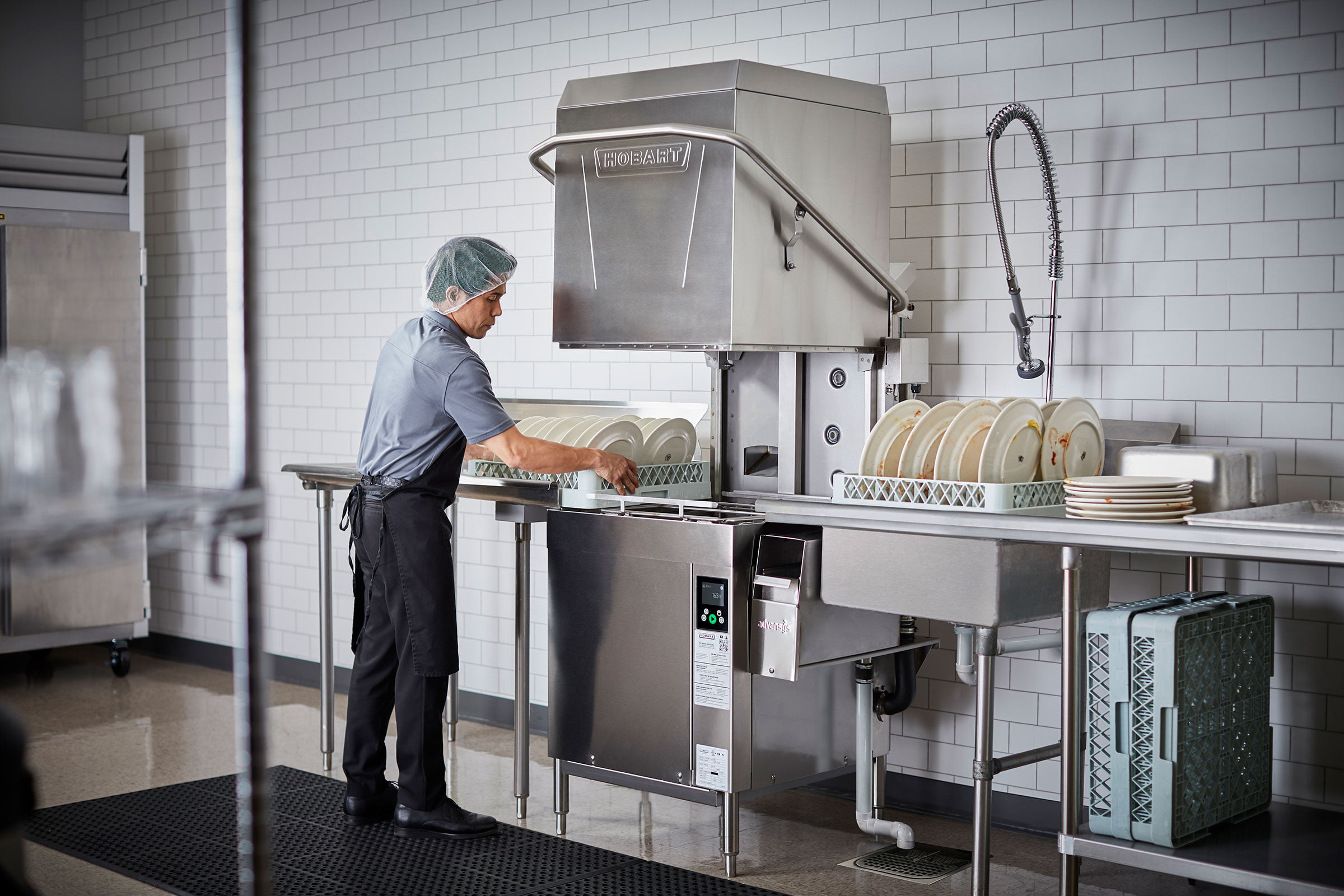
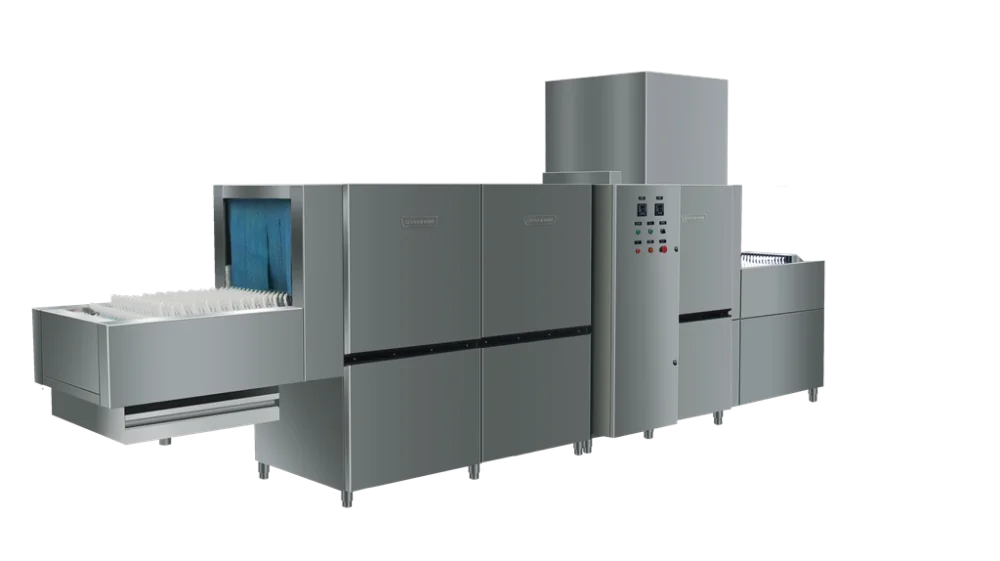

Ironically, this tells me some... awkward things about how the author relates to their kitchen. I cook - a lot. I host parties - usually dinner parties - and I use cheap Ikea plates & etc instead of disposable anythings. And like (most?) millenials-ish, the kitchen is where we tend to hang out.
My dishwasher isn't so that I have clean dishes before the next meal. It's so that I have a clean kitchen after.
(If I wanted only clean dishes before my next meal... actually I'd probably want as fast a dishwasher as possible.)