I totally disagree - for simple actions there is no need for a touchscreen. Just put a button and a label. And LED to confirm the action, buzzer if sound is needed. That is all you need.
The only advantage of a touchscreen is surprisingly not the ability to touch, but the ability to reconfigure the input interface through software. When you don't need to reconfigure things, encoders, toggles, push buttons, rotary switches, etc. are far superior (with some downsides - cost, reliability).
> for simple actions there is no need for a touchscreen.
Ok, here's a simple action, that's often solved by touchscreens - Choose a destination from a ticket machine. Let's start with the button-first approach. Here's what the London Underground ticket machines used to look like:


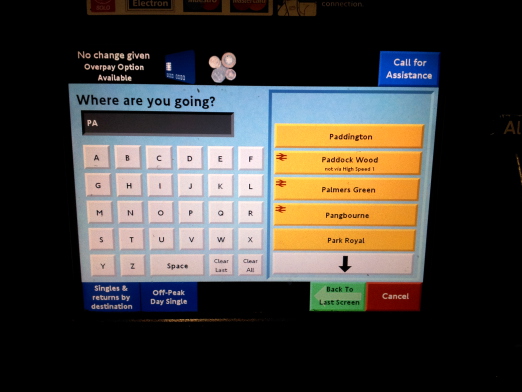
The only advantage of a touchscreen is surprisingly not the ability to touch, but the ability to reconfigure the input interface through software. When you don't need to reconfigure things, encoders, toggles, push buttons, rotary switches, etc. are far superior (with some downsides - cost, reliability).