According to the Heinsberg Study in Germany, the infection rate was as high as 15% and the mortality rate in the town would be as low as 0.37 per cent.
Germany launched the Heinsberg Protocol study to examine the rural town of Gangelt in the region of Heinsberg, where the first virus fatalities occurred.
During recent weeks, his team completed substantial research conducted through surveys and investigations in homes across the Heinsberg region - where more than 1,400 confirmed cases had been reported. Heinsberg has an approximate population of 250,000 inhabitants and has confirmed 46 coronavirus-related deaths.
These research findings have already provided some indication on how the virus works, as Streeck clarified:
“There is no significant risk of catching the disease when you go shopping. Severe outbreaks of the infection were always a result of people being closer together over a longer period of time, for example the après- ski parties in Ischgl, Austria.” He could also not find any evidence of ‘living’ viruses on surfaces. “When we took samples from door handles, phones or toilets it has not been possible to cultivate the virus in the laboratory on the basis of these swabs….”
“To actually 'get' the virus it would be necessary that someone coughs into their hand, immediately touches a door knob and then straight after that another person grasps the handle and goes on to touches their face.” Streeck therefore believes that there is little chance of transmission through contact with so-called contaminated surfaces.
There is substantial criticism mounting directed at the Heinsberg study [1]
- Immunity tests used might have shown false positives. So the 15% might be too high.
- Results of the highly infected town Gangelt are not transferable to whole Germany with lower infection rates.
- The author of the study is inflicted with a marketing agency, which is at least uncommon in science.
Own comment: The danger SARS-Cov19 remains in the speed of spreading due to missing herd immunity (in contrast to the common flu). 0.37 per cent is still a lot. USA: 327,200,000*0.37% = 1,210,640. Social distancing remains the single most effective tool.
There is always substantial criticism of any minority position in science, it's a subculture full of bullshit politics like any other. Also see my other comment - 15% could just as easily be too low:
Just to add a bit more context regarding the now often cited study of Gangelt (some questions where raised re methodology and esp the policy conclusions):
it is a good start & germany is doing now many more serological studies (also to monitor over time) and hopefully we'll soon gain more confidence re status quo and what it means
The recent case of 45/60 choir members contracting coronavirus after actively practicing social distancing contradicts this unusually confident assertion that it's hard to contract the disease.
That seems consistent with GP's claim. I'd classify 2.5 hours of choir practice in the same risk category as a ski party, considering that the choir members are standing next to each other, constantly ejecting virus particles, and taking deep breaths.
There's not some magic involved where the virus gives up after exactly 6 feet.
6 feet was chosen as a matter of policy because it was the most you could reasonably get people to stay apart. Sidewalks, store aisles, elevators, etc, are all about 6 feet wide and so it's a good number to convince people to cross the street or wait for the aisle to clear. 100 ft would be a much safer number but that's just not really physically reasonable (and so the guidance would have been dismissed by the public).
And crucially, the context of the shared space makes a large difference. You simply cannot compare 6ft. outdoors with lots of ventilation vs. indoors and forced air vs. indoors and no ventilation.
The choir practice should not be an example of how easy it is to spread; rather, it should be an example of the unreasonable intuitions people have about 'distance'.
Remaining in close contact, indoors, while singing, for a long period of time is not a good idea. It is quite reasonable to expect that to lead to transmission.
Similarly, two people passing by each other on a sidewalk, with nose breathing and mouths closed, even if it's closer than 6 ft., is a very small risk. Still good to maximize space, but nothing to get worked up about.
Singing is also likely to expel more droplets further.
I don't have a source, but a microbiologist I know was saying that safe distances, based on droplet physics, depend on activity, e.g. standing in a single file line vs walking vs hiking vs running.
Where did the article (https://www.latimes.com/world-nation/story/2020-03-29/corona...) say they maintained a 6 foot distance? If anything it suggests they were closer (foot between chairs, people weren't spread throughout the room but close to front).
Regardless, doesn't matter. Singing/shouting/chanting with a high density of people inside a closed setting is dangerous for any repository disease as viral concentration just keeps building up. Same thing happened with Shincheonji on a far larger scale.
"Members of the choir were already aware of the COVID-19 outbreak in their state, particularly around the Seattle area, which is about an hour south of Skagit County by car. Hand sanitizer was dispensed at the door of the practice that night in March, no one shared sheet music, and people were conscious not to stand too close to one another or engage in their huggy greetings. Also, no one remembers anyone coughing or sneezing, and no one present felt ill at the time. Nonetheless, a huge percentage of people present later tested positive for the virus."
My point is that the original article said that it's hard to get infected. Assuming that everyone was asymptomatic, and there was no coughing or sneezing, and everyone stayed away from each other, it's actually not that hard to spread the infection. In fact, if there was a single person who was asymptomatic and they infected 45 people, that means it's very easy to get infected.
From the LA Times article: "At one point the members broke into two groups, each standing around separate pianos to sing.". If you've ever watched a choir practice, this likely meant everyone facing inward toward the piano, and you can't stand too far apart because you need to hear everyone else to harmonize and adjust your volume. Singing loudly is probably only second to sneezing in terms of projecting atomized 'stuff' from the respiratory tract into the air. So there were 30 people standing in a circle spraying droplets directly at each other.
It may very well be that it's very easy to spread this virus, but I don't think this incident is a good indication of that. It seems more an indication of how poorly even well-intentioned people understood the contagiousness and what exactly social distancing meant at the time this happened (1 month ago).
I suspect that the risk increases the longer you're in an enclosed space with someone shedding the virus. Thought experiment, if spending two hours in the church with people singing meant 50% got infected. Then spending 5 minutes assuming it's linear (and it likely isn't), is only a 2% chance.
Brings up the difference between public health risk and personal risk. Public health perspective you want contacts to be infrequent and importantly short.
I'm not sure how to interpret hard vs. easy in this context. The measures they took to protect people (not touching) has no effect on the real risk (shouting/singing in a crowded room), which again should have already been known at this point in time to be a major risk factor (Shincheonji).
That is this evidence doesn't contradict Streeck arguing that formate transmission is unlikely and that it is long term exposure to breathing people that is the real risk. (Or that being in a relatively empty grocery store provides little risk)
(I don't have a clue one way or the other, just commenting on applicability of evidence)
Walking 6 feet past someone has a low risk of transmitting the virus to them.
Standing 6 feet away from someone for an hour... Is another story.
Also worth noting: My wife has worked with a lot of community choral groups. She is convinced that they took all reasonable precautions, but doubts that their rehearsal space was sufficient to accommodate everyone standing 6 feet apart from eachother for the entire exercise... Or even for any part of it.
I leave it as an exercise to the reader to work out what this means for the typical tech firm's open office layout.
They mention “certain distance” which I suspect is 3-4 feet at best but frankly even 6 feet probably isn’t enough for people singing loudly in a confined environment for a long period of time.
But it's not the same as a ski party, where people are mingling together. My entire point is that the original article downplayed how contagious it is, but even following social distancing guidelines, there was an enormously high infection rate.
Getting into a large room with a bunch of people and singing isn't in my mind following social distancing guidelines, even if you're not as huggy as usual.
Also this is self report of behavior after people did what was in retrospect a very stupid and risky activity.
When you’re singing loudly, full-throated, with deep breathing... that seems like an ideal scenario for a respiratory illness that might not mean much for the general population.
I am not sure if it’s even possible to give the fatality rate before everything is over because we don’t know if an infected patient eventually dies from the disease with a long delay. This is why I totally expect a fatality rate that is higher than we can observe today.
An asymptomatic infection should still count as an infection, so it should lower the infection fatality rate. I don't have expertise in this area, but I think both infected fatality rate and symptomatic fatality rate are useful.
For the study, they tested a representative sample that includes asymptomatic cases. Hence, one can assume a known, constant number of infected cases. And to complete the study they should, as far as I understand it, wait until they know how many of those infected die in order to calculate the fatality rate. I don’t think it’s relevant here if further people are infected after testing for the illness, and there shouldn’t be a need to monitor the new cases or even check if they die (it shouldn’t be necessary for the study).
That quote about shopping being safe doesn't seem to have much support, and frankly sounds very dangerous if taken too literally.
In fact existing outbreaks COVID-19 are notably NOT solely due to "people being closer together over a longer period of time". Cases of completely untraced community infection are everywhere with this disease.
> “To actually 'get' the virus it would be necessary that someone coughs into their hand, immediately touches a door knob and then straight after that another person grasps the handle and goes on to touches their face.”
This is just simply not true. Fomite transmissibility was demonstrated back in January. I think what he's trying to say is that the chances of static infectious surfaces seem low and that close proximity to an infected person is still the most common vector. But the way you quoted it makes it sounds like you can't get it from a surface, and we know that's not true.
Seriously, wash your hands, folks. And beware of selectively quoted articles telling you not to take obvious mitigation steps.
In early April 2020, Streeck and his team reported that they had "carried out an intensive search of the home of a family infected with the coronavirus but found no trace of it on surfaces."[18]
“We did not find any live virus on any surface. Not on cellphones, not on taps, not on doorknobs.”
One study of one family does not a public health policy make, was my point.
Again, we know that this virus can be transmitted to surfaces by the infected. We know that it lives there for days and can be cultured. We do not know the fraction of real-world infections that take a fomite route vs. inhalation, and this study seems like evidence (albeit somewhat limited) that the number is very low.
No one should be interpreting this as "you can't get sick from touching things". We don't know that. Even given this one study, that's not an appropriately conservative way to understand the disease, given the known stakes.
The WHO report out of China made it clear that the majority of transmission was happening within households (ie outside of Wuhan; in Wuhan it makes sense that this would be the primary route). Most people weren’t transmitting by casual contact, and “asymptomatic” transmission was essentially never happening. The media has blown the risk of these things way out of proportion.
While “social distancing” is a logical thing to do because of what we generally know about respiratory viruses, there’s actually little/no evidence that “shopping” is a thing that we need to specifically be worried about. It’s likely that we hit the point of diminishing returns once we shut down large gatherings like concerts and restaurants.
Any claim without sufficient data and reproducible results that the virus is unable to transfer via a surface, to me, borders on criminal negligence, given real research shows this is inaccurate.
As a counter to claim virus is “unable to live on surfaces”:
First link is ambiguous as to if the samples taken were “toxic” enough to result in infection, but the second link makes it clear that virus survives on surfaces for days in quantities large enough to infect someone.
> SARS-CoV-2 RNA was identified on a variety of surfaces in cabins of both symptomatic and asymptomatic infected passengers up to 17 days after cabins
Unless there’s more to this, it doesn’t seem very useful to me. It seems obvious to me that you’ll find some RNA. However it would likely be damaged/fragmented.
I’m not sure about the second reference, it would be interesting to dig out the original study.
— Research found that SARS-CoV-2 was detectable in quantities large enough to be infectious in aerosols for up to 3 hours, up to 4 hours on copper, up to 24 hours on cardboard and up to 2-3 days on plastic and stainless steel.
Human coronaviruses can remain infectious on inanimate surfaces for up to 9 days. Surface disinfection with 0.1% sodium hypochlorite or 62–71% ethanol significantly reduces coronavirus infectivity on surfaces within 1 min exposure time. We expect a similar effect against the SARS-CoV-2.
This meme in the media is the real negligence. This is the biggest blurred distinction they've used to sensationalize headlines. It's like digging up a graveyard and using it as proof that humans can survive for 300 years underground.
I'm quite happy to be over cautious until there's better evidence. It's fairly simple to change my behaviour and with a relatively low cost compared to the risk related to uncertainty over ease of transmission.
I'm not talking about whether to stay indoors or not. I'm talking about the precautions one should take in public spaces. I still need to go shopping but whilst there I'm going to assume all surfaces are potentially contaminated.
Likewise groceries, parcels and deliveries either go into quarantine for 2 or 3 days or they are washed.
Do you believe the point of isolation is to stop the spread or slow the spread? If the point is to slow the spread but ultimately for everyone to be exposed, wouldn’t it make sense to do that as quickly as possible without overrunning hospitals?
At this point new hospital admissions are significantly down from their peak. If the point is to slow the spread but acknowledging that it cannot be eliminated, we’ve in fact over-corrected.
The further you get the cases down, the slower the spread when things open back up, especially if it gives you time to ramp up other mitigations like PPE and test production during the lockdown to bring the R0 value down significantly.
The unmitigated doubling time is approximately 3 days. So for every halving in the overall prevalence you buy yourself 3 days of unmitigated growth in a population with no immunity.
On the testing and PPE front, again I wonder if this is just a feel good notion or if there’s even napkin math to show what scale of PPE and testing is theoretically being deployed and what impact that may have on R0.
But returning to the core point, how long until COVID has runs its course, and at what cost? Can we admit that herd immunity must be reached? As Dr. Birx repeatedly asks, are we at the tip of the iceberg or 25/50/75% of the way through?
No one wants to think about it because I guess it would make an uncomfortable choice obvious. Better to just self-flagellate so we can feel like we’re doing something.
> Saying that live virus is there because viral RNA was found is like saying I must be holding a meatball sub because there's a marinara stain on my pants.
There is no such a thing as a “live” virus. They are just a bundle of RNA in a protein/fat shell. If the RNA was identified it means the shell was intact.
Also they measure active live viruses, and has been shown that some viruses can go dormant and come back to life so measuring an area for a virus may not pick up dormant ones and lead to a result that is a false reassurance as the potential for those dormant virus to come back into life is still there.
But so much we don't know about this new virus strain, hence big rush to learn all these details about this virus as with better understanding, better management and approaches come about.
As for its survival rate on surfaces, we still don't know all the details, but does no harm to just treat all surfaces as infected outside your home and work with that - hence hand washing and not forgetting the details like tap, keys, phone, things you can't avoid touching up to the point you actually get to wash your hands. I'd hate to think how many have clean hands and then turn the tap off with the same hands that turned it on when potentially contaminated. That will be the small oversights that catch people out more.
Hence until we get that data to know for sure science wise, presume the worst and hope for the best is always the only prudent approach.
Dormancy refers to when a host is infected but the virus is not replicating.
There is no "dormant vs. live" distinction for viruses outside of a host as they have no function / biological processes outside of a host. They are just molecular robo-syringes that inject RNA/DNA.
Also refers to viruses dormant without any host, for example https://www.bbc.co.uk/news/science-environment-26387276
whilst an edge-case and it does show that enviromental factors and how a particular virus responds and reacts are still things we are learning about this one.
Heck, may find out that frozen good with contaminated packaging can put the viruses into dormant mode and when you take them out of the freezer, and temperature and humidity level kick it into life. Details like that unlikely, yet still not been ruled out and much science still ahead upon this virus and caught many off guard and on the backfoot, but we love solving problems and the science is starting to get more detailed a bigger picture every day. But still, mindful of not eliminating aspects that have not been totally ruled out is a balance of risk/caution and fair judgement still plays a part.
Dormancy isn't really proper biology jargon, the correct term for what I referred to above is latency.
However, outside of the cell, neither of those terms mean anything.
A virus outside of a cell does nothing, period. It is essentially a USB flash drive with a computer virus in it. Saying a USB flash drive can "lie dormant in a drawer for days" is just silly.
> Heck, may find out that frozen good with contaminated packaging can put the viruses into dormant mode and when you take them out of the freezer, and temperature and humidity level kick it into life.
We won't though, because we thoroughly understand how these things function. There are things that function like that: bacteria.
They just found RNA of the Virus not an active Virus, there is a huge difference. Same goes for Virus in stool, you can detect the RNA but it’s not active anymore. Source: Webasto Study
It's a two page summary. Note that this, and the accompanying press conference (with professional PR team) are it. That is the entirety of the details they have released.
I think it's absolutely crazy and irresponsible to do a press conference on a paper that you haven't even released a preprint of. I really hope that there aren't any issues with the actual publication, because if there are, they're going to cause a great amount of damage to scientific credibility, which so incredibly important right now.
Despite it opposing their previous stance on it? They're now mostly backpedalling, and discrediting the study. Or, at least, how it was presented - but can anyone blame them for that?
— Research found that SARS-CoV-2 was detectable in quantities large enough to be infectious in aerosols for up to 3 hours, up to 4 hours on copper, up to 24 hours on cardboard and up to 2-3 days on plastic and stainless steel.
AFAIK it remains unknown how many viruses are required and where in the human body to get an infection. So 'quantities large enough to be infectious' is probably false.
There are very well defined scientific protocols for what an infectious dose is, used in this research. You can put your “probably false” argument against the contents of the paper.
I was not referring to anything like that, but to the fact that a different amount of different viruses is required to cause an infection. E.g. in this paper it is estimated that influenza A (in aerosol form) requires around 2000-3000 viruses to infect: https://www.hindawi.com/journals/av/2014/859090/#conclusions. On the other hand Noro-viruses can infect a person in much smaller quantities (don't bother finding a reference but you'll find it quickly). All I'm saying that it's unlikely that we know such numbers at this point for SARS-CoV-2 so in the paper you linked they must have used some other definition for an 'infectous dose' than what you'd intuitively think.
Edit: Now that I actually read the paper that OP posted, it seems that they're estimating the half-life of SARS-CoV-2. It really depends on the initial amount of viruses how long it takes to go below some fixed 'non-infectious limit'. So numbers such as '3 hours' quoted in the paper are pretty much meaningless in practical situations where the inital amount of viruses might be much different. It's not that they're trying to emulate a cough or something.
The CDC is currently saying that this virus has an R0 of 5.7. Couple that with the many cases of casual spread (e.g. people who have gotten it with people they have barely interacted with), and the contrarian claims by this German study seem farcical.
More generally: will you please stop posting unsubstantive comments and flamebait to HN? You've done it a lot, and we ban accounts that do it, because it destroys the spirit of curious conversation, which is what the site is intended to be used for.
It took a couple of months for the Robert Koch institute to figure out what masks are good for. Let's give Dr. Streek some time to figure out how fomite transmission works.
This study and its conclusions have seen close to universal dismissal. It can't even demonstrate that it is actually detecting SARS-CoV-2 immunity (it was claiming results before anyone had even demonstrated effective tests for relevant antibodies), and not any of the many variations of coronavirus that spread during the colder months (yet which offer no immunity to SARS-CoV-2).
The claims about shopping are...unsupported and go contrary to an enormous volume of evidence (namely the high R0).
It isn't a good example of anything except that junk science has a moment to shine in a crisis.
EDIT: LOL, -2. This is the moment I delete my account and find slightly less stupid venues to participate in. Cheers.
Streeck studied medicine at the Charite University, Berlin and obtained his PhD from the University of Bonn, which he performed part-time at the Partners AIDS Research Center, Massachusetts General Hospital, Harvard Medical School.
After his graduation Streeck started to work as a postdoctoral fellow at the Ragon Institute of MGH, MIT and Harvard. In 2009 he was promoted to Instructor in Medicine and in 2011 to Assistant Professor at Harvard Medical School. In September 2012 he was recruited to the United States Military HIV Research Program, Bethesda, where he became the Chief of the Cellular Immunology Section as well as Assistant Professor at the Uniformed Services University of Health Sciences and adjunct faculty of the Bloomberg School of Public Health, Johns Hopkins University.[3] In 2015 he became the Chair for Medical Biology at the University Duisburg-Essen and founded the Institute for HIV Research in the same year,[4][5][6][7] though he still maintains the status of "visiting scientist" with the US Military HIV Research Program.
In 2018 Streeck was appointed to the advisory board of the German AIDS Foundation (Deutsche AIDS Stiftung).[8] In April 2020, he was appointed by Minister-President Armin Laschet of North Rhine-Westphalia to a 12-member expert group to advise on economic and social consequences of the 2020 coronavirus pandemic in Germany.[9]
Coronavirus research
In early April 2020, Streeck and his team reported that they had "carried out an intensive search of the home of a family infected with the coronavirus but found no trace of it on surfaces."[18]
“We did not find any live virus on any surface. Not on cellphones, not on taps, not on doorknobs.”
There are some red flags about this study though. German press is reporting that a PR firm founded by the notorious yellow-paper journalist Kai Diekmann is involved in publicizing the results. Diekmann was recently involved in a scandal where researchers in Heidelberg wrongly claimed to have developed a blood test for breast cancer. Streeck appears to be a personal friend of one of the other founders of the company. In any case, using a PR agency is pretty much unheard of for a German research institute.
I'm reminded of that time a Nobel prize winner used the "authority" he generated from winning the Noble prize to convince everyone that Vitamin C was a magical cure-all for all disease.
Being an amazing HIV researcher does not mean Streeck has an appropriate background in coronaviruses to be an authority in that field, especially given that his team has (a) found outlier results at odds with every other study thus far published and (b) is making a broad policy pronouncement based on studying a single family's household without considering confounding factors, like say the family cleaning the house before the researchers visited.
This is comforting, but I'd rather still be cautious. I wear gloves when I go shopping. I wash my hands frequently anyway, and now I wash them even more. Worst case, I've wasted some time.
Junk science can come from people not known for junk science. And in the end we rack it up to a technical fault (e.g. a test for coronavirus antibodies that cannot distinguish between many of the several other coronavirus infections that spread during the winter), the way participants were enrolled, etc. That's why there is a peer review process.
And this study bizarrely was released with a press conference and a press conference, yet perilously little actual methodology or useful information for the scientific community to critique. Oh and with a professional PR firm. And it uses this to promote significant changes in public policy! (e.g. relax the restrictions because our two page summary gives some conclusions that are entirely contrary to the entire world of experts)
It's all extraordinarily weird.
And again, it has only made waves online. Among the medical professionals, virologists, etc...crickets.
Just to be clear, HN would normally laugh nonsense like this off the site -- a PR "study" that has zero peer review, that goes against all conventional wisdom, that is not acknowledged or credited by any other expert in the field. Has this site gone absolutely stupid?
> The claims about shopping are...unsupported and go contrary to an enormous volume of evidence (namely the high R0).
Honestly? An R0 of 2-3 is frankly not that high.
If grocery shopping were a huge risk, and people spread the disease before being symptomatic, you’d expect a single sick individual to infect way more than just 2-3 people on average.
Severe acute respiratory syndrome coronavirus 2 is the causative agent of the 2019 novel coronavirus disease pandemic. Initial estimates of the early dynamics of the outbreak in Wuhan, China, suggested a doubling time of the number of infected persons of 6–7 days and a basic reproductive number (R0) of 2.2–2.7. We collected extensive individual case reports across China and estimated key epidemiologic parameters, including the incubation period. We then designed 2 mathematical modeling approaches to infer the outbreak dynamics in Wuhan by using high-resolution domestic travel and infection data. Results show that the doubling time early in the epidemic in Wuhan was 2.3–3.3 days. Assuming a serial interval of 6–9 days, we calculated a median R0 value of 5.7 (95% CI 3.8–8.9)
Calling it Junk science is a bit harsh. I would say that the sponsoring entity (one of the German states) did force an intermediate result. This might turn out to be a bad idea, but is needed to steer the political decision process (the German states and federal government want to convene to make decisions about the lock down on April 14th).
The study has been widely critiqued, but dismissal is too harsh. I don't think anybody really has said that the main finding is wrong. It just might not be as strong. Instead of 15% immune in the area, it might be just 12% or 10%. Fatality rate might be 0.5% rather than 0.37%.
The study goal itself is correct and it is a shame that not every epidemiologist is doing exactly the same study right now all over the world. That the German CDC did not think to run such a study themselves since Covid-19 turned bad is a scandal.


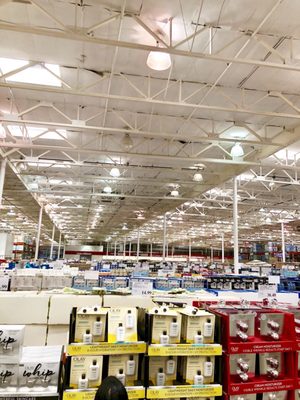
Germany launched the Heinsberg Protocol study to examine the rural town of Gangelt in the region of Heinsberg, where the first virus fatalities occurred.
https://www.thenational.ae/world/germany-s-wuhan-has-15-per-...
During recent weeks, his team completed substantial research conducted through surveys and investigations in homes across the Heinsberg region - where more than 1,400 confirmed cases had been reported. Heinsberg has an approximate population of 250,000 inhabitants and has confirmed 46 coronavirus-related deaths.
These research findings have already provided some indication on how the virus works, as Streeck clarified:
“There is no significant risk of catching the disease when you go shopping. Severe outbreaks of the infection were always a result of people being closer together over a longer period of time, for example the après- ski parties in Ischgl, Austria.” He could also not find any evidence of ‘living’ viruses on surfaces. “When we took samples from door handles, phones or toilets it has not been possible to cultivate the virus in the laboratory on the basis of these swabs….”
“To actually 'get' the virus it would be necessary that someone coughs into their hand, immediately touches a door knob and then straight after that another person grasps the handle and goes on to touches their face.” Streeck therefore believes that there is little chance of transmission through contact with so-called contaminated surfaces.
https://today.rtl.lu/news/science-and-environment/a/1498185....