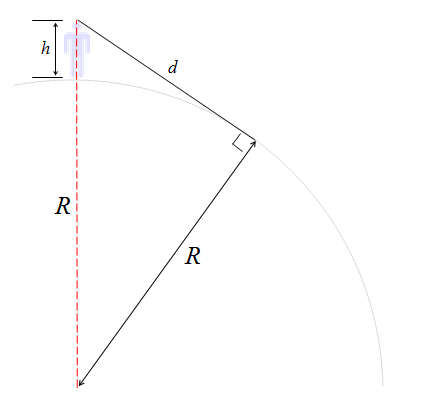
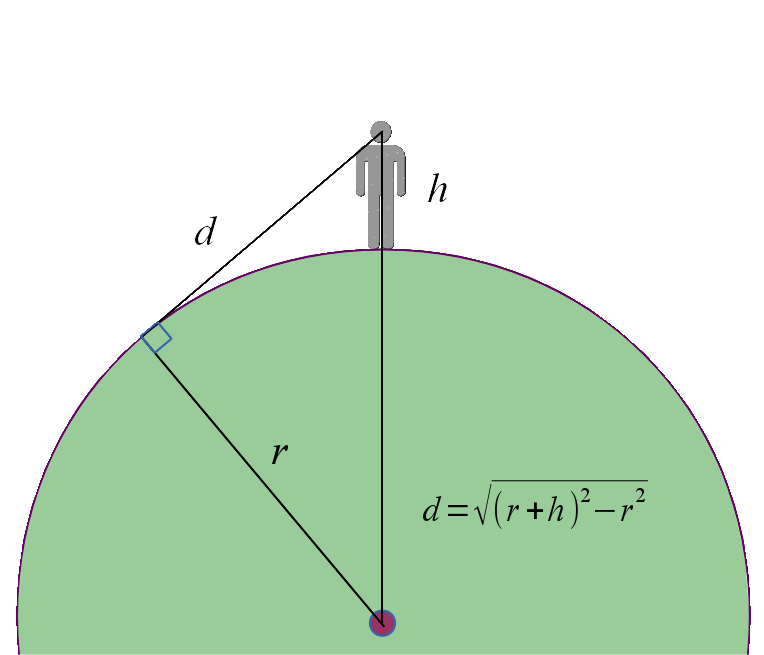
It's familiar because it's a not uncommon comment. Well, except that most such comments refer to the Verrazano-Narrows Bridge, which has a longer span than the Golden Gate. For examples:
It's not unique to the V-N Bridge. Here's a generic version in:
- a NASA report from 1978, Skylab EREP Investigations Summary, says "For example, the support towers on each side of a long suspension bridge are several centimeters further apart at the top than at the bottom because of the curvature of the Earth" http://books.google.com/books?id=MEYgAAAAIAAJ&q=%22bottom+be...
and two links for the same observation for the Humber Estuary Bridge in:
That said, for Golden Gate-specific comments, see:
- Ghost Hunter's Guide to the San Francisco Bay Area (2005) ("The engineering is so perfect that the towers are actually five inches further apart at the top than the base to account for the curvature of the Earth.") http://books.google.com/books?id=oD52WFx2mykC&pg=PA71&dq=gol...
- Practical Digital Wireless Signals (2010) ("As an example, for the Golden Gate Bridge at San Francisco the tops of the towers are further apart than the tower bases by about 9 cm due to the curvature of the Earth") - http://books.google.se/books?id=itG9Zwf7eHAC&pg=PA261&dq=%22... .
Therefore, do you really believe that you are the originator of that fact, and due special attribution?
books.google.com , which is also the domain name for all of those links. The searches were various combinations of "golden gate" "curvature of the earth" and a few other bridge names.
It looks like this blog made their own version instead of copying yours. Since you can't own the fact, and they're not using your picture, they didn't take anything copyrighted or trademarked by you. Maybe you could argue that the stick-figure diagram is copyrightable, but it seems like a stretch.
No it doesn't. Not at all, except insofar as that basic sketch is depicted in a zillion trigonometry textbooks and has been for well longer than you've been alive.
The basic idea is pretty obvious. People have been computing "astounding facts" attributable to the Earth's curvature for thousands of years. Golden Gate Bridge is a pretty obvious choice for computing the tangible spread of two apparently parallel towers: WTC towers were too close for a dramatic spread, and other than GGB there isn't any other pair of towers so universally known (at least to an American audience) which are identical and far enough apart for a spreading of inches. If I think about it long enough, I'll probably recall seeing the same computation & example in trigonometry class decades ago.
Just because you thought of it doesn't mean you're first - by a long shot.
Oh, and your sketch is wrong. The two lines labeled "R" aren't the same length.
> Oh, and your sketch is wrong. The two lines labeled "R" aren't the same length.
lutusp's diagram is the arachnoid one. His labels are correct, it's the datagenetics one that has apparently incorrect labeling. The dashed red line is not R in length, but R + h, which is not clearly indicated though the apparent intent. The dashed line should stop at the circle and change color or something to indicate a second line segment.
That said, you're correct. Ignoring the person another similar diagram is here:
If you read to the bottom of the cylinder article, there's a link to another blog post by the same guy about other Martin Gardner puzzles, and the 'band around the Earth' puzzle is the first one!