The only problem I see here would be created by themselves.
The price they pay for postponing questions is losing WebRTC and those "serious applications" in the meantime.
I looked into TeamSpeak when searching for a multi-channel PTT tool a few weeks ago and couldn't find a way to listen to multiple channels and talk/reply to each channel individually. Does TeamSpeak support that?
This will be entertaining due to the well known driver names BUT not high level by any means:
"Due to the wide variety of gaming skill levels amongst the drivers, game settings will be configured in such a way to encourage competitive and entertaining racing. This includes running equal car performance with fixed setups, reduced vehicle damage, and optional anti-lock brakes and traction control for those less familiar with the game."
More like a "So You Think You Can Dance" celebrity edition than anything else.
A much higher level event which also includes some IRL drivers from multiple series is: The Race All-Star Esports Battle (https://www.youtube.com/watch?v=_a_RV5UY8mk)
Higher level mostly because they race in rFactor2 which is a better simulator than F1 2019 and there are no driver aids. Also because everyone on the grid are long-ish time sim racers, even if some of them also happen to be IRL drivers (Max Verstappen, Felix Rosenqvist, Antonio Felix da Costa, a few others)
> I think the essential office chitchat issue is "being yourself" vs. "seeming like a high quality professional". I've found out the hard way that relaxing and aiming for a real conversation carries a high % chance of saying something unbecoming of a team leader.
Indeed, this is a very good way to put it.
Although I do understand people who say silly things at the lunch table without a second thought - they value fun and genuine social interactions more than "upward mobility".
If you can't be yourself for at least 8h/day and you also can't be yourself after that, because you shouldn't base you social life around your co-workers, then who are you? And when are you allowed to be yourself? Weekends and bank holidays? Fuck. That.
We would all be happier if we were allowed to be ourselves all the time. Maybe by hopping around until landing on a cluster of likewise co-workers who can see the "high quality professional" side by side with the crazy cat lady or the punkrocker.
But again, I think your decription is correct and that we live within a very sad state of affairs.
Thanks for this. This has become a realization of mine in the past couple of years. I already wear a neat shirt to work and do my hair neatly, because that's expected. I'm not going to change my personality however, because I am who I am and I don't want to pretend to be something I'm not.
I've even decided that I will no longer 'perform' interviews. I could get most jobs, because I'm pretty good at doing interviews. However, I've come to the conclusion that I should just be me and if they don't like it, there isn't a fit. Recently got my first rejection because of this and I didn't mind as much as I thought I would. Of course, exceptions will be made when I really need a job. But as long as the market is on my side, I'll just keep being myself.
I've been doing the same. I even tell recruiters and interviewers "if I was unemployed, you'd be getting a very different version of me". It adds more fuel to the notion of why employed people are so much better to recruit, because you get more signal and less noise.
We've all known for a while that being unemployed, and having that desperation stink on you, is a bad situation. But I'd never really considered it from the hiring side, that when you are interviewing someone who desperately needs a job, you're interviewing more of an actor.
THe person conducting the interview is asking you questions he knows the answer to, and knows that you know what he wants to hear, and is just checking that you know how to play the game and repeat back to him what he wants.
If you answered all the stupid interview questions completely honestly you would never get a job. Both parties know this, yet everyone keeps ploughing on with this moronic game.
Honestly though, from what I see around me though, most people are acting when they're in interviews. Even if they don't 'really' need the job. Maybe that's because I mostly know young people and they don't have the confidence or the awareness yet, though.
100% this. The teams that I have been a part of that have had a lasting impact on me allow for authenticity. Sure, sometimes you get a disparaging remark that can escalate. But, in my limited experience, that downside is so minuscule to the upside of having authenticity creating happiness in the workplace.
I have foregone an opportunity to work for a very big company straight out of graduation simply because I just enjoyed my internship there too much, and it was in complete contrast to how my peers described their experiences with their internships, traineeships, or full-time jobs. I enjoy my upward mobility in a smaller company with some potential, working with people who don't take themselves too seriously (because they had to years ago anyway).
It's more comfortable, and it makes me want to go back to work on Monday.
Saying objectively stupid or offensive stuff without reading the room is a bad idea wherever you are. But people already treat family, friends, coworkers differently, with different topics of discussion and jokes. So you have a different "face" or "recipe" for each of them anyway.
And small talk might actually help your chances of upward mobility since people start being aware of your name. They know you delivered something. Your superiors are more likely to mention that and you if people in the room know who you are than if you're "a resource".
Envision Virgin Racing ( https://envisionvirginracing.com ) | Software Engineer | Silverstone, UK | ONSITE | Full-time | Eligible to work in the UK
Competing to win the ABB FIA Formula E Championship – the world’s first fully-electric racing series and the fastest growing motorsport.
Our 15 people, multi-background engineering department works towards achieving the best possible race results.
We are looking for a Software Engineer with at least 5 years experience with Python and comfortable with software engineering best practices for the full development cycle.
Most software development aims at creating or improving the internal analysis tools and decision support systems, used by the strategy, performance and race engineers.
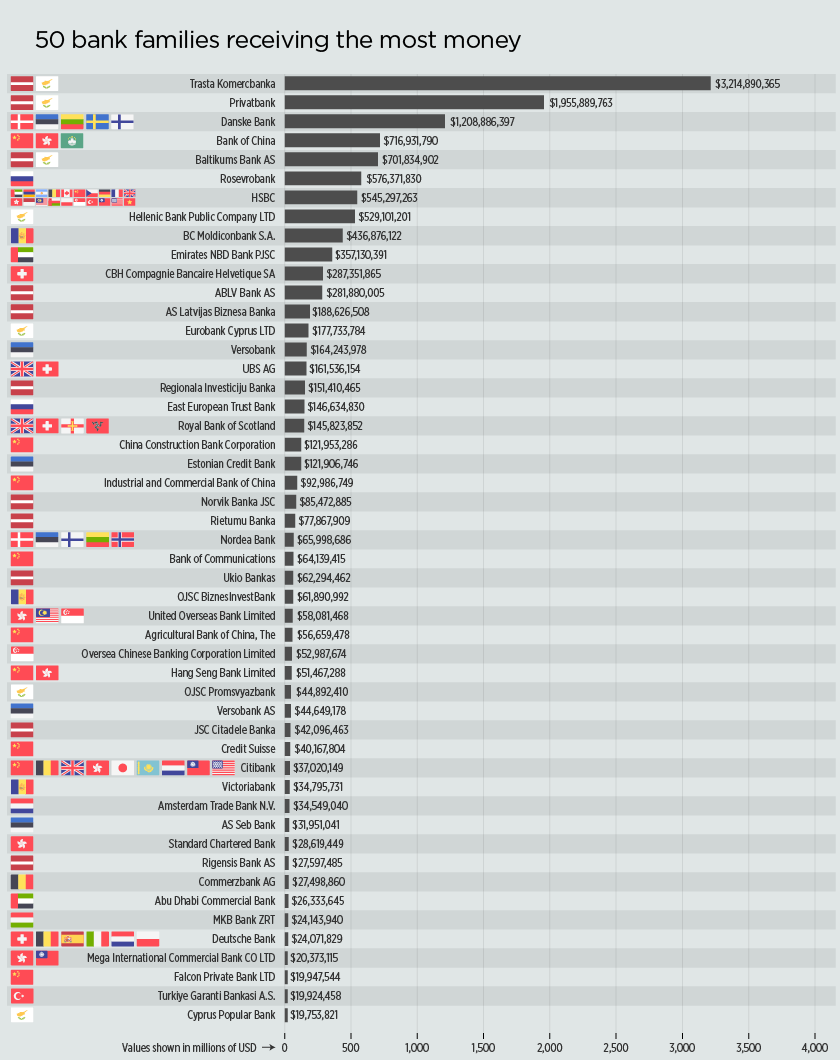
I’m not certain as to the original post’s implication, but the multi-billion-dollar Russian “Laundromat” schemes that have come to light over the past few years fed through Baltic banks, including at least one in Lithuania. I’d think, though, that since these came to light there would be added scrutiny and it wouldn’t be an ideal place for further nefarious activity.
> through Baltic banks, including at least one in Lithuania
Just to clarify: The Russian Laundromat mostly relied on the banks from Latvia and Estonia[1], the two EU countries with the largest Russian population. The only banks which participated in the scheme from Lithuania – Danske and Nordea – were actually Scandinavian, and have either left the country (Danske), or merged with others (Nordea) afterwards.
This one was really a Lithuanian bank, even though founded by a person who was born in Russia, and who escaped to Russia when the bank collapsed in 2013. There are none of such banks left in the country anymore, and people are very concerned about any possible Revolut's connections to Russia.
> Why does being regulated by Lithuania make it look it like a money-laundering scheme?
It doesn't raise issues per se. But Lithuania has a sizable Russian population [1]. It's also a small country.
The latter means it has less experience supervising novel and complex financial systems. It also makes its regulators easier to unduly influence, either through bribery or threats (e.g. Revolut failing would probably deplete Lithuania's national deposit system).
> But Lithuania has a sizable Russian population [1]. It's also a small country.
The Russian population (5%) is a tiny minority here, not represented by any political party in the parlament. It's much bigger (25%) in Latvia and Estonia, as Russians tend to live in the cities near the Russian border[1].
> The latter means it has less experience supervising novel and complex financial systems. It also makes its regulators easier to unduly influence, either through bribery or threats
In this case, there is a common view in Lithuania, that as a tiny economy we should focus on IT sector and follow Estonia's example, trying to be the most modern and innovative state in the EU.
Therefore, there is an entire goverment program for attracting and supporting fintech companies[2], hoping that they will open offices in Lithuania and employ recent graduates, preventing them from fleeing to Western Europe for better job opportunities.
Of course, it makes no financial sense to give a banking license to a foreign startup for such a small economy, but Revolut is extremely popular in Lithuania and the general population sees it as an alternative to Scandinavian banks which have occupied the local market.
As a result, those policitians who have tried to oppose giving the license to Revolut were publicly attacked from all sides as "working on behalf of Scandinavian banks".
> Those policitians who tried to oppose giving the license to Revolut were publicly attacked from all sides as "working on behalf of Scandinavian banks"
I rest my case. That such financial regulation is being politically decided gives Revolut more leeway in Lithuania than it would have in e.g. the U.K.
> That such financial regulation is being politically decided
It's not being politically decided, but multiple senior members of the parlament in the committee on Budget and Finance have publicly expressed their concerns.
I agree that there is a lot of general inexperience in the entire system, and I don't believe that Lithuania would be able to regulate Revolut properly, as it's based in the UK.
The point was, that Revolut was more than welcome in Lithuania, and they didn't need to try to influence anyone. The politicians and regulators were even proud that one of the biggest fintech startups in Europe chose to set foot here.
They also saw that N26 was successfully granted a license in Germany, Monzo in the UK, and Bunq in Netherlands. Therefore, it wasn't seen as such a big risk.
The way I understand it, not really. Financial services seem to operate crossborder just OK, while the licenses are not cross border (I mean cross EU border).
Good point. I believe there are EU directives in place which mandate that if an institution is authorised in one member state it can operate in any other state
Grammar and style are both ultimately dictated by usage, so if someone insists on plugging in XYZ as a new ultra-PC pronoun I can't really prove that it is incorrect, no matter how ridiculous.
So, that said: The whole point of using "they" is when you don't know the gender of a person and don't want to presume by saying "he" or "she" or muddying up the text by saying "he or she". When you know the gender of a person, using the correct pronoun is better--it's both succinct and corresponds more closely with reality.
It's a touchy subject [I mean, some idiot flagged my comment--come on!] but people tend to over-correct in grammar quite a bit, and over-correcting with "they" happens like this.